
Roti Making Tools for Beginners: 10 Must-Have Kitchen Tools for Perfect Rotis
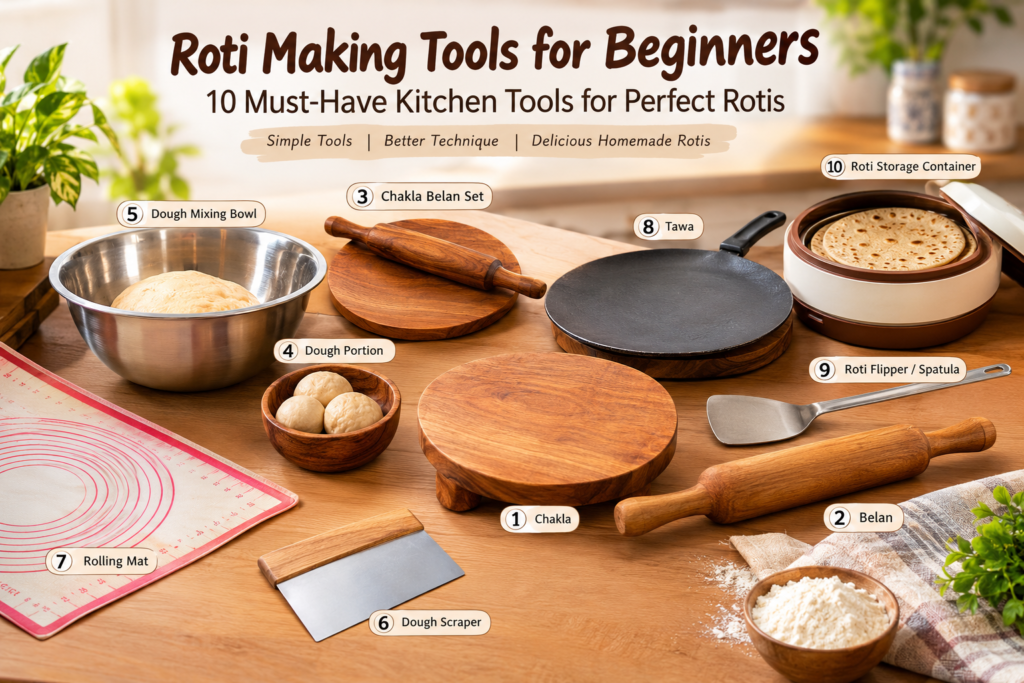
Making soft, round, homemade rotis becomes much easier when you have the right tools in your kitchen. Beginners often think that making roti requires special skills, but the right roti making tools can make the process simpler, faster, and more comfortable.
From a traditional chakla and belan to a modern roti maker, each tool has a different purpose. Choosing the right combination depends on your cooking style, kitchen space, and experience.
In this guide, we will explore 10 must-have kitchen tools for making roti and explain how each one can help beginners prepare delicious homemade rotis.
1. Chakla
A chakla, also known as a rolling board, provides a flat and stable surface for rolling roti dough.
A good chakla should have a smooth surface and https://nlsenterprises.in/ enough space to roll the dough comfortably. Wooden chaklas are popular because they are lightweight, easy to handle, and suitable for traditional Indian kitchens.
For beginners, a properly sized chakla can make rolling easier and help prevent the dough from sticking to the surface.
2. Belan
The belan, or rolling pin, is one of the most important roti-making tools.
It is used to flatten and shape the dough into a round roti. Beginners should choose a belan that feels comfortable in their hands and is easy to control.
A wooden belan is a traditional choice for Indian kitchens. Its simple design makes it useful for preparing roti, chapati, and other flatbreads.
Tip: Avoid applying excessive pressure while rolling. Gentle, even movements usually give you better control over the dough.
3. Chakla Belan Set
If you are new to making rotis, buying a chakla belan set can be more convenient than purchasing both items separately.
A matching set provides a rolling board and rolling pin designed to work together. Wooden sets are particularly popular for traditional home cooking.
Look for a smooth finish, comfortable shape, and sturdy construction when choosing a set.
4. Roti Maker
A roti maker can be useful for beginners who find traditional rolling difficult or want to save preparation time.
Depending on the type, a roti maker may help flatten or cook the roti. Manual and electric models are available, so check the product instructions before use.
However, a roti maker is not necessarily better than a chakla and belan. Traditional tools give you more control over the thickness and shape of your roti.
5. Dough Mixing Bowl
Before rolling a roti, you need properly prepared dough. A sturdy mixing bowl makes kneading and preparing the dough more convenient.
Choose a bowl that provides enough space for kneading without spilling flour or water over the kitchen counter.
A good dough consistency is more important than the bowl itself. Soft, well-kneaded dough is generally easier for beginners to roll.
6. Dough Scraper
A dough scraper is a small but useful kitchen tool for handling dough.
It can help divide a large portion of dough into smaller, equal-sized pieces. This makes it easier to prepare rotis of similar size.
A scraper can also help collect leftover dough or flour from your work surface, making kitchen cleanup easier.
7. Rolling Mat
A rolling mat can provide an additional non-stick or easy-to-clean surface for preparing roti.
Although a traditional chakla is enough for most kitchens, a rolling mat may be helpful if you have limited counter space or prefer a lightweight setup.
When buying one, choose a food-safe material and make sure it stays firmly in place while rolling.
8. Tawa
Once your roti is rolled, you need a suitable tawa to cook it.
A flat tawa provides an even cooking surface and is an essential part of the roti-making process. Cast iron, stainless steel, and non-stick options are commonly available.
For beginners, choose a tawa that heats evenly and has a comfortable handle.
Remember that cooking temperature matters. A tawa that is too cold may make the roti dry, while excessive heat can burn the outside before the inside cooks properly.
9. Roti Flipper or Spatula
A roti spatula or flipper helps you turn the roti safely while cooking.
Choose a spatula with a comfortable grip and a suitable edge for lifting the roti without damaging it.
Beginners should avoid pressing the roti too aggressively with the spatula. Allow the heat to cook the surface naturally and turn it at the appropriate stage.
10. Roti Storage Container
After making fresh rotis, a roti storage container helps keep them organized and warm for serving.
An insulated casserole or suitable food-storage container can be useful when preparing several rotis for the family.
Avoid leaving cooked rotis uncovered for long periods because exposure to air can make them lose moisture and become dry.
How to Choose the Best Roti Making Tools for Beginners
You do not need to buy every available kitchen gadget. Start with the basics.
For traditional roti making, a chakla, belan, mixing bowl, tawa, and spatula are usually enough. If you want additional convenience, you can consider a dough scraper, rolling mat, roti maker, or storage container.
When choosing wooden roti-making tools, pay attention to:
- Smooth and comfortable finish
- Sturdy construction
- Easy handling
- Suitable size
- Easy cleaning
- Food-safe materials
- Comfortable grip
The best tool is the one that feels practical for your everyday cooking routine.
Traditional Tools vs Modern Roti Makers
Traditional chakla and belan remain popular because they provide direct control over the dough. They are simple, reusable, and do not require electricity.
Modern roti makers can provide convenience, especially for people who find rolling difficult. However, results can vary depending on the appliance and dough preparation.
For beginners learning the basic technique, starting with a chakla and belan can be a useful way to understand dough consistency, pressure, and rolling technique.
Tips for Making Better Rotis
Even the best tools cannot compensate for poor dough preparation. Keep these simple tips in mind:
- Knead the dough properly.
- Keep the dough soft but not excessively wet.
- Divide dough into similar-sized portions.
- Use a lightly floured surface when necessary.
- Roll gently and evenly.
- Preheat the tawa properly.
- Avoid overcooking the roti.
- Store cooked rotis in a covered container.
With regular practice, your rolling technique will naturally improve.
Final Thoughts
The right roti making tools for beginners can make homemade cooking easier and more enjoyable. A traditional chakla and belan are excellent starting points, while a tawa, spatula, mixing bowl, and storage container complete the basic setup.
If you are building your kitchen collection, focus on quality and usability instead of buying too many tools at once. A well-made wooden chakla and belan set can be a practical addition to an Indian kitchen and a useful choice for everyday roti preparation.
Ready to upgrade your kitchen? Explore quality wooden roti-making tools and choose the right chakla and belan set for your home.