
Easy Roti Making Tips: 10 Simple Ways to Make Soft & Round Rotis at Home
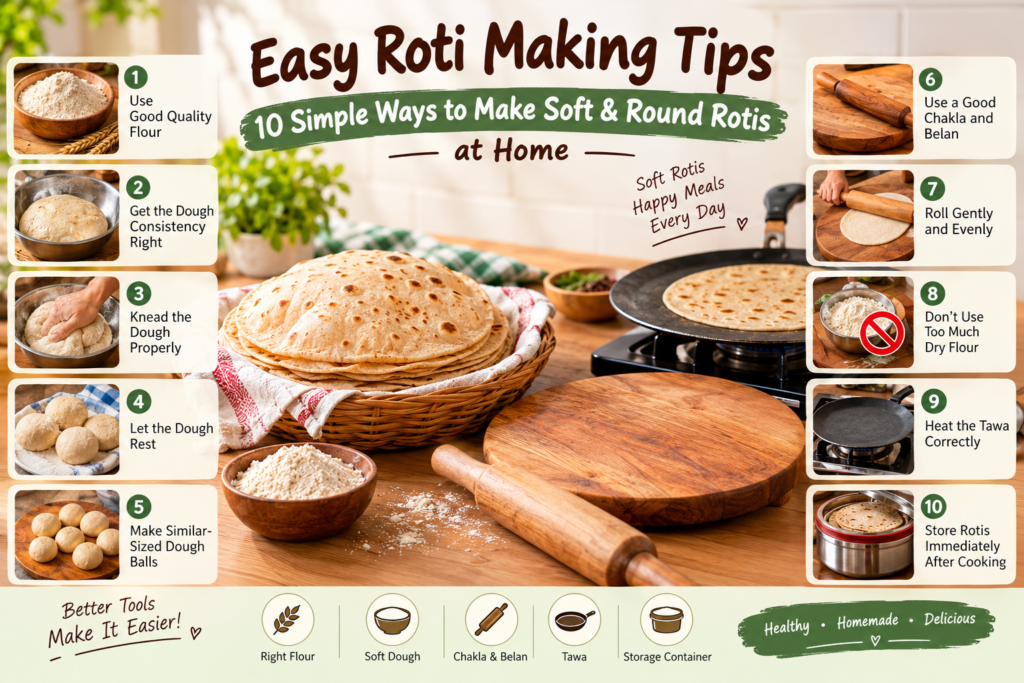
Making soft and round rotis at home can seem difficult when you are just starting. The good news is that you do not need complicated techniques. With the right dough consistency, a little practice, and suitable roti-making tools, you can improve your results quickly.
Whether you are learning to cook or simply want softer homemade chapatis, these easy roti making tips will help you prepare better rotis with less frustration.
1. Start With the Right Flour
The quality and type of flour can affect the texture of your roti. Whole https://nlsenterprises.in/ wheat atta is commonly used for traditional Indian chapatis because it produces a soft and flexible dough when prepared correctly.
Choose fresh, good-quality atta and store it in an airtight container. If your flour has absorbed moisture or developed an unusual smell, replacing it can improve the final result.
2. Get the Dough Consistency Right
One of the biggest secrets to soft rotis is properly prepared dough.
Add water gradually while mixing the flour. Avoid adding a large amount of water at once. Knead until the dough becomes smooth and soft without feeling excessively sticky.
If the dough is too hard, your rotis may become dry or difficult to roll. If it is too wet, handling and shaping can become difficult.
Quick answer: For soft rotis, aim for dough that is soft, smooth, and easy to press without sticking excessively to your hands.
3. Knead the Dough Properly
Kneading helps bring the flour and water together and creates a smoother dough.
Spend a few minutes kneading with gentle but consistent pressure. If the dough feels slightly dry, add a small amount of water and knead again.
Good kneading also makes the dough easier to roll, which is particularly helpful for beginners.
4. Let the Dough Rest
Do not rush immediately from kneading to rolling.
Cover the dough and allow it to rest for around 15–20 minutes. Resting gives the flour time to absorb water and can make the dough softer and easier to handle.
Keep the dough covered so that its surface does not dry out.
5. Make Similar-Sized Dough Balls
Divide the dough into small, similar-sized portions before rolling.
Try to make each dough ball reasonably smooth. A smooth ball is easier to flatten and roll evenly.
If your portions are dramatically different in size, your rotis will naturally vary in thickness and cooking time.
6. Use a Good Chakla and Belan
A chakla and belan can make a significant difference when learning how to roll roti.
The chakla provides a stable surface, while the belan helps flatten and shape the dough. A smooth wooden chakla and belan can be comfortable for everyday kitchen use.
Place the dough ball on the chakla and flatten it gently before beginning to roll.
Beginner tip: Instead of pressing extremely hard, use controlled movements and rotate the dough regularly.
7. Roll Gently and Evenly
Getting a perfectly round roti takes practice. Do not worry if your first few rotis look more like maps than circles.
Start from the center and roll outward using light, even pressure. Rotate the dough as you roll instead of repeatedly rolling in only one direction.
Try to maintain similar thickness throughout the roti. Uneven thickness can cause some areas to cook faster than others.
8. Do Not Use Too Much Dry Flour
Dry flour can prevent sticking, but excessive flour can affect the texture and may leave extra flour on the cooking surface.
Use only as much flour as necessary to handle the dough comfortably.
If your dough is sticking constantly, check its consistency first. Adding large amounts of dry flour is often only a temporary solution.
9. Heat the Tawa Correctly
The tawa temperature is another important factor in making soft rotis.
A properly heated tawa allows the roti to cook efficiently. If the tawa is too cold, the roti may take longer to cook and can become dry. Excessive heat can cause the surface to brown too quickly.
Heat the tawa before placing the rolled roti on it, then adjust the heat as needed according to your stove and tawa.
10. Store Rotis Immediately After Cooking
Freshly cooked rotis can lose moisture when exposed to air.
Place cooked rotis in a covered container or suitable roti casserole soon after cooking. Keeping them covered helps retain warmth and softness for serving.
If you are preparing rotis for the entire family, avoid leaving finished rotis uncovered while you continue cooking.
Common Roti-Making Mistakes to Avoid
Beginners often make a few simple mistakes. Avoiding them can improve your results quickly.
- Using dough that is too hard
- Skipping the resting period
- Making uneven dough balls
- Applying excessive pressure while rolling
- Rolling the dough too thin or too thick
- Using too much dry flour
- Cooking on an incorrectly heated tawa
- Leaving cooked rotis uncovered
Remember that consistency comes with practice. You do not need perfect rotis on your first attempt.
What Tools Do You Need to Make Roti?
For traditional homemade roti, you can start with a few basic tools:
- Chakla
- Belan
- Mixing bowl
- Tawa
- Spatula
- Dough scraper
- Roti storage container
You do not need to purchase every kitchen gadget available. A quality wooden chakla and belan set combined with a good tawa is enough for many home cooks.
How Can Beginners Make Round Rotis?
The easiest way to improve your shape is to focus on even dough thickness rather than trying to create a perfect circle immediately.
Rotate the dough frequently while rolling and use gentle pressure. With regular practice, your hands will naturally learn how much pressure to apply.
A stable chakla and comfortable belan can also make the rolling process easier.
Final Thoughts
Making soft and round rotis is a skill that improves with practice. The most important factors are soft dough, proper kneading, adequate resting time, gentle rolling, and correct tawa temperature.
Use these easy roti making tips consistently rather than trying to change everything at once. Start with the basics, use comfortable roti-making tools, and give yourself time to develop the technique.
If you are upgrading your kitchen, explore a quality wooden chakla and belan set to make everyday roti preparation more convenient and enjoyable.
Ready to improve your homemade rotis? Choose reliable roti-making tools and start practicing today!