
How to Store a Wooden Roti Maker: 10 Easy Tips to Keep It Like New
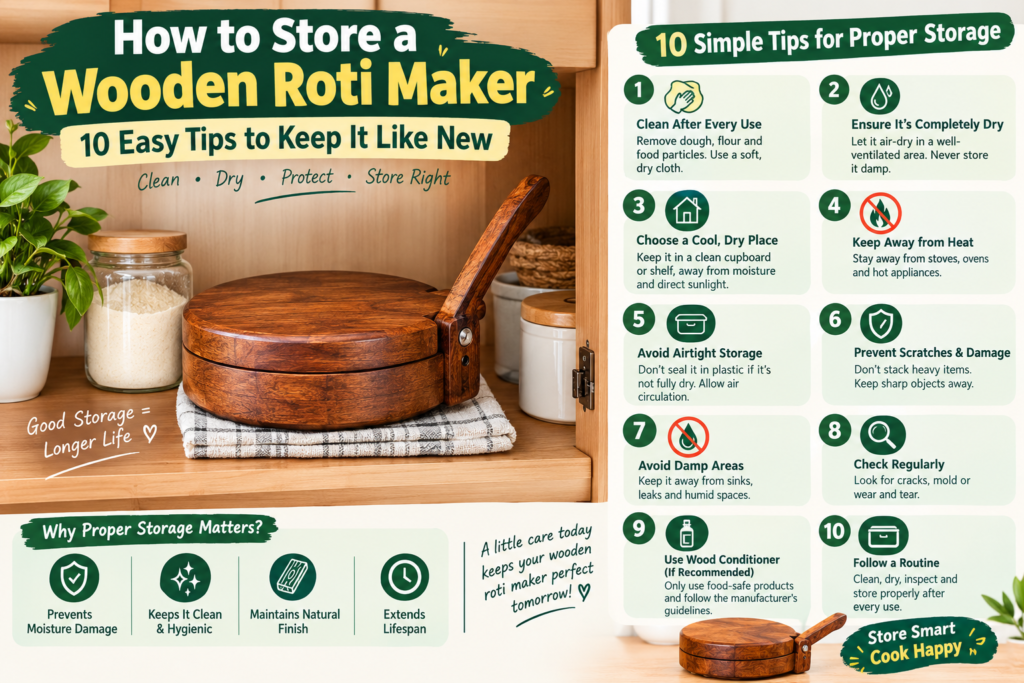
A wooden roti maker is a useful kitchen tool for preparing homemade rotis and chapatis. With proper care, it can remain functional and attractive for a long time. However, storing it incorrectly can expose the wood to excess moisture, heat, dust, and other conditions that may cause damage.
So, how should you store a wooden roti maker to keep it in good condition?
The best way to store a wooden roti maker is to clean it after use, let it dry completely, and keep it in a clean, dry, well-ventilated place away from excessive heat and moisture.
In this guide, you will discover 10 easy storage tips to protect your wooden roti maker, maintain its natural appearance, and help extend its useful life.
Why Is Proper Storage Important for a Wooden Roti Maker?
Wood is a natural material that responds to https://nlsenterprises.in/ changes in moisture and temperature. If a wooden roti maker stays wet or is stored in a damp area, the wood may swell, warp, crack, or develop mold.
Proper storage helps you:
- Keep the surface clean and ready for use.
- Reduce the risk of moisture damage.
- Protect the wood from scratches and unnecessary wear.
- Prevent dust and kitchen debris from collecting on the surface.
- Maintain the appearance and usefulness of your kitchen tool.
A few simple storage habits can make everyday kitchen maintenance easier.
10 Easy Tips to Store a Wooden Roti Maker Properly
Follow these practical tips to keep your wooden roti maker clean, dry, and ready for your next cooking session.
1. Clean the Roti Maker After Every Use
Before storing your wooden roti maker, remove any leftover dough, flour, or food particles.
Use a soft, dry cloth to wipe away loose residue. If dough sticks to the surface, gently remove it with a slightly damp cloth, provided the manufacturer’s care instructions allow it.
Avoid sharp metal tools and abrasive scrubbers because they may scratch the wood.
Quick tip: Cleaning the roti maker immediately after use makes it easier to remove dough before it dries.
2. Make Sure It Is Completely Dry
One of the most important rules for storing wooden kitchen tools is to avoid trapping moisture.
After cleaning, wipe the surface with a dry towel. Allow the roti maker to air-dry in a clean, well-ventilated area before putting it away.
Pay attention to hinges, joints, edges, and other areas where moisture might collect.
Never store your wooden roti maker while it is still damp. Trapped moisture can encourage mold growth and may damage the wood over time.
3. Choose a Cool, Dry Storage Location
Store your wooden roti maker in a dry place with good ventilation.
A clean kitchen cupboard or shelf can work well if the area is not damp. Avoid storing it near leaking pipes, wet sinks, or walls that regularly collect condensation.
Also, keep it away from direct sunlight and excessive heat, as these conditions may contribute to drying, fading, or cracking.
Best practice: Choose a storage spot that stays reasonably dry and has a stable temperature.
4. Keep It Away From the Stove and Oven
Although the kitchen is the natural place for a roti maker, the area beside a stove or oven may not be ideal for storage.
Repeated exposure to heat can dry out the wood unevenly and may affect its shape or finish.
Keep your wooden roti maker away from hot appliances, open flames, and areas exposed to steam. Let it cool to room temperature if it has been near a heat source before storing it.
A cupboard or shelf away from cooking heat is usually a better option.
5. Avoid Airtight Storage While Moisture May Remain
Putting a wooden roti maker into an airtight plastic bag or sealed container before it is fully dry can trap moisture.
Instead, let it dry completely and store it where air can circulate. If you use a protective cover to keep away dust, choose one that is clean and dry.
Avoid wrapping the roti maker tightly in a damp cloth or storing it in a sealed space where condensation can form.
Good ventilation helps keep the storage environment suitable for wooden kitchenware.
6. Protect the Surface From Scratches
Scratches and dents can affect the appearance of a wooden roti maker and make some areas harder to clean.
When placing it in a cupboard, avoid stacking heavy cookware directly on top of it. Keep sharp utensils, metal tools, and rough-edged objects away from its surface.
If you need to stack kitchen items, give the roti maker its own space or use a clean, dry protective layer that will not trap moisture.
Handle the tool carefully when moving it between the counter and storage area.
7. Keep It Away From Damp Kitchen Areas
Moisture is one of the main things to avoid when storing wooden kitchen tools.
Do not keep your roti maker beside a sink where it may get splashed regularly. Avoid damp cabinets and storage spaces with poor ventilation.
If your kitchen is particularly humid, check the storage area regularly and allow the roti maker to air out when necessary.
If you notice persistent dampness, mold, or a musty smell, investigate the cause before continuing to use the tool.
8. Inspect It Regularly for Damage
Take a moment to inspect your wooden roti maker when you clean or store it.
Look for cracks, splinters, loose hinges, unusual discoloration, or signs of mold. Pay particular attention to the surfaces that come into contact with dough.
Minor wear may be manageable, but deep cracks, persistent mold, or splintering can make the tool difficult to clean safely.
If damage affects the food-contact surface and cannot be corrected safely, stop using the roti maker and consider replacing it.
Regular inspection helps you identify problems before they become more serious.
9. Use Wood Conditioner Only When Recommended
Some wooden kitchen tools may benefit from occasional conditioning, but not all wooden roti makers need oil or other treatments.
Check the manufacturer’s instructions before applying anything to the surface. If conditioning is recommended, use only a product specifically suitable for food-contact wooden kitchenware.
Avoid ordinary furniture polish, varnish, scented oils, and unapproved chemical treatments. These products may not be suitable for surfaces that touch food.
Never apply a conditioner to cover up mold, dirt, or a damp surface. Clean and dry the roti maker first.
10. Create a Simple After-Use Storage Routine
The easiest way to protect your wooden roti maker is to follow the same routine after every cooking session.
Use this simple checklist:
- Remove leftover dough and flour.
- Wipe the surface clean.
- Use a slightly damp cloth only when needed and permitted.
- Dry the roti maker thoroughly.
- Check for visible damage.
- Store it in a clean, dry, well-ventilated location.
Following these steps consistently helps prevent common storage problems and keeps your kitchen tool ready for the next meal.
Where Should You Store a Wooden Roti Maker?
The best storage location is clean, dry, well-ventilated, and away from excessive heat.
Here is a quick comparison of common storage locations:
| Storage location | Recommendation |
|---|---|
| Dry kitchen cupboard | A good option if it is well ventilated |
| Clean, open shelf | Suitable if protected from splashes and dust |
| Beside the kitchen sink | Avoid areas exposed to regular splashes |
| Next to a hot stove | Avoid excessive heat and steam |
| Damp cabinet | Not recommended |
| Sealed plastic bag while damp | Avoid because moisture can become trapped |
Choose the location based on the conditions in your kitchen, not simply on convenience.
Common Wooden Roti Maker Storage Mistakes to Avoid
Even a good-quality wooden roti maker can deteriorate if it is stored incorrectly.
Avoid these common mistakes:
Storing it while wet: Moisture can contribute to swelling, mold, and wood damage.
Leaving dough on the surface: Food residue can dry and become harder to remove.
Keeping it near heat: Excessive heat may dry the wood unevenly.
Using a damp cover: A wet cloth or cover can trap moisture against the surface.
Stacking heavy items on top: Excess pressure can cause dents or other damage.
Ignoring visible cracks: Damaged surfaces may become difficult to clean thoroughly.
The simplest solution is to clean, dry, inspect, and store your roti maker properly after each use.
Frequently Asked Questions
1. How should I store a wooden roti maker?
Clean it after use, remove all moisture, and store it in a clean, dry, well-ventilated place away from direct sunlight, excessive heat, and damp areas.
2. Can I store a wooden roti maker in a kitchen cupboard?
Yes. A kitchen cupboard is suitable if it is clean, dry, and free from persistent moisture. Make sure the roti maker is completely dry before putting it away.
3. Should I cover my wooden roti maker when storing it?
You can use a clean, dry cover to protect it from dust. Make sure the roti maker is fully dry first, and avoid covers or containers that trap moisture.
4. How do I prevent a wooden roti maker from cracking?
Avoid soaking it in water, exposing it to excessive heat, or storing it in conditions with large moisture changes. Clean it gently, dry it thoroughly, and follow the manufacturer’s care instructions.
5. Can I keep a wooden roti maker near the gas stove?
It is better to store it away from the stove. Repeated heat and steam exposure may damage the wood or affect its finish.
6. Should I oil my wooden roti maker before storing it?
Only if the manufacturer recommends conditioning. Choose a product suitable for food-contact wooden kitchenware and follow its instructions. Not every wooden roti maker needs oil.
7. How often should I clean my wooden roti maker?
Remove dough and flour after every use. Wipe it clean as needed, and always make sure it is completely dry before storage.
8. What should I do if my wooden roti maker develops mold?
Stop using it until you can determine whether it can be cleaned safely. Follow the manufacturer’s guidance, and replace it if mold has penetrated the wood or cannot be removed completely.
Final Thoughts
Knowing how to store a wooden roti maker properly can help preserve its appearance and useful life. The most important steps are simple: clean it after use, dry it completely, protect it from excessive heat and moisture, and keep it in a clean storage area.
You do not need an elaborate storage system. A dry cupboard or suitable shelf, combined with a consistent cleaning routine, is often enough.
Start today: Clean your wooden roti maker after your next cooking session, let it dry completely, and give it a safe place in your kitchen. These small habits can make a big difference over time.