
How to Maintain a Wooden Stool: 10 Easy Tips to Keep It Looking New
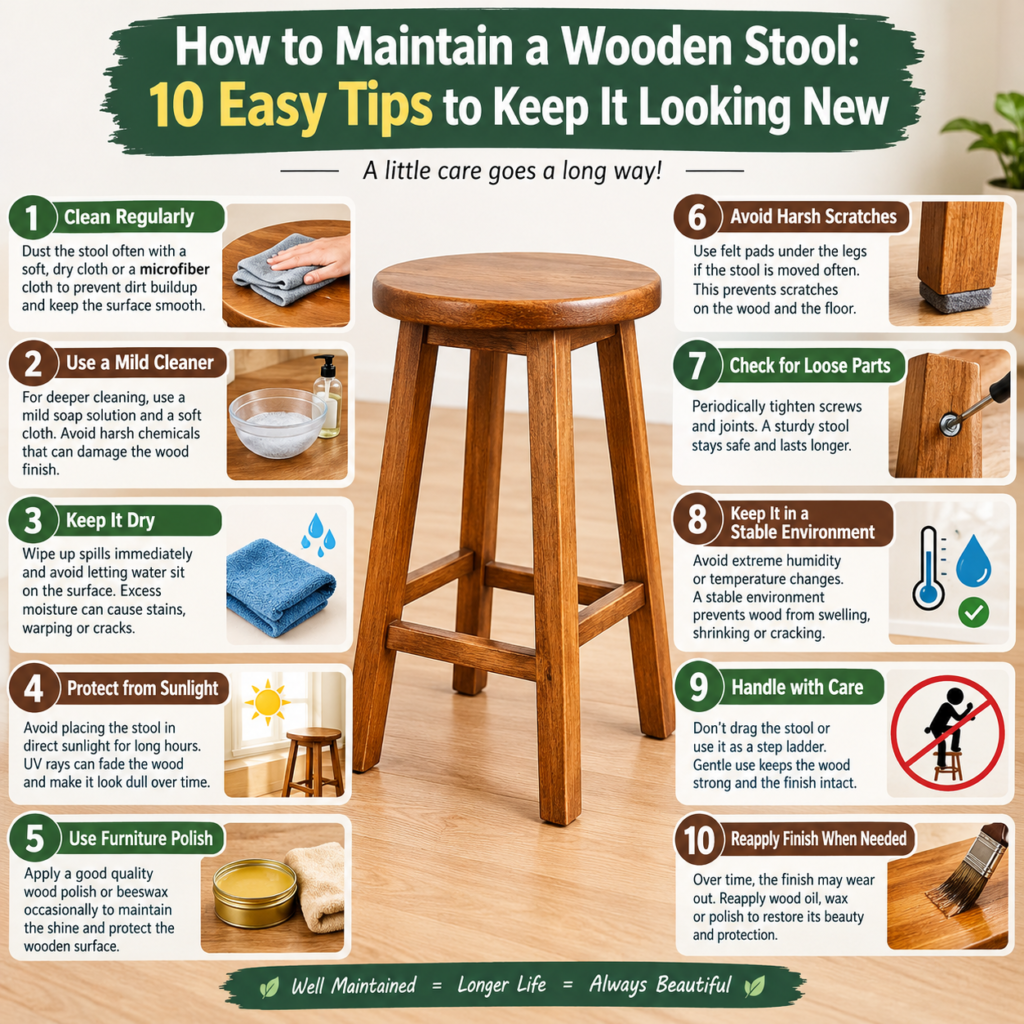
A wooden stool is a practical and stylish addition to any home. Whether you use it as extra seating, a plant stand, a bedside table, or a decorative accent, proper care helps preserve its natural beauty and extend its useful life. However, dust, moisture, scratches, and improper cleaning can gradually affect its appearance.
If you want to know how to maintain a wooden stool, the good news is that you do not need expensive products or complicated techniques. A simple cleaning routine, careful handling, and proper storage can help keep your stool attractive and functional for years.
In this guide, you will discover 10 easy wooden stool maintenance tips, learn how to prevent common types of damage, and find answers to frequently asked questions about wooden furniture care.
Why Is Wooden Stool Maintenance Important?
Wood is a natural material that can respond to changes in humidity, temperature, and moisture. Without proper maintenance, a wooden stool may develop stains, scratches, cracks, or a dull finish.
Regular care helps preserve the wood grain, maintain the https://nlsenterprises.in/ protective coating, and identify small problems before they become serious. Whether you own a traditional wooden stool or a modern decorative design, a consistent maintenance routine can make a noticeable difference.
10 Easy Tips to Maintain a Wooden Stool
1. Clean Your Wooden Stool Regularly
Dust and dirt can accumulate on the seat, legs, and joints of a wooden stool. Use a soft microfiber cloth to remove loose particles without scratching the surface.
For sticky marks, wipe the area with a lightly damp cloth and a small amount of mild soap, provided the finish is compatible. Avoid soaking the wood or pouring water directly onto it.
Regular cleaning keeps your stool looking fresh and prevents dirt from building up over time.
2. Protect the Stool from Excessive Moisture
Moisture is one of the biggest concerns when maintaining wooden furniture. Prolonged exposure to water can cause swelling, warping, discoloration, or finish damage.
Wipe up spills immediately and dry the surface with a clean towel. If you use a wooden stool as a plant stand, place a waterproof saucer beneath the pot to protect the seat from water leaks.
Keep the stool away from damp walls, leaking pipes, and areas where water regularly collects.
3. Prevent Scratches and Surface Damage
Scratches can make a wooden stool look worn, especially when it has a polished or decorative finish.
Avoid dragging heavy objects across the seat. Lift items instead of sliding them, and do not use abrasive scrubbers to remove marks.
If you use the stool as a display stand, place a soft protective pad beneath decorative objects. For everyday seating, avoid placing sharp tools or rough materials directly on the surface.
4. Keep the Stool Away from Direct Sunlight
Continuous exposure to direct sunlight may fade some wood finishes and cause uneven discoloration. Strong heat can also affect the surface coating.
Position your wooden stool away from sunny windows, heaters, and other intense heat sources whenever possible.
If the stool is part of your living room décor, choose a location with stable indoor conditions. This simple step helps preserve its original color and appearance.
5. Use Suitable Wood Care Products
Not every wooden stool needs the same maintenance products. Painted, varnished, lacquered, and unfinished wood surfaces have different care requirements.
For routine cleaning, a soft cloth and a mild, compatible cleaning solution are usually sufficient. Avoid harsh chemicals, concentrated cleaners, and abrasive powders unless the manufacturer recommends them.
Some unfinished or oil-finished stools may benefit from an appropriate wood conditioner. However, do not automatically apply oil or polish to every stool, as unsuitable products can leave sticky residue or damage the finish.
6. Dry the Stool Thoroughly After Cleaning
Proper drying is just as important as cleaning. Moisture trapped around joints, underneath the seat, or between wooden components may contribute to damage over time.
After wiping the stool, use a dry towel to remove remaining moisture. Allow it to air-dry completely in a well-ventilated area.
Never leave a wooden stool wet for long periods or use intense heat to speed up drying. Gradual, even drying is generally safer for wooden furniture.
7. Check the Legs, Joints, and Seat Regularly
A wooden stool should be stable and secure before every use. Over time, joints may loosen, screws may need tightening, or the wood may develop cracks.
Inspect the seat, legs, connecting joints, and any attached hardware periodically. If the stool wobbles, stop using it until the problem has been corrected.
Do not ignore splinters, broken supports, or structural cracks. Repairing damage promptly helps prevent further deterioration and reduces the risk of accidents.
8. Store Your Wooden Stool Properly
When your stool is not in use, keep it in a clean, dry location. Avoid damp storage rooms, areas with recurring condensation, and places exposed to extreme temperature changes.
If you stack stools, make sure the design allows safe stacking without scratching or putting excessive pressure on the legs. Place protective material between surfaces when necessary.
For stools used seasonally as plant stands or decorative accessories, clean and dry them before storing them away.
9. Use Your Stool for Its Intended Purpose
Using a wooden stool correctly helps preserve its strength and finish. A stool designed for seating may have different load limits and construction features from one intended primarily for decoration.
Follow the manufacturer’s weight limit and avoid standing on the stool unless it is specifically designed and rated for that purpose.
Do not drag the stool across rough flooring, as this can damage its legs. Lift it carefully when moving it, and use suitable floor protectors where appropriate.
10. Follow a Simple Maintenance Schedule
Consistent care is easier than dealing with extensive damage later. Create a basic maintenance routine based on how frequently you use your stool.
- Daily or after use: Wipe away spills and visible dirt.
- Weekly: Remove dust from the seat, legs, and joints.
- Monthly: Check for scratches, loose hardware, and surface changes.
- As needed: Clean deeper marks and use compatible maintenance products.
- Seasonally: Inspect the stool for moisture damage and review its storage conditions.
Adjust this schedule according to the stool’s finish, environment, and frequency of use.
Common Wooden Stool Maintenance Mistakes to Avoid
Avoid these mistakes to protect your wooden stool:
- Using excessive water during cleaning.
- Leaving spills or damp cloths on the surface.
- Scrubbing with steel wool or abrasive pads.
- Applying unsuitable oils, waxes, or furniture polish.
- Keeping the stool near strong heat sources.
- Ignoring loose joints, cracks, or splinters.
- Exceeding the manufacturer’s recommended weight limit.
Gentle cleaning, moisture control, and careful handling are the foundations of effective wooden stool maintenance.
Frequently Asked Questions
How often should I maintain a wooden stool?
Remove dust regularly and clean spills as soon as they occur. Inspect the stool monthly for loose joints, scratches, and other signs of wear. Frequently used stools may need more regular cleaning.
How can I make my wooden stool look new again?
Start by removing dust and dirt with a soft cloth. Clean the surface using a suitable mild solution, dry it thoroughly, and follow the manufacturer’s finish-care instructions. Deep scratches or peeling coatings may require refinishing.
Can I use oil on a wooden stool?
Only if the wood and its finish are suitable for oiling. Some unfinished or oil-finished stools may benefit from an appropriate conditioner, while sealed, painted, or lacquered surfaces generally require different care.
How do I prevent a wooden stool from cracking?
Avoid prolonged moisture exposure, extreme heat, and sudden environmental changes. Store the stool in a reasonably stable indoor environment and address loose joints or visible damage promptly.
Is a wooden stool suitable for everyday use?
Yes, provided it is designed for your intended use, remains structurally sound, and is maintained correctly. Follow the manufacturer’s weight limit and avoid using a decorative stool as a substitute for a load-rated seating product.
Final Thoughts
Learning how to maintain a wooden stool is simple when you follow a consistent care routine. Regular cleaning, protection from moisture, scratch prevention, proper storage, and periodic inspections can help preserve its natural appearance and usefulness.
Whether you use a wooden stool in your kitchen, living room, bedroom, or garden-covered area, choose care methods suited to its finish and construction.
Explore the wooden home accessories available at NLS Enterprises to find practical products that complement your home and everyday lifestyle.