How to Maintain Wooden Kitchen Utensils
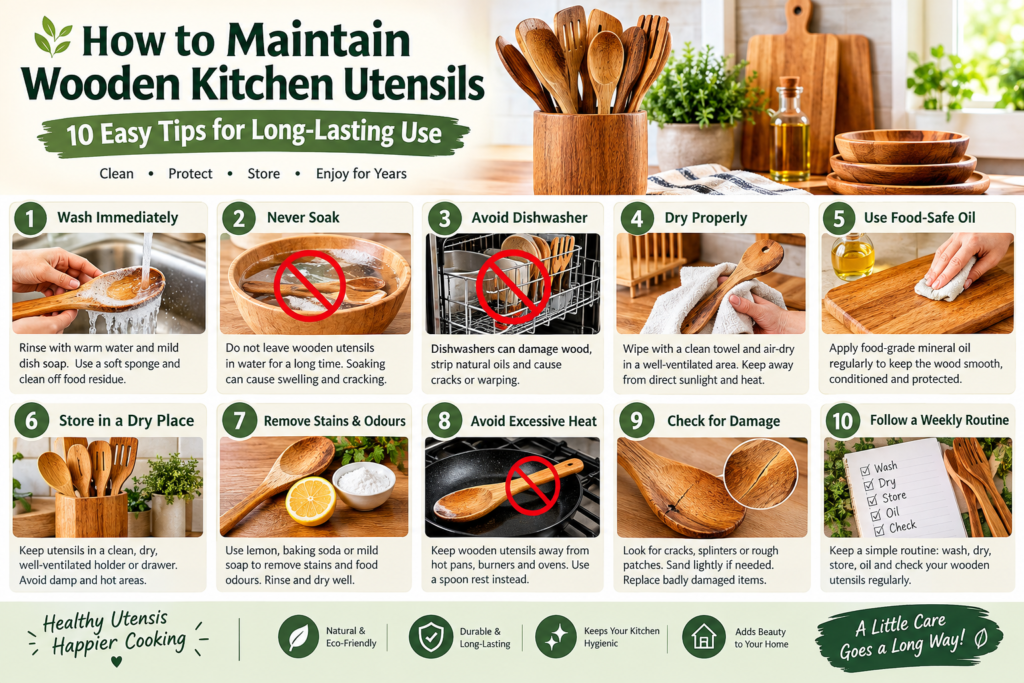
How to Maintain Wooden Kitchen Utensils: 10 Easy Tips for Long-Lasting Use
Wooden kitchen utensils are a useful and stylish addition to every home. From wooden spoons and spatulas to chopping boards and serving tools, these products make everyday cooking easier. They also add a natural and traditional touch to your kitchen.
However, wooden utensils need proper care to stay clean, smooth and durable. Unlike plastic or metal tools, wood can absorb moisture, food smells and stains. Without regular maintenance, it may become rough, develop cracks or lose its natural shine.
The good news is that caring for wooden kitchen utensils is simple. With a few easy habits, you can keep them in good condition for years. Here are 10 practical tips to help you clean, protect and maintain your wooden kitchen products.
Why Is It Important to Maintain Wooden Kitchen Utensils?
Wood is a natural material that can be affected by water, heat and changes in humidity. Proper maintenance helps prevent unnecessary damage and keeps wooden utensils looking attractive.
Regular cleaning also removes leftover food and grease. Drying your utensils properly reduces moisture-related problems, while occasional oiling can help prevent the wood from becoming dry and rough.
Whether you use wooden spoons every day or keep wooden serving tools for special occasions, a simple care routine can help extend their useful life.
10 Easy Tips to Maintain Wooden Kitchen Utensils
1. Wash Wooden Utensils After Every Use
Cleaning your wooden utensils immediately after cooking is one of the easiest ways to maintain them. Food residue can stick to the surface and become difficult to remove if left for too long.
Use warm water, mild dish soap and a soft sponge to clean wooden spoons, spatulas and other kitchen tools. Gently scrub the surface to remove grease and food particles. Rinse thoroughly and move on to drying.
Avoid using harsh cleaning chemicals or rough scrubbers, as they can damage the natural surface of the wood.
2. Never Soak Wooden Utensils in Water
Leaving wooden utensils in water for a long time can damage the wood. Wood absorbs moisture, which may cause it to swell. As it dries, uneven shrinking can lead to cracks or warping.
Instead of soaking your utensils, wash them quickly under running water. If food is stuck to the surface, gently remove it with a soft brush.
This simple habit helps protect your wooden kitchen products from unnecessary moisture damage.
3. Avoid Cleaning Wooden Utensils in a Dishwasher
Dishwashers use high temperatures, strong detergents and prolonged water exposure. These conditions can dry out wooden utensils, damage their finish and increase the risk of cracking.
Handwashing is generally the safest way to clean wooden kitchen tools. Use mild soap and warm water, then dry each item with a clean towel.
For specially finished products, check the manufacturer’s instructions before choosing a cleaning method.
4. Dry Your Wooden Utensils Properly
Drying is just as important as washing. Wet wooden utensils can develop unpleasant smells if they are stored without proper ventilation.
After washing, wipe each utensil with a clean, dry towel. Place it in a well-ventilated area and allow it to air-dry completely before storing.
Avoid leaving wooden utensils in direct sunlight or near hot appliances for long periods. Excessive heat can dry out the wood and cause damage.
5. Apply Food-Safe Oil to Protect the Wood
Wooden utensils may become dry or dull after repeated washing. Applying food-safe mineral oil can help condition the wood and maintain its smooth appearance.
First, make sure the utensil is clean and completely dry. Apply a thin layer of food-grade mineral oil using a soft cloth. Allow the oil to absorb according to the product instructions, then wipe away any excess.
Repeat this process whenever the wood looks dry or rough. Avoid ordinary cooking oils, such as olive oil, for routine conditioning because some can become rancid and develop unpleasant smells.
6. Store Wooden Kitchen Utensils in a Dry Place
Proper storage helps keep wooden utensils clean and protects them from moisture. Store your utensils in a dry drawer, cabinet or well-ventilated holder.
Keep them away from sinks, damp countertops and hot cooking appliances. Do not put wet utensils in closed drawers or airtight containers.
If you use a countertop utensil holder, clean it regularly and make sure it allows enough airflow for the utensils to remain dry.
7. Remove Stains and Unpleasant Smells
Wooden utensils can absorb strong food odours and develop stains from ingredients such as garlic, onions and turmeric.
For everyday odours, wash the utensil with mild dish soap and warm water. You can also gently rub the surface with a cut lemon, then rinse and dry it thoroughly.
For light stains, sprinkle a small amount of baking soda onto a damp cloth and gently rub the affected area. Rinse well afterward. Avoid aggressive scrubbing, as it can make the surface rough.
8. Keep Wooden Utensils Away from Excessive Heat
Excessive heat can dry out wood and damage its natural finish. Avoid leaving wooden spoons inside hot pans for extended periods or placing them directly on hot stovetops.
Use a spoon rest while cooking to protect your utensils and keep your kitchen countertop clean.
Also, avoid placing wooden kitchen tools inside ovens or near open flames unless the manufacturer specifically confirms they are suitable for that use.
9. Check for Cracks and Other Damage
Inspect your wooden utensils regularly for cracks, splinters, rough surfaces and unusual smells. Damaged areas can trap food particles and become difficult to clean.
Minor surface roughness may sometimes be improved with fine-grit sandpaper, provided the utensil is suitable for sanding. Remove all sanding dust and recondition the surface with food-safe mineral oil.
However, replace utensils with deep cracks, persistent mould or damage that prevents proper cleaning. Keeping damaged tools in use can make safe food preparation more difficult.
10. Follow a Simple Weekly Care Routine
A regular maintenance routine makes caring for wooden utensils easier. You do not need expensive cleaning products or complicated methods.
Every week, check your utensils for rough areas, cracks and lingering odours. Clean your utensil holder and make sure your storage area is dry. If the wood looks dry, apply food-safe mineral oil according to the product instructions.
Remember that everyday washing and thorough drying are more important than following a strict weekly oiling schedule.
Frequently Asked Questions
How often should I oil wooden kitchen utensils?
Oil your utensils whenever they appear dry, faded or rough. The frequency depends on how often you use and wash them. Use only food-safe mineral oil intended for wooden kitchenware.
Can I wash wooden spoons with dish soap?
Yes. Mild dish soap and warm water are suitable for everyday cleaning. Avoid soaking wooden spoons or leaving them wet for long periods.
How can I prevent wooden utensils from cracking?
Wash them promptly, avoid prolonged soaking and dishwasher cleaning, dry them thoroughly and keep them away from excessive heat. Apply food-safe mineral oil when needed.
How long do wooden kitchen utensils last?
Their lifespan depends on the type of wood, quality of construction and how well they are maintained. Regular cleaning, proper drying and careful storage can help extend their useful life.
Conclusion
Maintaining wooden kitchen utensils is easy when you follow a few simple steps. Wash them after use, avoid soaking, dry them properly and store them in a clean, dry place. Apply food-safe mineral oil when needed to keep the wood smooth and conditioned.
With regular care, wooden spoons, spatulas and chopping boards can remain useful and attractive for a long time. A little attention after every use helps protect your kitchen essentials and preserve their natural beauty.