10 Essential Tools You Need to Make Perfect Rotis at Home
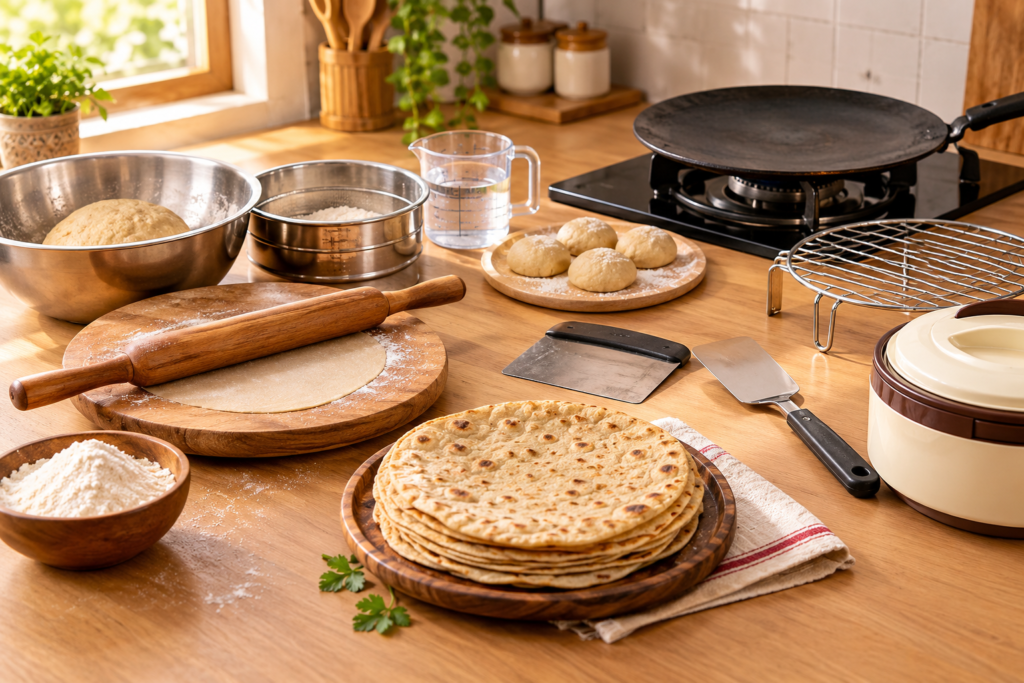
Making soft, round and delicious rotis at home does not require a complicated kitchen setup. With the right roti-making tools, you can prepare evenly rolled and perfectly cooked rotis more easily.
From the traditional chakla and belan to a good-quality tawa, each tool has an important role in the process. Whether you are a beginner learning how to make chapatis or an experienced home cook, having the right equipment can make your daily cooking faster and more convenient.
Here are 10 essential tools you need to make perfect rotis at home.
1. Chakla – The Roti Rolling Board
A chakla is one of the most important traditional tools for making rotis. It provides a flat, stable surface where you can roll your dough evenly.
Chaklas are commonly available in wood, marble and stainless steel. Choose a smooth, sturdy board that gives you enough space to roll your roti comfortably.
For Indian kitchens, a good chakla is useful not only for rotis but also for parathas, puris and other flatbreads.
2. Belan – The Traditional Rolling Pin
The belan works together with the chakla to shape your dough into a thin, round roti.
A wooden belan is a popular choice because it is lightweight and easy to control. The shape and size of the rolling pin can affect how comfortably you roll the dough.
For beginners, practice applying gentle and even pressure while rotating the dough. This helps create a more evenly shaped roti.
3. Tawa – The Essential Roti Griddle
A good tawa is essential for cooking rotis. It provides the hot, flat cooking surface needed to cook the dough quickly and evenly.
You can find tawas made from cast iron, stainless steel and other materials. Cast iron is particularly valued for its ability to retain heat, while other options may be easier to handle and maintain.
Whichever type you choose, the key is to learn the correct heat level. A properly heated tawa helps the roti cook without becoming unnecessarily dry.
4. Flour Sieve – For Smooth, Lump-Free Flour
A flour sieve or atta chalni is a simple but useful Indian kitchen tool.
Sifting wheat flour can help remove unwanted particles and break up lumps, giving you a smoother flour mixture. It can also make mixing the dough easier.
If you regularly make homemade rotis, keep a durable stainless-steel sieve in your kitchen.
5. Mixing Bowl – For Preparing the Dough
You need a spacious mixing bowl to combine wheat flour and water and prepare the roti dough.
Choose a bowl that is large enough to knead comfortably without flour spilling over the sides. Stainless steel, glass and food-safe plastic bowls are commonly used.
A good mixing bowl also makes it easier to add water gradually while kneading.
6. Measuring Cup or Water Jug
Although experienced cooks often add water by feel, beginners can benefit from a measuring cup or small water jug.
Adding too much water can make the dough sticky, while too little water can leave it hard and difficult to roll.
The exact amount of water depends on the flour and its absorption capacity, so add water gradually rather than pouring it all in at once.
7. Dough Scraper
A dough scraper is a small tool that can make roti preparation much easier.
It helps divide dough into portions and can also remove sticky dough from your work surface. A scraper is especially useful when preparing several rotis for a family meal.
It is inexpensive, compact and easy to clean, making it a useful addition to a modern Indian kitchen.
8. Spatula or Roti Turner
A flat spatula or roti turner helps you safely flip the roti while it cooks.
Choose one with a comfortable handle and a broad, thin edge. This makes it easier to lift the roti without tearing it.
A good spatula is also useful for flipping parathas and handling other flatbreads on the tawa.
9. Roti Jali or Roasting Rack
If you like puffed rotis, a roti jali or roasting rack can be useful, depending on your cooking method.
After cooking the roti partially on the tawa, some traditional methods use direct heat to encourage it to puff. Always use appropriate heat and handle hot cookware carefully.
This tool is optional, but it can be helpful for people who enjoy traditional-style puffed rotis.
10. Roti Box or Insulated Casserole
Once your rotis are cooked, you need a way to keep them warm and soft.
A roti box, insulated casserole or covered container can help retain warmth and moisture for serving.
Place cooked rotis inside and keep the container covered rather than leaving them exposed to air. This simple step can make a noticeable difference when serving rotis to the whole family.
What Are the Most Important Tools for Making Rotis?
If you are setting up your kitchen from scratch, you do not need to buy everything at once.
The basic roti-making tool kit can be as simple as:
- Chakla
- Belan
- Tawa
- Mixing bowl
- Flour sieve
- Spatula
- Roti container
These tools cover the main stages of preparation, from making the dough and rolling it to cooking and serving.
How Can You Make Better Rotis at Home?
The tools are important, but technique matters too. Knead the dough properly, allow it to rest, roll with even pressure and cook the roti at an appropriate temperature.
Your flour, water quantity, dough consistency and cooking time can all affect the final texture.
For soft rotis, avoid overcooking them. Once cooked, keep them covered so they do not dry out.
Final Thoughts
Making perfect rotis at home becomes much easier when you have the right Indian kitchen tools. A sturdy chakla, comfortable belan and reliable tawa form the foundation of a simple roti-making setup.
You can then add helpful accessories such as a flour sieve, dough scraper, roti turner and insulated roti box according to your needs.
Whether you call them roti, chapati or phulka, these everyday Indian flatbreads can become easier to prepare with the right tools and a little practice.
Start with the essentials, learn your dough and cooking temperature, and you will be well on your way to making delicious homemade rotis every day.