10 Best Wooden Tools for Making Chapati and Roti
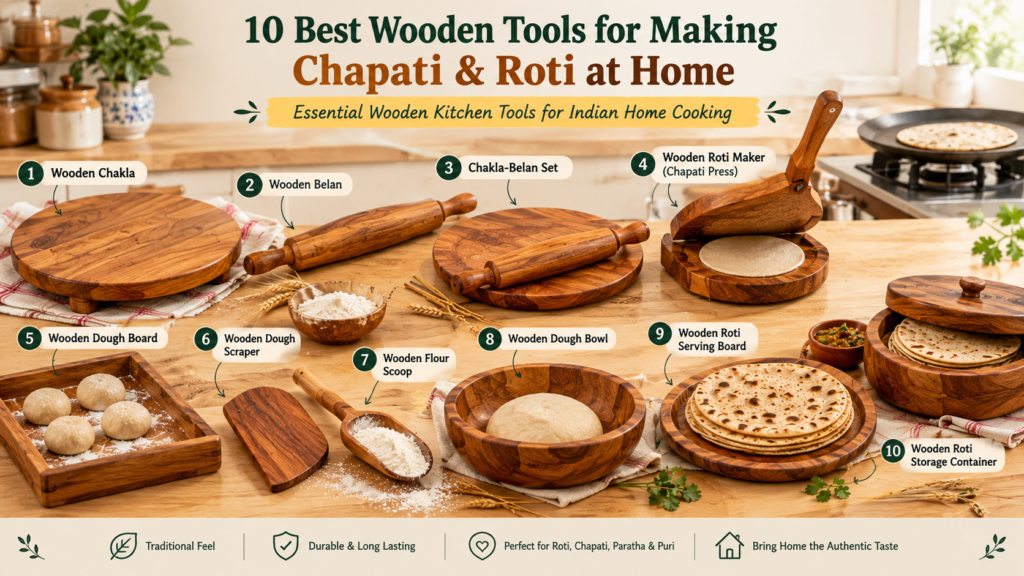
Making fresh chapati and roti at home is a daily tradition in many Indian kitchens. While the recipe itself is simple, having the right tools can make preparing, rolling and serving rotis much easier.
Wooden kitchen tools are popular because they offer a traditional feel and can be comfortable for everyday cooking. A wooden chakla and belan, for example, provide a familiar setup for rolling chapati, roti, paratha and puri. Wooden rolling-board sets are also available in different sizes, including 10-inch models designed specifically for Indian flatbreads.
If you are setting up your kitchen or replacing old utensils, here are 10 useful wooden tools for making chapati and roti at home.
1. Wooden Chakla
A wooden chakla is one of the most important tools for making chapati.
It provides a flat surface where you can roll your dough with a belan. Look for a chakla with a smooth, even surface and enough space to roll the size of roti you normally make.
A stable chakla is particularly helpful for beginners because it allows you to concentrate on your rolling technique without constantly adjusting the board.
2. Wooden Belan
The wooden belan, or rolling pin, works together with the chakla.
A good belan should feel comfortable in your hands and allow you to apply gentle, even pressure. Its weight, length and handle design can affect how easily you roll the dough.
For everyday Indian cooking, choose a belan that is smooth, sturdy and comfortable rather than simply choosing the heaviest option.
3. Wooden Chakla-Belan Set
If you are buying your first roti-making tools, a wooden chakla-belan set can be a convenient option.
Buying the two pieces together ensures that you have both the rolling surface and rolling pin needed for preparing chapati.
Some Indian kitchenware sets are handmade from natural wood and are designed for everyday preparation of rotis, chapatis, puris and other flatbreads.
4. Wooden Roti Maker or Chapati Press
A wooden roti maker is another option for home cooks who want an alternative to traditional rolling.
Manual wooden roti presses use a pressing mechanism rather than electricity. Some models are designed to produce rotis of around 8 inches or larger, depending on the dough and technique used.
A wooden press can be useful for people who find traditional rolling difficult, but it still requires properly prepared, soft dough for good results.
5. Wooden Dough Board
A wooden dough board gives you additional space for preparing and shaping dough.
It can be useful when making several rotis at once because you can portion, flatten and prepare dough without crowding your kitchen counter.
Choose a board with a smooth, food-safe surface and enough working space for your normal batch size.
6. Wooden Dough Scraper
A wooden dough scraper can help divide dough into equal portions before rolling.
Equal-sized dough balls make it easier to produce rotis with a consistent size and thickness.
A scraper can also help keep your work surface organized when preparing a large batch of dough for a family meal.
7. Wooden Flour Scoop
A small wooden flour scoop can be useful for transferring atta from a storage container to your mixing bowl.
It can also help you control the amount of flour you use while preparing and rolling dough.
When choosing one, look for a smooth, well-finished surface without cracks or rough edges.
8. Wooden Dough Bowl
A wooden dough bowl can add a traditional touch to your kitchen while providing a dedicated container for kneading and resting dough.
The bowl should be sturdy enough for regular use and easy to clean according to the manufacturer’s instructions.
Remember that wooden utensils need appropriate care. Avoid prolonged soaking and follow the care recommendations supplied with the product.
9. Wooden Roti Serving Board
A wooden serving board can be useful for placing freshly cooked rotis before serving.
It can also provide a convenient surface for arranging chapatis, parathas or other flatbreads during a family meal.
Choose a food-safe board with a smooth finish and clean it properly after every use.
10. Wooden Roti Storage Container
After cooking your chapatis, keeping them covered can help reduce exposure to air and prevent them from drying out quickly.
A wooden roti storage container can be an attractive addition to a traditional Indian kitchen setup. If you use a wooden container for food storage, make sure it is specifically designed and finished for food contact.
For longer storage, always follow appropriate food-safety and cleaning practices.
How to Choose the Best Wooden Chapati Tools
When buying wooden tools for making roti, look beyond appearance.
Consider these important factors:
- Smooth finish: The surface should be free from splinters and rough edges.
- Stability: Your chakla or board should remain steady while rolling.
- Comfort: Choose a belan that feels natural and easy to control.
- Size: Make sure the chakla and belan suit the size of rotis you normally prepare.
- Durability: Look for sturdy construction suitable for regular kitchen use.
- Easy maintenance: Check the manufacturer’s cleaning and care instructions.
- Food-safe material: Choose products intended for food preparation.
A wooden chapati roller and board set, for example, can provide a stable rolling surface while maintaining a traditional cooking experience. Some Indian products are made from teak wood and marketed specifically for chapati, roti and puri preparation.
Are Wooden Tools Good for Making Roti?
Yes, wooden tools can be useful for making roti and chapati, especially when they are smooth, sturdy and properly maintained.
However, the tool alone does not determine whether your roti will be soft and round. Dough consistency, kneading, resting time, rolling technique and tawa temperature all affect the final result.
For beginners, start with the basics: a good wooden chakla, comfortable belan and suitable tawa. Once you become comfortable with the process, you can add other wooden accessories according to your needs.
Frequently Asked Questions
What wooden tools are needed to make chapati?
The basic setup is a wooden chakla and belan. Optional tools include a wooden dough board, dough scraper, flour scoop and storage or serving accessories.
Is a wooden chakla good for making roti?
Yes. A smooth, stable wooden chakla provides a suitable surface for rolling roti and chapati.
Which wood is best for a roti-making board?
Choose a food-safe, durable wood with a smooth finish. Teak wood is one example used for wooden chapati and roti boards.
Is a wooden roti maker better than a chakla belan?
They offer different methods. A chakla and belan provide direct control while rolling, whereas a manual wooden press uses a pressing mechanism. Your choice depends on comfort, technique and kitchen needs.
Final Thoughts
The best wooden tools for making chapati and roti are the ones that are comfortable, stable, durable and easy to maintain.
For most Indian kitchens, a quality wooden chakla and belan are a practical starting point. You can then add a wooden dough board, scraper, flour scoop or other accessories as your cooking routine requires.
With the right tools, good dough and regular practice, making fresh homemade roti and chapati can become a simpler and more enjoyable part of your everyday cooking.