
Wooden Snack Tray Online in India: What to Look for Before Buying
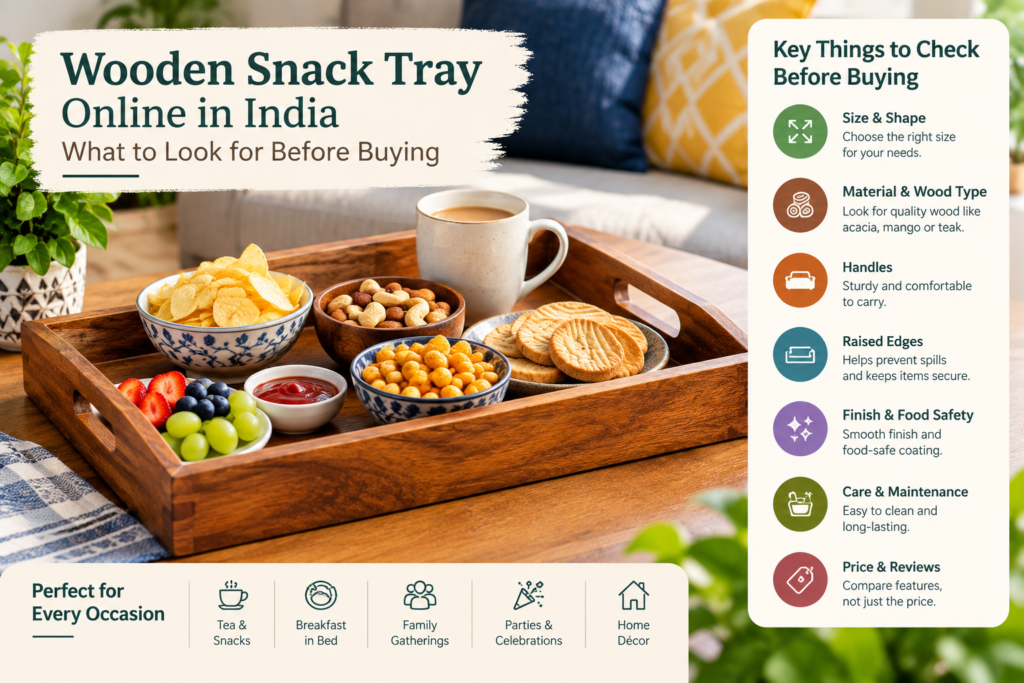
Buying a wooden snack tray online in India sounds simple until you start comparing sizes, shapes, wood types, handles, finishes, and prices. A tray may look beautiful in a product photo, but the real question is whether it will be comfortable to carry, stable when loaded, easy to clean, and suitable for the way you actually serve snacks. Current Indian listings show a wide range of wooden snack trays, including mango wood, solid wood, engineered wood, acacia, and handcrafted options, with https://nlsenterprises.in/ designs ranging from simple everyday trays to decorative serving pieces.
Whether you need a tray for tea and biscuits, dry fruits, namkeen, sandwiches, desserts, or guests, choosing based on your actual use is smarter than choosing only by appearance. This guide explains the key things to check before purchasing a wooden snack serving tray online, so you can make a practical and informed choice.
Why Choose a Wooden Snack Tray?
A wooden tray brings a natural, warm appearance to the table while providing a practical surface for serving food and drinks. It can be used for everyday snacks, evening tea, family gatherings, parties, or even as a decorative tray when it is not being used for serving. Indian homes have a particularly strong use case for serving trays because one tray can move tea, snacks, cups, bowls, and other items from the kitchen to the living room in a single trip.
The bigger advantage is versatility. A well-designed wooden snack tray can also work as a breakfast tray, tea tray, coffee-table organizer, or decorative display. But remember: natural wood is not automatically suitable for direct food contact. If snacks will touch the surface directly, check the product information for an appropriate food-safe finish rather than assuming that every wooden tray is food-safe.
What to Check Before Buying a Wooden Snack Tray Online
When shopping online, product photographs can hide important details. Before placing an order, check the dimensions, material, weight, handle construction, surface finish, edge design, care instructions, and food-contact information. These details tell you much more about whether a tray will work in everyday life than a beautiful lifestyle photograph.
Think about what you will actually serve. If your main purpose is evening tea with two cups and a plate of biscuits, you probably do not need a huge tray. If you regularly serve several guests, a larger rectangular design may be more practical. Current Indian buying guides similarly recommend choosing tray size and shape according to the number of items you normally carry.
Choose the Right Size
Size is one of the most important factors when buying a wooden snack tray online. A tray that is too small becomes crowded quickly, while an oversized tray can become unnecessarily heavy when filled.
For personal tea and snacks, a compact tray can be enough. A medium-sized tray is generally more versatile for a couple of cups, snack bowls, biscuits, and small plates. Larger trays are useful for family gatherings and guests, but you should also consider whether you can comfortably carry the loaded tray.
A recent Indian serving-tray guide suggests that trays around 12–16 inches can work well for two to four cups and a small snack plate, while larger trays are better suited to entertaining and bigger spreads. Treat those dimensions as a practical reference rather than a universal rule.
Pick the Right Shape
The shape of a wooden snack serving tray affects both appearance and usability. Rectangular trays generally provide plenty of usable surface area and work well when you need to arrange several cups, plates, and bowls. Round trays can look softer and more decorative, while oval designs provide a balance between presentation and serving space.
If you frequently carry tea and snacks from one room to another, choose a shape that gives you enough room without making the tray difficult to hold. A beautiful tray that is awkward to carry will probably spend more time in a cupboard than on your dining table.
Check the Wood and Material
Wood type can influence appearance, durability, weight, and maintenance requirements. Indian listings commonly include mango wood, acacia, teak, engineered wood, and other materials. For example, current snack-tray listings include mango wood and solid wood options, while some specialist products use acacia.
Do not fall into the trap of assuming that the most expensive wood is automatically the best choice. The construction, finish, handle attachment, and intended use matter too. A recent buying guide notes that handle attachment and finish quality can be important indicators of long-term usability.
Look for Strong and Comfortable Handles
Handles may seem like a small detail, but they become extremely important when a tray is carrying several cups or bowls. A good handle should feel secure and comfortable rather than thin, loose, or difficult to grip.
If you are buying a wooden tray for snacks and tea, imagine carrying it when it is fully loaded. Would you feel confident lifting it with both hands? Are the handles wide enough for a comfortable grip? Are they firmly attached to the tray?
These simple questions can prevent an otherwise attractive purchase from becoming frustrating.
Raised Edges Can Prevent Spills
A raised rim can be particularly useful for serving tea, coffee, snacks, and drinks. It provides a small barrier around the edge and can help keep plates and cups from sliding off during carrying.
Some current Indian wooden snack trays specifically feature raised edges alongside handles for easier hosting and safer serving.
This does not mean raised edges guarantee that spills will never happen. A loaded tray should still be carried carefully and kept level, particularly when it contains hot drinks.
Check the Finish and Food Safety
If snacks will come into direct contact with the tray, food safety should be part of your buying checklist. Look for clear information about the finish and whether the product is intended for food contact.
Some Indian sellers specifically state that their wooden serving products use food-safe finishes. For example, current product listings include acacia trays described as having a food-safe lacquer, while other sellers specify food-safe oils, waxes, or coatings.
Do not assume that every painted, printed, laminated, or decorative wooden tray is designed for direct food contact. If the listing does not clearly explain its intended use, ask the seller before using it for food.
Compare Price Without Choosing on Price Alone
Online prices for wooden snack trays in India vary considerably depending on size, material, design, craftsmanship, and brand. Current listings show snack serving trays ranging from several hundred rupees to above ₹2,000, while broader serving-tray collections extend into higher price ranges.
The cheapest tray is not necessarily the best value, and the most expensive tray is not automatically the most durable. Compare what you are actually receiving: solid wood or engineered material, dimensions, finish, handle construction, food-contact suitability, and care requirements.
Wooden Snack Tray Care and Maintenance
A wooden tray needs sensible care rather than complicated maintenance. For routine cleaning, wipe the surface with a soft damp cloth and dry it afterward. Avoid soaking the tray in water unless the manufacturer specifically says that it is suitable for this treatment.
Several current Indian product listings recommend hand cleaning, avoiding soaking, and keeping wooden trays dry after cleaning.
Avoid harsh scrubbers and unnecessary exposure to heat or moisture. If you choose a natural wood tray with an oil-based finish, follow the manufacturer’s instructions for periodic maintenance rather than applying random household products.
Wooden Snack Tray Buying Checklist
Before ordering a wooden snack tray online in India, check these points:
- Purpose: Tea, snacks, breakfast, parties, or décor?
- Size: Does it fit the food you normally serve?
- Material: Solid wood, engineered wood, acacia, mango, or another material?
- Handles: Are they sturdy and comfortable?
- Edges: Does the tray have a useful raised rim?
- Finish: Is the surface smooth and suitable for its intended use?
- Food safety: Is direct food contact clearly supported?
- Care: Can you easily follow the recommended cleaning routine?
- Storage: Will it fit comfortably in your kitchen or cabinet?
- Reviews: Do customers mention actual quality, stability, and durability?
Conclusion
Choosing a wooden snack tray online in India should be about more than finding an attractive design. The right tray needs to match your serving habits, available space, preferred material, and maintenance routine. Size, shape, handles, raised edges, finish, and food-contact information can make a much bigger difference to everyday usability than decorative details alone.
If you mainly serve tea and biscuits, a compact or medium tray may be enough. For family gatherings and guests, consider a larger rectangular design with sturdy handles. Most importantly, read the product specifications carefully before buying and do not assume that every wooden tray has the same food-safety or care requirements.
A well-chosen wooden snack tray can serve far beyond snacks—it can become a useful everyday piece for tea, breakfast, coffee, desserts, gifting, and home décor.
FAQs
1. What should I look for when buying a wooden snack tray online in India?
Check the size, material, construction, handles, raised edges, finish, food-contact suitability, care instructions, and customer reviews. Choose according to what you normally serve rather than buying based only on appearance.
2. Which wood is best for a snack serving tray?
There is no single best wood for every buyer. Acacia, mango, teak, and other woods can be used for serving products, but the construction and finish are equally important. Always check whether the specific product is intended for food contact.
3. Can I use a wooden tray for tea and snacks?
Yes. A suitable wooden serving tray can be used for tea, coffee, biscuits, dry fruits, sandwiches, desserts, and other snacks. A raised edge can provide additional convenience when carrying cups and plates.
4. How do I clean a wooden snack tray?
Most wooden trays should be wiped with a soft damp cloth and dried thoroughly. Avoid soaking and harsh scrubbers unless the manufacturer provides different care instructions.
5. Is a wooden snack tray a good choice for Indian homes?
Yes, a versatile wooden tray can be useful for everyday chai, snacks, guests, family gatherings, breakfast, and decorative serving. The important part is choosing a size and design that match your actual household needs.