Wooden Roti Maker vs Traditional Chakla Belan
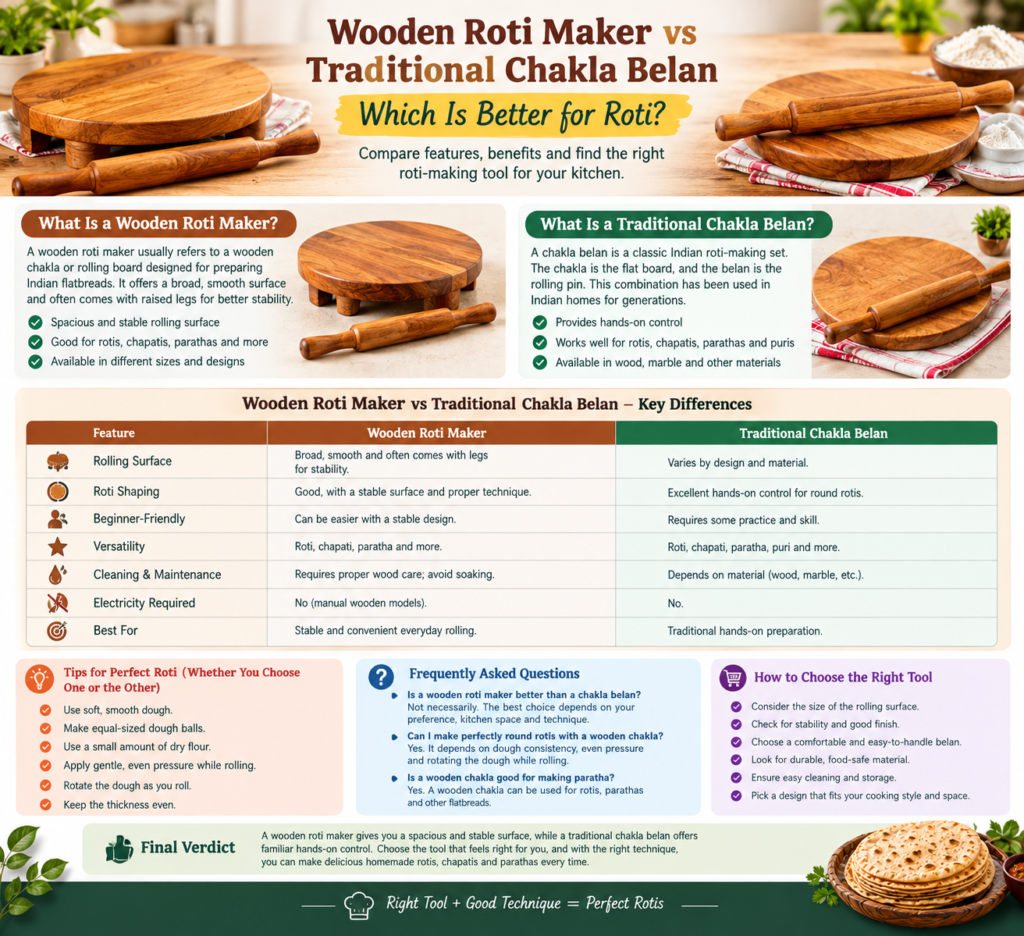
When it comes to making homemade rotis, the right tools can make a noticeable difference. Two popular options in Indian kitchens are the wooden roti maker and the traditional chakla belan.
Both are designed to help prepare rotis, chapatis, parathas and other flatbreads, but they offer a different cooking experience. A traditional chakla and belan give you direct control over the dough, while a wooden roti-making board can provide a stable, spacious surface for rolling.
So, which is better: a wooden roti maker or traditional chakla belan?
The answer depends on your kitchen setup, rolling technique, available space and personal preference. Let’s compare both options.
What Is a Wooden Roti Maker?
A wooden roti maker generally refers to a wooden chakla or rolling board designed for preparing Indian flatbreads. Many traditional wooden models have a broad, smooth surface, and some include raised legs for stability.
The smooth surface provides space for rolling dough with a wooden belan. Some models are also marketed for making chapati, paratha, puri and other dough-based foods.
Because wooden roti makers come in different shapes and designs, it is worth checking the surface size, stability and finish before buying one.
What Is a Traditional Chakla Belan?
A chakla belan is one of the most familiar traditional roti-making tools in Indian homes.
The chakla is the flat board, while the belan is the rolling pin. You place the dough on the chakla and use the belan to flatten and shape it.
Traditional chakla-belans are available in materials such as wood, marble and other kitchen-safe materials. Wooden sets are commonly sold in India and are used for roti, chapati, paratha and puri preparation.
Wooden Roti Maker vs Chakla Belan: Key Differences
Although the terms can sometimes overlap, the main difference is usually in the design and setup rather than the basic purpose.
1. Ease of Rolling
A sturdy wooden rolling board can provide a stable surface for beginners. A broad, smooth surface gives you enough room to move the belan and rotate the dough.
With a traditional chakla belan, your technique plays a bigger role. You need to coordinate the pressure of the belan with the rotation of the dough.
For beginners, stability can make the rolling process feel easier, while experienced cooks may prefer the control of a familiar chakla-belan setup.
2. Control Over Roti Shape
If you want to learn how to make perfectly round rotis, the traditional chakla and belan offer excellent control.
You can adjust pressure, change the rolling direction and rotate the dough as you work.
However, a wooden roti-making board can provide the same basic rolling surface when paired with a good belan. The final shape depends largely on dough consistency and rolling technique rather than the board alone.
3. Stability
Stability is important when rolling dough.
Some wooden roti boards are designed with raised legs or other features that help keep them in place on the kitchen counter.
A traditional chakla may also remain stable if it has a suitable base or is placed correctly on the counter.
If your board moves while rolling, consider a non-slip mat or a more stable design.
4. Versatility
Both options can be useful beyond everyday rotis.
A wooden chakla can be used for chapati, paratha and puri, and some products are also promoted for rolling pizza dough, pastry and cookie dough.
The traditional chakla belan is similarly versatile for many Indian flatbreads.
Therefore, versatility is generally less about the name of the tool and more about its size, surface and how comfortably you can use it.
5. Cleaning and Maintenance
Wooden kitchen tools need appropriate care.
After using a wooden chakla or roti board, remove excess flour and wipe the surface clean. Avoid leaving wooden items soaking in water for long periods because excess moisture can affect the wood over time.
Always follow the manufacturer’s care instructions, especially if the product has a special finish.
Which Is Better for Beginners?
For someone learning to make roti for the first time, a stable wooden rolling board with a comfortable belan can be a practical choice.
However, buying a particular type of board will not automatically produce round or soft rotis.
The most important skills are:
- Preparing soft, smooth dough
- Making evenly sized dough balls
- Using a suitable amount of dry flour
- Applying gentle pressure
- Rotating the dough while rolling
- Keeping the thickness even
With regular practice, these techniques become much easier.
Which Is Better for Traditional Indian Cooking?
If you enjoy traditional Indian cooking, a chakla and belan remain a simple and versatile combination.
They do not require electricity, are easy to store and can be used whenever you need to roll dough.
A wooden chakla can also be considered part of this traditional setup, so the comparison is not always between completely different tools. In many cases, a wooden roti maker is essentially a specially designed rolling board used with a belan.
Wooden Roti Maker vs Traditional Chakla Belan: Quick Comparison
| Feature | Wooden Roti Maker | Traditional Chakla Belan |
|---|---|---|
| Rolling surface | Usually broad and smooth | Varies by design and material |
| Roti shaping | Depends on rolling technique | Excellent hands-on control |
| Beginner-friendly | Can be easy with a stable design | Requires some practice |
| Versatility | Roti, chapati, paratha and more | Roti, chapati, paratha, puri and more |
| Maintenance | Requires proper wood care | Depends on material |
| Electricity required | No, for manual wooden models | No |
| Best for | Stable everyday rolling | Traditional hands-on preparation |
How to Choose the Right Roti-Making Tool
Before buying, consider the size of the rolling surface, stability, material, weight, ease of cleaning and storage space.
If you have limited kitchen space, choose a compact model that is easy to store. If you prepare rotis frequently, a sturdy and comfortable setup may be more important.
Also consider the belan. A rolling pin that feels comfortable in your hands can make everyday roti preparation easier.
Frequently Asked Questions
Is a wooden roti maker better than a chakla belan?
A wooden roti maker and traditional chakla belan can both work well for rolling roti. The better option depends on your preferred design, stability, size and rolling technique.
Can I make perfectly round rotis with a wooden chakla?
Yes. A wooden chakla provides a suitable surface for rolling dough. Making a round roti depends mainly on dough consistency, even pressure and rotating the dough while rolling.
Is a wooden chakla good for making paratha?
Yes. A suitably sized wooden chakla can be used for rolling parathas as well as rotis and chapatis.
What should I look for when buying a wooden roti maker?
Look for a smooth rolling surface, good stability, suitable size, comfortable handling and easy maintenance. Check the product’s material and care instructions before purchasing.
Final Verdict
There is no single tool that is perfect for every kitchen. A wooden roti maker can offer a spacious and stable rolling surface, while a traditional chakla belan provides the familiar hands-on method used for making Indian flatbreads.
For most home cooks, the important factors are stability, comfort, surface quality and rolling technique.
Choose a tool that feels natural in your hands, practice your dough and rolling technique, and you can make delicious homemade rotis, chapatis and parathas with either setup.