Wooden Roti Maker vs Traditional Chakla Belan
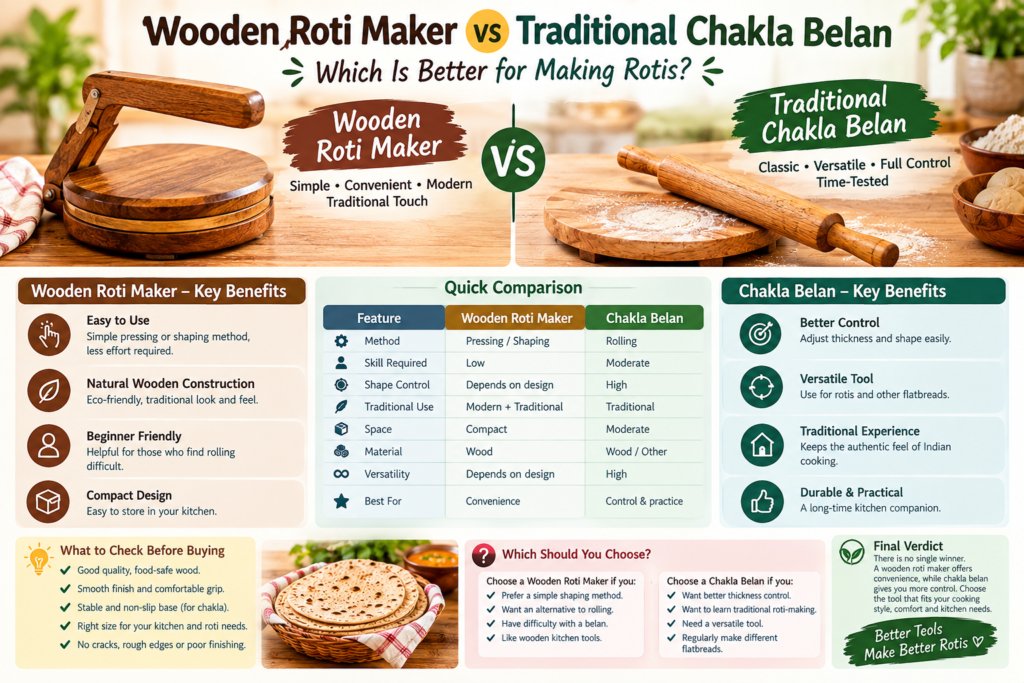
Making homemade rotis is an everyday cooking routine in many Indian households. While the basic ingredients are simple, the right kitchen tool can make rolling and shaping dough easier. Two options commonly considered are ahttps://nlsenterprises.in/shop/ wooden roti maker and the traditional chakla belan.
But which one should you choose?
The answer depends on your cooking habits, available kitchen space, comfort, and how much control you want while shaping your rotis. In this guide, we compare a wooden roti maker and traditional chakla belan to help beginners and regular home cooks understand their differences.
What Is a Wooden Roti Maker?
The term wooden roti maker can refer to a wooden tool or manual roti-making device designed to help flatten or shape dough. Wooden versions are often valued for their natural material, simple construction, and traditional kitchen appearance.
Depending on the design, a wooden roti maker may be used for pressing or shaping dough. Some products are designed as boards, while others may have a press-style mechanism.
Before buying one, check the exact design, dimensions, wood type, surface finish, and intended use.
What Is a Traditional Chakla Belan?
A chakla belan consists of two basic tools: a chakla, which is the rolling board, and a belan, which is the rolling pin.
The dough is placed on the chakla and rolled with the belan until it reaches the desired size and thickness.
Chakla belan has been a traditional choice for making Indian flatbreads for generations. It gives the cook direct control over the shape, thickness, and size of the roti.
Wooden Roti Maker vs Chakla Belan: Key Differences
The main difference is the method of shaping the dough.
A wooden roti maker may simplify the pressing or flattening process, depending on its design. A chakla belan requires a rolling motion and more manual control.
Here is a simple comparison:
| Feature | Wooden Roti Maker | Traditional Chakla Belan |
|---|---|---|
| Operation | Pressing or shaping, depending on design | Rolling manually |
| Skill required | Generally simple for basic shaping | Requires some practice |
| Shape control | Depends on the design | High control |
| Traditional use | Modern/traditional hybrid | Traditional |
| Space | Depends on model | Usually compact |
| Material | Often wood | Usually wood or other materials |
| Versatility | Depends on design | Can be used for different dough shapes |
| Learning curve | Usually easier for basic operation | Requires rolling practice |
Benefits of a Wooden Roti Maker
A wooden roti maker can be useful for people who want a straightforward way to flatten dough.
1. Simple to Use
Depending on the design, a wooden roti maker can reduce the effort required to flatten dough. This can be helpful for beginners who are still learning traditional rolling techniques.
2. Natural Wooden Construction
Wooden kitchen products are popular because of their natural appearance and traditional feel. A well-finished food-contact wooden product can also look attractive in a kitchen.
3. Useful for Beginners
If you find using a rolling pin difficult, a suitable wooden roti maker may provide an alternative method for preparing dough.
4. Easy to Store
Many wooden roti-making tools have a relatively simple design and can be stored with other kitchen utensils.
However, always follow the manufacturer’s cleaning and care instructions because wooden products require appropriate maintenance.
Benefits of Traditional Chakla Belan
The chakla belan remains popular because it provides excellent control over the rolling process.
1. Better Control Over Thickness
With a belan, you can adjust your pressure while rolling. This allows you to make thinner or thicker rotis according to your preference.
2. Easy to Adjust Shape
If your dough becomes slightly oval or uneven, you can rotate it and correct the shape while rolling.
3. Versatile Kitchen Tool
A chakla and belan can be used for more than just rotis. Depending on the dough and recipe, they can also help prepare other Indian flatbreads.
4. Traditional Cooking Experience
For people who enjoy traditional Indian cooking, using a chakla belan provides a familiar hands-on experience.
Which Is Better for Making Rotis?
There is no single answer for every kitchen.
A wooden roti maker may suit someone who wants a simpler pressing or shaping method, while a traditional chakla belan may be preferable for someone who wants direct control over the thickness and shape of the roti.
If you are learning traditional roti-making techniques, chakla belan is particularly useful because it teaches you how dough responds to pressure and rotation.
If convenience is your primary consideration, a suitable roti maker may be worth considering.
Wooden Roti Maker vs Chakla Belan: Which Should Beginners Choose?
Beginners should consider how they actually want to make rotis rather than choosing a tool simply because it looks easier.
Choose a wooden roti maker if you:
- Prefer a simple shaping method.
- Want to experiment with an alternative to rolling.
- Have difficulty controlling a traditional belan.
- Prefer the appearance of wooden kitchen tools.
Choose a chakla belan if you:
- Want better control over roti thickness.
- Want to learn traditional roti-making.
- Need a versatile rolling tool.
- Want to adjust the shape manually.
- Regularly prepare different types of Indian flatbreads.
What Should You Check Before Buying?
Whether you choose a wooden roti maker or chakla belan, quality matters.
Check the following before purchasing:
- Wood quality: Look for a durable, food-contact-suitable material.
- Smooth finish: The surface should be smooth and comfortable to use.
- Stability: A chakla should not slide easily while rolling.
- Size: Choose a size appropriate for your kitchen and roti size.
- Construction: Avoid products with visible cracks, rough edges, or poor finishing.
- Maintenance: Check whether the product requires special cleaning or care.
Avoid choosing solely based on price. A poorly finished kitchen tool can be uncomfortable to use and may not last as long.
Frequently Asked Questions
Is a wooden roti maker better than a chakla belan?
It depends on your cooking preferences. A wooden roti maker may offer a simpler shaping method, while chakla belan provides more manual control over the roti’s size and thickness.
Is chakla belan good for beginners?
Yes. Although rolling a perfectly round roti takes practice, chakla belan gives beginners direct control and helps develop traditional roti-making skills.
Can a wooden roti maker make perfectly round rotis?
The result depends on the design of the product, dough consistency, and how it is used. Always check the product’s intended function before purchasing.
Which is easier to clean?
Cleaning requirements depend on the specific material and construction. Wooden tools generally need to be cleaned according to the manufacturer’s care instructions and should be kept properly dry.
What is the best roti-making tool for an Indian kitchen?
There is no universal choice. Chakla belan is a versatile traditional option, while a wooden roti maker may appeal to people looking for an alternative shaping method.
Final Verdict
The choice between a wooden roti maker and traditional chakla belan ultimately comes down to your preferred cooking method.
A wooden roti maker can provide a convenient alternative for shaping dough, while a chakla belan gives you greater hands-on control and a traditional roti-making experience.
For anyone learning the fundamentals of homemade rotis, practicing with a chakla and belan can be especially useful. Once you understand dough consistency, pressure, rotation, and thickness, you can decide whether another roti-making tool fits your routine.
The best kitchen tool is ultimately the one that feels comfortable, suits your cooking style, and helps you prepare rotis consistently.