
Traditional Roti Making Tools: 10 Essential Kitchen Tools for Perfect Rotis
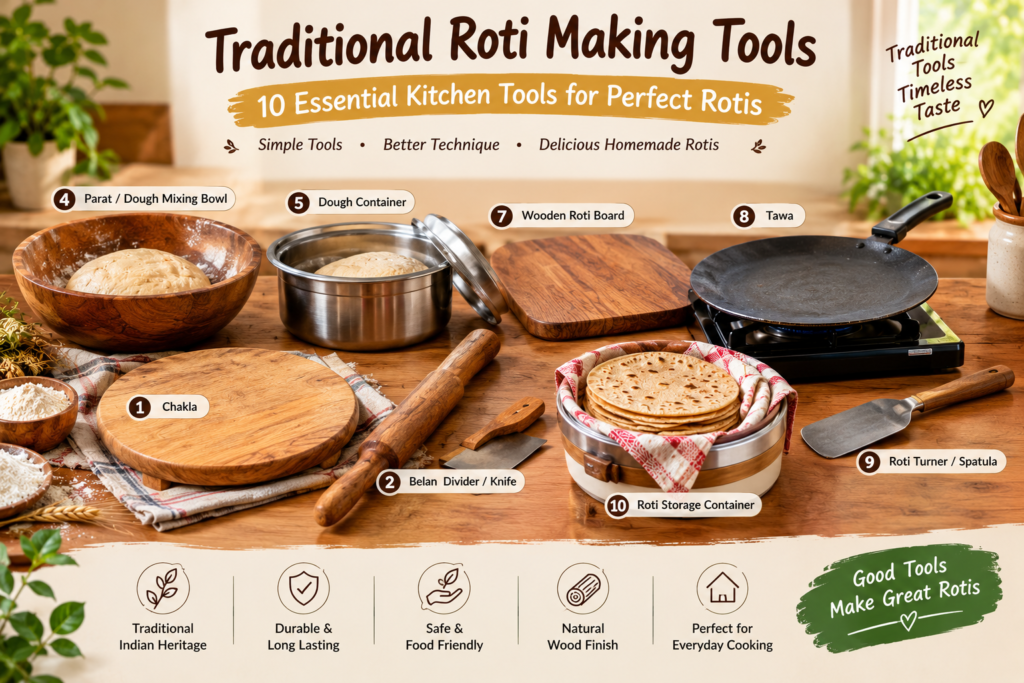
Roti is one of the most popular everyday foods in Indian homes. Although the ingredients are simple, making soft and evenly cooked rotis becomes much easier when you use the right traditional roti making tools.
From the classic chakla and belan to the humble tawa, these kitchen essentials have been used for generations. They are practical, reusable, and designed around the simple process of preparing homemade Indian flatbreads.
If you are setting up your kitchen or want to https://nlsenterprises.in/ improve your roti-making routine, here are 10 traditional roti making tools worth knowing about.
1. Wooden Chakla
A chakla is a traditional round rolling board used as a stable surface for rolling roti dough.
A wooden chakla is especially popular in Indian kitchens because it is lightweight and easy to handle. Its smooth surface provides a convenient area for shaping dough.
When choosing one, look for a sturdy construction, smooth finish, and sufficient rolling space.
2. Wooden Belan
The belan, or rolling pin, is used to flatten and shape dough into a roti.
Traditional wooden belans are available in different shapes and sizes. For everyday use, choose one that feels comfortable in your hands and is easy to rotate while rolling.
A well-balanced belan can give beginners better control over pressure and thickness.
3. Chakla Belan Set
A chakla belan set combines the two most important traditional rolling tools.
Buying them as a set can be convenient because the chakla provides the working surface while the belan shapes the dough. A wooden set can also add a traditional look to your kitchen.
For beginners, this is often the easiest place to start when building a basic roti-making setup.
4. Parat or Dough Mixing Bowl
Before rolling a roti, you need to prepare the dough properly.
A parat or mixing bowl provides enough space to combine wheat flour and water and knead the dough. Traditional Indian kitchens commonly use wide vessels for dough preparation.
The container itself does not determine the quality of your roti, but having enough space makes kneading more comfortable.
5. Dough Container
After kneading, the dough should generally be kept covered so that its surface does not dry out.
A dough container helps keep prepared dough clean and protected until you are ready to make rotis.
Choose a container that is easy to clean and large enough to hold the dough without crowding it.
6. Dough Divider or Knife
A simple dough divider or kitchen knife can be used to separate the prepared dough into smaller portions.
Dividing the dough evenly helps create rotis of relatively consistent size. You do not necessarily need a specialized gadget—a basic kitchen tool can do the job effectively.
The key is to keep the portions similar so they cook at a similar rate.
7. Wooden Roti Board
Some kitchens use a larger wooden rolling board instead of a traditional round chakla.
A wooden roti board provides additional working space and can be useful when preparing larger quantities of dough.
Choose a board with a smooth surface and stable construction. It should sit firmly on your kitchen counter while you roll.
8. Tawa
The tawa is essential for cooking the rolled roti.
Traditional Indian cooking commonly uses flat tawas made from materials such as cast iron or other metals. A good tawa should heat evenly and provide enough surface area for your roti.
Preheating the tawa properly is important. A poorly heated cooking surface can affect the texture and cooking time.
9. Roti Turner or Spatula
A roti turner helps you flip the roti during cooking.
Choose a spatula that provides a comfortable grip and an edge suitable for lifting flatbreads. A lightweight turner can be easier for beginners to control.
Avoid pressing the roti unnecessarily while cooking, as excessive handling can affect its texture.
10. Roti Storage Container
Once your rotis are cooked, keeping them covered can help them retain warmth and moisture.
A roti storage container, casserole, or insulated food container is useful when preparing several rotis for a family meal.
Place the rotis inside soon after cooking rather than leaving them exposed to air for an extended period.
Why Choose Traditional Roti Making Tools?
Traditional tools remain popular because they are simple and practical. A chakla and belan do not require electricity, complicated controls, or special settings.
Wooden roti-making tools can also be lightweight and easy to incorporate into everyday cooking. With proper care, quality wooden kitchen tools can remain useful for a long time.
However, do not assume that traditional automatically means better. Construction, finish, size, comfort, and maintenance matter more than the label “traditional.”
How to Choose the Right Roti Making Tools
Before buying traditional roti tools, consider your daily cooking needs.
Look for:
- A smooth, food-safe surface
- Comfortable handling
- Strong and stable construction
- Suitable chakla size
- Well-balanced belan
- Easy-to-clean materials
- Practical design for everyday use
If you are buying wooden tools, inspect the finish carefully. Avoid products with rough surfaces, splinters, cracks, or poor construction.
Traditional vs Modern Roti-Making Tools
Modern appliances such as electric roti makers can provide convenience, but traditional tools offer more direct control.
With a chakla and belan, you control the thickness, shape, and rolling pressure yourself. This can be especially useful when you want to learn traditional roti-making techniques.
A modern appliance may be convenient for some households, while a traditional wooden chakla-bel an set can be a better choice for cooks who enjoy hands-on preparation.
Tips for Better Homemade Rotis
Having good tools is only part of the process. For better results:
- Use fresh wheat flour.
- Prepare soft, smooth dough.
- Knead the dough properly.
- Allow the dough to rest before rolling.
- Make evenly sized dough balls.
- Roll with gentle, consistent pressure.
- Preheat the tawa properly.
- Avoid overcooking the roti.
- Keep cooked rotis covered.
Practice is what turns the tools into useful skills.
Final Thoughts
Traditional roti making tools bring simplicity and familiarity to everyday Indian cooking. A wooden chakla, belan, tawa, dough bowl, and roti turner form the foundation of a traditional home roti-making setup.
You do not need a kitchen full of gadgets. Start with a few well-made essentials and focus on using them correctly.
If you are looking to upgrade your kitchen, explore quality wooden chakla-bel an sets and traditional wooden roti-making products designed for everyday home cooking.
Choose the right tools, practice the technique, and make homemade rotis with confidence.