
25 Small Item Storage Ideas to Organize Every Room
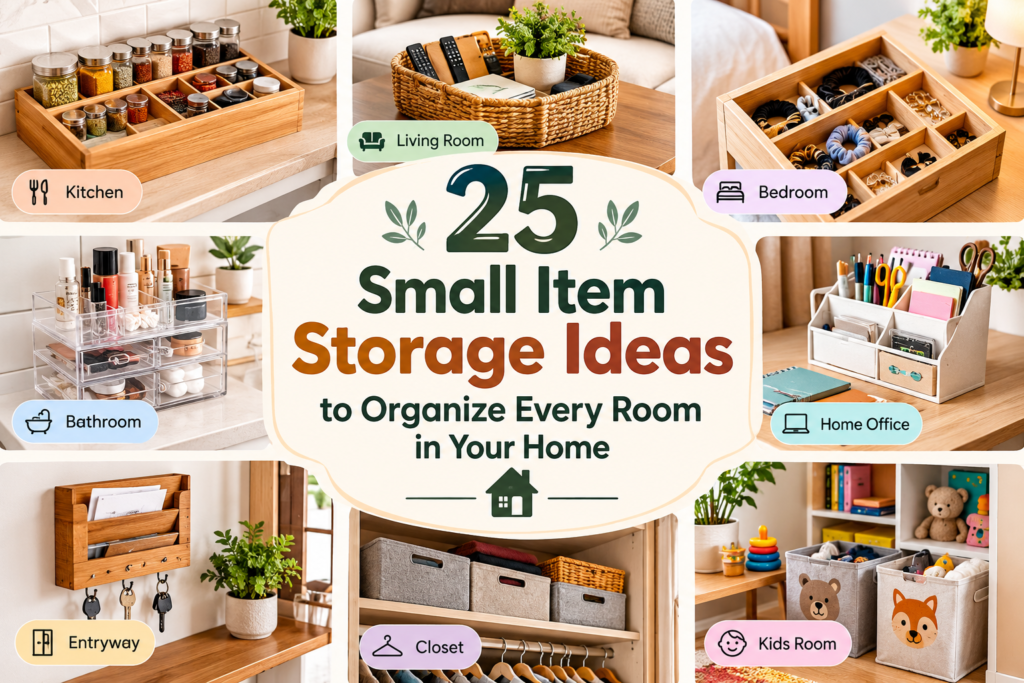
Small item storage ideas can make a surprisingly big difference when your home feels cluttered. Keys, cables, cosmetics, stationery, toys, craft supplies, spices, jewelry, and other tiny essentials seem harmless individually, yet they can quickly turn drawers, shelves, countertops, and tables into messy catch-all zones.
The good news? You don’t https://nlsenterprises.in/ necessarily need a bigger home or expensive furniture. Smart use of drawers, doors, walls, corners, cabinets, and under-bed space can create useful storage without making your rooms feel crowded. Recent home-organization advice similarly highlights overlooked areas such as under beds, the backs of doors, empty walls, cabinet interiors, and unused corners as practical storage opportunities.
If you’re looking for small item storage ideas for small spaces, the following solutions can help you create a home where everything has a place—and, more importantly, where you can actually find it later.
Discover smart small room storage ideas to make the most of your available space while keeping your room neat and organized. Use multifunctional furniture, wall-mounted shelves, under-bed storage boxes, and stylish organizers to reduce clutter. These simple storage solutions help create a comfortable, spacious, and beautiful room.
Discover practical storage ideas for small spaces to keep your home organized, clutter-free, and stylish. Make the most of every corner with multifunctional furniture, wall-mounted shelves, under-bed storage, and compact organizers. These smart storage solutions help maximize space while creating a comfortable and beautiful living environment.
1. Use Drawer Dividers for Tiny Essentials
Drawers are excellent for small items, but without compartments they quickly become cluttered. Add adjustable drawer dividers to separate batteries, cables, stationery, tools, makeup, hair accessories, or kitchen gadgets. Use smaller sections for frequently used items and label each section if several family members share the drawer.
This simple change turns one large space into several useful zones. Instead of digging through everything to find a charging cable or pair of scissors, you can see exactly where each item belongs.
2. Try Small Stackable Storage Bins
Stackable bins make vertical use of shelves and cabinets. Choose transparent or open-front containers when you want to see the contents quickly. They’re particularly useful for craft supplies, toys, office accessories, cleaning products, and bathroom essentials.
For a small apartment, stacking can be much more efficient than spreading containers across the floor or shelves.
3. Turn the Back of a Door Into Storage
Don’t overlook the back of your doors. A hanging organizer can hold accessories, cleaning supplies, scarves, small toys, toiletries, or other lightweight items.
This is especially useful when floor and cabinet space are limited. Current small-home organization recommendations also identify door-back storage as an easy way to use otherwise wasted space.
4. Add Hooks Inside Cabinets
Small hooks can transform the inside of a cabinet door into a mini storage station. Use them for measuring spoons, brushes, reusable bags, lightweight kitchen tools, or accessories.
Before installing anything, check the door’s clearance so the added items don’t prevent it from closing properly.
5. Use a Small Tray for Everyday Items
A tray creates a designated home for things that tend to wander. Place one near your entrance for keys, sunglasses, wallets, and small accessories, or use one on a bedroom table for watches and everyday jewelry.
The trick is to keep the tray limited to items you regularly use. Otherwise, it simply becomes another clutter collection point.
6. Organize Jewelry in Compartments
Jewelry needs separation because chains, earrings, bracelets, and rings can easily become tangled. A compartmented jewelry box, shallow drawer organizer, wall-mounted rack, or small divided tray can keep pieces visible and protected.
You can even repurpose a small frame, box, or tray into a decorative jewelry organizer rather than purchasing specialized furniture.
7. Create a Dedicated Charging Station
Loose charging cables are among the easiest small items to lose. Create one charging zone using a small box, cable clips, or a divided organizer.
Label cables if several look similar. Keeping chargers together also makes it easier to notice when something is missing or damaged.
8. Make Use of Wall Shelves
When floor space is limited, look upward. Floating shelves and narrow wall shelves can hold small baskets, books, decorative pieces, plants, and frequently used accessories without taking valuable floor space.
For renters, removable or low-impact solutions may be preferable where permanent installation isn’t practical.
9. Store Small Items Under the Bed
Under-bed storage is useful for items you don’t need every day. Use shallow containers or zippered storage bags for seasonal accessories, spare linens, travel items, or less frequently used belongings.
Keep containers closed when possible to protect contents from dust. Under-bed storage is also specifically recommended as a practical solution for compact homes.
10. Use Small Baskets on Open Shelves
Open baskets can make shelves look organized while keeping small miscellaneous items contained. Try them in the living room for remotes and cables, in a bedroom for accessories, or in a bathroom for personal-care products.
Choose one basket category rather than putting completely unrelated items together.
11. Install a Pegboard for Flexible Storage
A pegboard is useful when your storage needs change frequently. Add hooks, small shelves, and baskets to create customized zones for craft supplies, tools, stationery, or hobby equipment.
Because accessories can be moved around, you don’t have to redesign the entire storage system when your needs change.
12. Keep Small Kitchen Items in Clear Containers
Small kitchen ingredients and accessories can easily disappear inside deep cabinets. Clear containers or labeled jars can help organize items such as spices, baking decorations, tea bags, and small pantry supplies.
On countertops, keep only regularly used items visible. Recent organizing advice also recommends reducing countertop clutter by grouping everyday essentials and moving rarely used items into appropriate storage.
13. Create a Bathroom Drawer System
Bathroom drawers often contain cotton swabs, hair ties, cosmetics, grooming tools, and skincare products. Small removable containers can separate these categories and prevent products from becoming mixed together.
Keep everyday products toward the front and occasional-use items farther back.
14. Use Magnetic Storage Where Appropriate
Magnetic strips or magnetic containers can be useful for certain lightweight metal items. In a kitchen, for example, they can help organize selected tools while freeing drawer space.
Always choose a secure system appropriate for the item’s weight and keep potentially hazardous objects safely out of children’s reach.
15. Give Your Entryway a Small-Item Station
Your entrance is where small items tend to accumulate. Create a simple entryway organization station with hooks, a small shelf, basket, or tray for keys, wallets, sunglasses, and other everyday essentials.
When everything has a defined landing spot, you’re less likely to leave belongings on tables and countertops throughout the house.
16. Use Corner Shelving
Corners often become dead space. A slim corner shelf can turn an unused area into storage for small plants, books, baskets, toiletries, or decorative objects.
For compact rooms, vertical corner storage can be particularly useful because it increases storage without requiring much additional floor area.
17. Organize Kids’ Small Toys by Category
Instead of putting every toy into one large box, divide small toys into categories such as building pieces, dolls, cars, puzzles, and art supplies.
Small labeled bins make cleanup easier because children can see where each category belongs. Choose containers that are easy for children to handle safely.
18. Create a Craft Supply Organizer
Craft materials are often small, numerous, and easy to mix together. Use transparent boxes, divided containers, drawer organizers, or labeled jars for beads, buttons, ribbons, thread, stickers, and similar supplies.
The goal isn’t simply to hide everything. Good small-item storage should make the item easy to find and easy to put away.
19. Repurpose Old Boxes and Containers
Before buying new storage products, look around your home. Sturdy gift boxes, small cartons, jars, and unused containers can often become useful organizers.
Repurposing also gives you an inexpensive way to test a storage system before investing in purpose-built organizers.
20. Add a Bedside Pocket Organizer
A bedside pocket can hold your phone, glasses, remote control, notebook, charging cable, or reading accessories. It is particularly useful when your bedside table is small or already crowded.
A repurposed fabric item can also become a practical pocket-style organizer for lightweight belongings.
21. Use Clear Containers for Visibility
Clear storage has one major advantage: you can see what you own. This reduces the need to open multiple boxes when searching for one small item.
Use clear containers for hobby supplies, seasonal accessories, bathroom products, and miscellaneous household items.
22. Label Everything That Needs a Home
Labels are especially useful when you have multiple similar containers. Simple labels such as “Cables,” “Batteries,” “Crafts,” “Hair Accessories,” or “Tools” can make your storage system easier to maintain.
Don’t over-label every tiny object. Focus on categories that are frequently searched for or shared by several people.
23. Use Furniture With Hidden Storage
When choosing furniture for a compact home, look for pieces that perform more than one job. Ottomans with storage, beds with drawers, benches with compartments, and storage stools can hide small items without adding another separate cabinet.
This approach is particularly helpful when every square foot matters.
24. Make One “Miscellaneous” Box—But Keep It Controlled
Sometimes you genuinely need a miscellaneous box. The important part is keeping it small and reviewing it regularly.
If the box becomes impossible to search, divide its contents into categories. Otherwise, your “miscellaneous” storage simply becomes a hiding place for clutter.
25. Give Every Small Item a Permanent Home
The most effective small item storage idea isn’t necessarily a particular box or organizer. It’s creating a consistent home for every category of item.
Ask yourself: Where should this item go when I’m finished using it? If the answer is clear, tidying becomes much easier. For example, keys go to the entryway tray, cables return to the charging station, jewelry goes into its organizer, and craft supplies return to labeled containers.
That simple habit can make a bigger difference than buying dozens of storage products.
How to Choose the Best Small Item Storage Ideas for Your Home
Start by identifying where small items create the most clutter. Is it the kitchen counter, bedroom drawer, bathroom cabinet, entryway, home office, or children’s play area?
Then use the three-zone approach: keep frequently used items within easy reach, occasionally used items in accessible cabinets or shelves, and rarely used belongings in higher, under-bed, or other less convenient storage.
Most importantly, don’t buy organizers before measuring your available space. A beautiful storage box that doesn’t fit your drawer is still clutter. Measure first, categorize second, and buy—or repurpose—storage solutions third.
Final Thoughts
The best small item storage ideas don’t require a huge budget or a complete home makeover. They work because they give everyday objects a clear place to live. By using drawer dividers, baskets, labels, wall shelves, door organizers, under-bed containers, and multipurpose furniture, you can turn overlooked spaces into practical storage zones.
Whether you live in a large family home, a compact apartment, or a small home in India, the principle is the same: use the space you already have more intelligently. Start with one cluttered area today, give every category a home, and build your organization system gradually.
FAQs About Small Item Storage Ideas
1. What is the best way to store small items?
The best method depends on the item and how often you use it. Drawers with dividers, labeled containers, baskets, wall shelves, and small trays are versatile options. Keep frequently used items easy to reach and less-used belongings in closed storage.
2. How can I organize small items in a small space?
Use vertical and overlooked areas such as walls, cabinet doors, corners, under-bed space, and the backs of doors. Stackable containers can also increase usable storage without requiring additional floor space.
3. How do I organize small items without buying expensive organizers?
Repurpose sturdy boxes, jars, containers, trays, and unused household items. Before buying anything, sort your belongings and measure the space you already have.
4. How do I stop drawers from becoming messy?
Use adjustable dividers or small containers to create separate sections. Group similar items together and avoid putting unrelated objects into the same compartment.
5. What small item storage works best for an apartment?
For apartments, prioritize vertical storage, under-bed storage, door organizers, floating shelves, compact baskets, and multipurpose furniture. These solutions add organization while using relatively little floor space.