
Roti Maker vs Rolling Board: 7 Key Differences to Know Before Buying
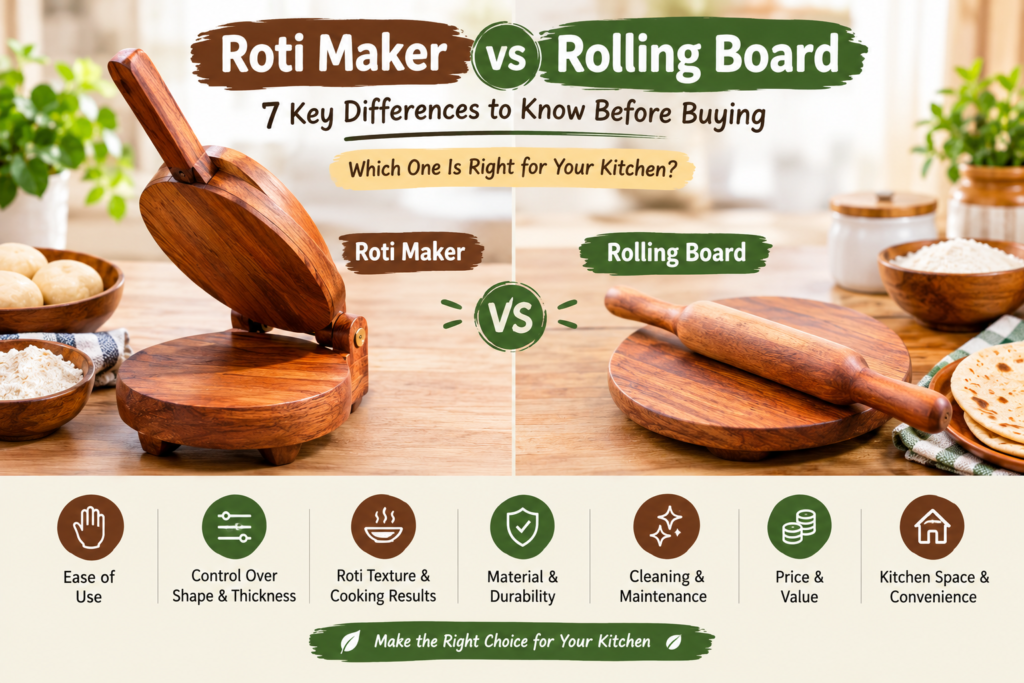
Choosing between a roti maker and a rolling board can make a difference in your daily cooking routine. Both tools help prepare rotis at home, but they work differently and offer different levels of convenience and control. The right choice depends on your cooking habits, kitchen space, budget, and preferred method of preparing Indian flatbreads.
If you are planning to buy a wooden rolling board or a roti-making tool online in India, this guide will help you compare both options. Discover seven important differences, learn what to check before buying, and choose the right kitchen tool for your home.
What Is a Roti Maker?
A roti maker is a kitchen tool designed to flatten https://nlsenterprises.in/ dough into a thin, round shape. The term can refer to a manual pressing tool or an electric appliance that presses and may cook the dough, depending on the model.
Manual wooden roti makers use a pressing mechanism to flatten dough. Electric roti makers typically use heated plates and require specific operating instructions.
Before purchasing, check the product type carefully because a wooden dough press and an electric roti maker do not offer the same features.
What Is a Rolling Board?
A rolling board, commonly called a chakla in India, is a flat surface used with a rolling pin, known as a belan. You place a dough ball on the board and roll it into a thin circle.
Wooden rolling boards are popular in Indian kitchens because they provide a traditional surface for preparing rotis, chapatis, and other flatbreads.
A wooden chakla belan set is a practical option for households that prefer traditional cooking methods and want manual control over the size and thickness of their rotis.
7 Key Differences Between a Roti Maker and a Rolling Board
1. Ease of Use
A roti maker may be easier for people who prefer a pressing method. Manual models require you to position the dough and apply pressure, while electric models have different operating requirements.
A rolling board requires you to roll the dough with a belan. Beginners may need practice to achieve evenly shaped rotis, but the technique becomes easier with experience.
Which is better? Choose a roti maker if its pressing or operating method suits you. A rolling board is ideal if you are comfortable learning traditional rolling techniques.
2. Control Over Shape and Thickness
A rolling board allows you to adjust the thickness and diameter of each roti by changing your rolling pressure and technique. This flexibility is useful when preparing different types of flatbreads.
A manual roti maker can flatten dough quickly, but the result depends on its design, the amount of dough, and the pressure applied. Electric models may offer less manual control over the final shape.
For consistent results with either tool, prepare smooth dough, use similar-sized dough balls, and avoid applying excessive dry flour.
3. Roti Texture and Cooking Results
The softness of a roti depends on several factors, including dough consistency, resting time, thickness, and cooking temperature.
A rolling board gives you direct control over how thinly the dough is rolled. This can be helpful when preparing traditional chapatis or parathas.
A pressing-style roti maker can flatten dough, but it does not automatically guarantee softer or rounder rotis. Electric models may also produce different results depending on their temperature and operating instructions.
Buying tip: Focus on the tool that helps you maintain a consistent technique rather than assuming one product guarantees better rotis.
4. Material and Durability
Wooden rolling boards and rolling pins offer a natural appearance and a traditional feel. Their durability depends on the wood quality, construction, finish, and care.
When buying a wooden chakla belan set, check for a smooth surface, sturdy construction, and the absence of cracks or splinters.
A roti maker may be made from wood, metal, or other materials. For electric models, examine the build quality, safety features, warranty, and availability of replacement parts.
Choose a product designed for regular kitchen use rather than relying on appearance alone.
5. Cleaning and Maintenance
A wooden rolling board is generally simple to maintain. Remove leftover dough and flour, wipe the surface with a dry or slightly damp cloth, and allow it to dry completely.
Wooden tools should not be soaked in water or stored while damp because excess moisture can cause warping or cracking.
Manual roti makers also need regular cleaning, particularly around joints and pressing surfaces. Electric roti makers require additional care: unplug the appliance, allow it to cool, and follow the manufacturer’s cleaning instructions. Never immerse an electric appliance in water.
6. Price and Value for Money
A basic wooden chakla belan set may be an economical choice for everyday roti preparation. It does not require electricity and typically has a simple design.
Manual and electric roti makers vary in price according to their materials, construction, features, and brand. Electric models may also add to your household electricity use.
Compare the purchase price, expected lifespan, maintenance requirements, and convenience before deciding. The cheapest product is not necessarily the best value if it is poorly made or unsuitable for your cooking routine.
7. Kitchen Space and Everyday Convenience
A rolling board and belan are often easy to store in a kitchen cabinet or drawer. Their space requirements depend on the board’s diameter and the rolling pin’s length.
A manual roti maker may need additional room depending on its pressing mechanism. Electric models can require more counter space and access to a suitable electrical outlet.
If you have a compact Indian kitchen, measure your available storage area before ordering. A simple wooden chakla belan set can be a practical choice for households that value traditional preparation and straightforward storage.
Roti Maker vs Rolling Board: Quick Comparison
| Feature | Roti Maker | Rolling Board |
|---|---|---|
| Method | Pressing or electric operation | Manual rolling |
| Thickness control | Depends on the model | Flexible manual control |
| Learning curve | Depends on the design | Requires rolling practice |
| Electricity | Only for electric models | Not required |
| Maintenance | Varies by model | Generally simple |
| Storage | Varies by size | Usually straightforward |
| Best suited for | Users who prefer its specific mechanism | Traditional home cooking |
How to Choose the Right Roti-Making Tool
Before buying, consider these practical factors:
- Cooking style: Decide whether you prefer pressing dough or rolling it manually.
- Material quality: Check the finish, construction, and durability.
- Size: Make sure the product fits your kitchen and storage space.
- Ease of cleaning: Read the care instructions before purchasing.
- Budget: Compare features and long-term value, not just the initial price.
- Product details: Review dimensions, customer feedback, warranty information, and return policies where applicable.
When shopping for wooden kitchen products online in India, always read the specifications carefully. Product photographs alone may not reveal the actual size, weight, or quality of the finish.
Frequently Asked Questions
Is a roti maker better than a rolling board?
Neither option is best for everyone. A roti maker may suit people who prefer its pressing or electric mechanism, while a rolling board offers flexibility and manual control over thickness.
Is a wooden rolling board good for making chapatis?
Yes. A smooth, stable wooden rolling board paired with a suitable belan can be used to roll chapatis, rotis, and other flatbreads.
Can beginners use a wooden chakla belan?
Yes. Beginners can start with small dough balls, roll gently, and rotate the dough regularly to develop a more even shape.
What should I check before buying a wooden rolling board?
Look for a smooth, stable surface, suitable dimensions, sturdy construction, and clear care instructions.
Final Verdict: Which One Should You Buy?
A roti maker and a rolling board can both be useful kitchen tools, but the right choice depends on your priorities. If you enjoy traditional cooking and want greater control over the thickness of your dough, a wooden rolling board with a belan is a versatile option. If you prefer a pressing method, compare roti makers based on their design, ease of use, and maintenance requirements.
Ready to upgrade your kitchen? Explore the wooden kitchen collection at NLS Enterprises to find practical products for your everyday cooking needs. Compare the available designs, check the product specifications, and choose a roti-making tool that fits your kitchen and cooking style.