How to Use a Wooden Chakla Belan Properly
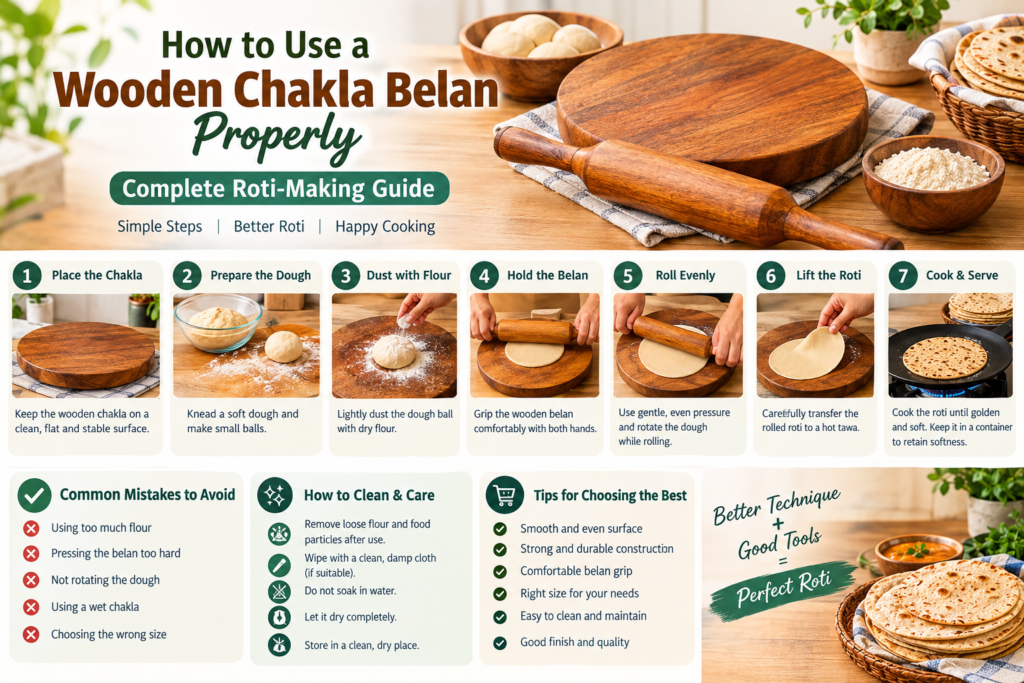
Making soft, round, and evenly cooked roti becomes easier when you use the right technique and a good-quality wooden chakla belan. A chakla provides a stable surface for rolling dough, while the belan helps spread the dough evenly into a round shape.
Whether you are a beginner or already make roti regularly, learning how to use a wooden chakla belan properly can improve your rolling technique and make everyday cooking more convenient.
This guide explains how to prepare your chakla belan, roll roti step by step, avoid common mistakes, and care for your wooden kitchen tools.
What Is a Wooden Chakla Belan?
A wooden chakla belan is a traditional Indian kitchen tool used to roll roti, chapati, paratha, puri dough, and other flatbreads.
The chakla is the round rolling board, while the belan is the rolling pin used to flatten and shape the dough.
Wooden chakla belan sets are popular for everyday kitchens because they are generally lightweight, easy to handle, and convenient to store.
For the best experience, choose a chakla with a smooth, even surface and a belan that feels comfortable in your hands.
How to Use a Wooden Chakla Belan Properly
Follow these simple steps to roll roti more comfortably and evenly.
1. Place the Chakla on a Clean, Flat Surface
Start by placing your wooden chakla on a clean and stable kitchen countertop.
The board should not wobble while you are rolling. If the chakla moves, make sure the surface underneath is dry and stable. A suitable non-slip kitchen mat can also help improve grip.
Avoid placing the wooden chakla on a wet surface.
2. Prepare the Dough Properly
Good roti starts with properly prepared dough.
Knead the wheat flour with water until you get a soft, smooth dough. Let the dough rest for a short period before making individual dough balls.
Take a small portion of dough and roll it between your hands to create a smooth ball.
A dough ball that is too hard can make rolling difficult, while overly wet dough can stick to the chakla.
3. Dust the Dough Lightly With Flour
Take the dough ball and flatten it gently with your fingers.
Apply a small amount of dry wheat flour to prevent excessive sticking. Do not use too much flour because excess flour can make the rolling process messy and may burn while cooking.
Place the lightly dusted dough on the center of the wooden chakla.
4. Hold the Belan Correctly
Hold the wooden belan comfortably with both hands.
Your grip should be firm but relaxed. There is no need to press extremely hard.
Apply gentle and even pressure while moving the belan forward and backward. As the dough becomes wider, rotate it slightly with your fingers to help maintain a round shape.
5. Roll the Dough Evenly
Start rolling from the center and move outward using smooth strokes.
Try to maintain consistent pressure. If you press harder on one side, that area can become thinner than the rest of the roti.
Rotate the dough regularly while rolling.
The goal is to create an evenly shaped, reasonably uniform roti rather than forcing it into a perfect circle in just a few strokes.
6. Add a Little Flour if the Dough Sticks
If the dough starts sticking to the chakla, add a small amount of dry flour.
Avoid repeatedly adding large amounts of flour. Too much flour can make the surface dusty and affect the final cooking process.
A properly kneaded dough should become easier to roll with practice.
7. Transfer the Rolled Roti Carefully
Once the roti is rolled to your preferred size and thickness, lift it carefully from the chakla.
Place it on a properly heated tawa and cook according to your usual roti-making method.
After cooking, place the roti in a suitable container to help retain its softness.
Common Mistakes to Avoid
Even a good wooden chakla belan can become difficult to use if the technique is incorrect.
Using Too Much Flour
Excess dry flour can make rolling messy and may burn on the tawa.
Pressing the Belan Too Hard
Heavy pressure can make the dough uneven. Use controlled, gentle movements instead.
Not Rotating the Dough
Rotating the dough while rolling helps distribute pressure and makes it easier to create an even shape.
Using a Wet Chakla
Wood requires proper care. Avoid using the chakla when it is wet or leaving it submerged in water.
Choosing the Wrong Size
A very small chakla can make rolling larger rotis or parathas inconvenient. Choose a size that works comfortably with your usual cooking style.
How to Clean a Wooden Chakla Belan
Proper cleaning can help keep your wooden kitchen tools in good condition.
After use, remove loose flour and food particles. Wipe the chakla and belan using a clean, slightly damp cloth if appropriate for the product’s care instructions.
Do not leave wooden products soaking in water for long periods.
After cleaning, allow them to dry completely before storing them. Keep them in a clean, dry place away from unnecessary moisture.
Always follow the manufacturer’s specific care instructions because wood type and finish can vary.
How to Choose a Good Wooden Chakla Belan
When buying a wooden chakla belan, consider these factors:
- Smooth surface: The chakla should have an even rolling surface.
- Strong construction: Look for a sturdy product without visible cracks or major defects.
- Comfortable belan: The rolling pin should feel easy to hold and control.
- Suitable size: Choose a chakla size that matches your regular roti requirements.
- Easy maintenance: Make sure you can comfortably clean and store it.
- Good finish: A properly finished wooden surface can provide a more comfortable rolling experience.
Frequently Asked Questions
How do I use a wooden chakla belan for roti?
Place the chakla on a stable surface, prepare a soft dough ball, lightly dust it with flour, and roll it using the belan with gentle, even pressure. Rotate the dough as you roll to help create an even shape.
Should I put oil on a wooden chakla?
Generally, you should not apply cooking oil to the rolling surface during normal roti preparation unless the manufacturer specifically recommends it. Use dry flour when needed to prevent sticking.
How do I stop roti dough from sticking to a wooden chakla?
Use properly kneaded dough and lightly dust the dough with dry flour. Avoid adding excessive flour because too much can make the rolling process messy.
Can I use a wooden chakla belan for paratha?
Yes. A suitable wooden chakla belan can be used to roll paratha dough as well as roti and chapati.
How should I store a wooden chakla belan?
Clean it according to the manufacturer’s instructions, allow it to dry completely, and store it in a clean, dry place away from excessive moisture.
Final Thoughts
Learning how to use a wooden chakla belan properly is mostly about using the right dough consistency, maintaining a comfortable grip, applying even pressure, and rotating the dough while rolling.
A good-quality wooden chakla belan can be a practical addition to an everyday kitchen. With the right technique and regular care, you can make the rolling process smoother and more consistent.
For the best results, focus on proper dough preparation, gentle rolling, a stable chakla, and correct maintenance. Once you develop a comfortable rolling technique, making evenly shaped roti becomes much easier.