
How to Use an Incense Holder Safely: 10 Essential Tips Before You Burn
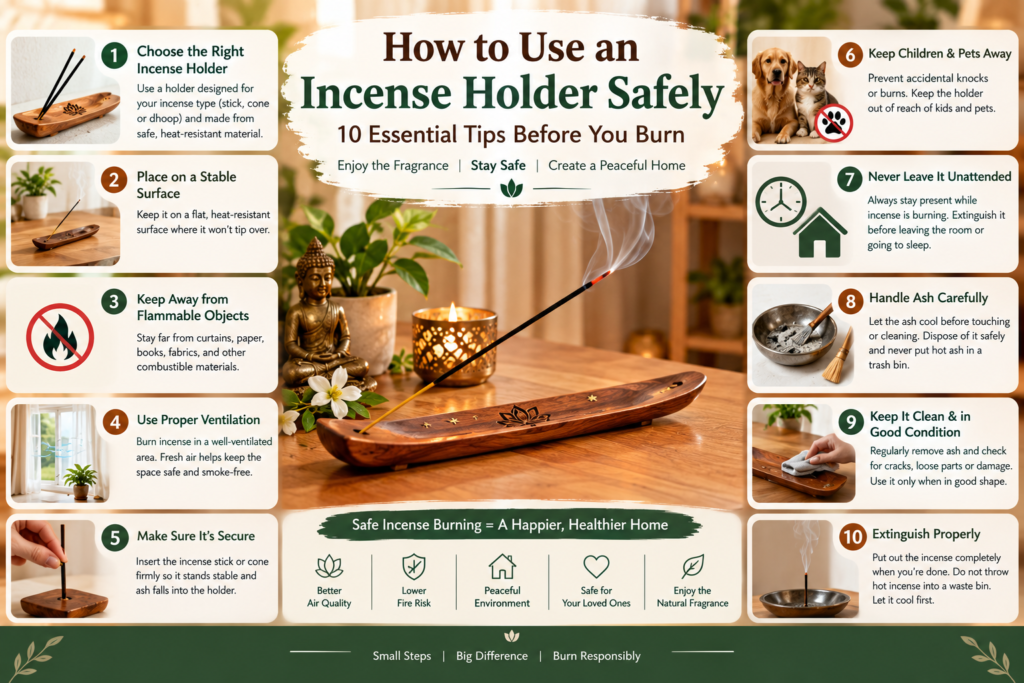
Incense can make your home feel calm, welcoming, and pleasant. Whether you enjoy agarbatti, dhoop, incense sticks, or cones, using the right incense holder is an important part of burning incense safely.
An incense holder helps collect ash, keeps the burning incense more stable, and can reduce the chance of hot ash falling onto furniture or other surfaces. However, an incense holder does not eliminate fire risk.
If you are wondering how to use an incense holder safely, the key is simple: choose a suitable https://nlsenterprises.in/ holder, place it correctly, keep it away from flammable materials, and never leave burning incense unattended.
Here are 10 essential incense holder safety tips to follow at home.
1. Choose the Right Incense Holder
Start by selecting an incense holder designed for the type of incense you plan to burn.
A stick holder should securely support the incense stick and provide a suitable area for falling ash. A cone or dhoop holder should be designed to contain the burning material and heat.
For Indian homes, a properly designed agarbatti holder or dhoop stand can be a practical option for regular use.
Avoid unstable holders or decorative objects that were not designed to withstand incense heat.
2. Place the Holder on a Stable Surface
Always place your incense holder on a flat, stable, heat-resistant surface.
A table, stone surface, ceramic plate, or another appropriate non-flammable surface can provide better stability than soft or uneven furniture.
Make sure the holder cannot easily tip over when the incense is burning.
A stable position is particularly important if you have pets or children who could accidentally knock it over.
3. Keep Incense Away from Flammable Objects
This is one of the most important rules for safe incense burning.
Keep burning incense away from curtains, paper, books, clothing, bedding, cardboard, dry flowers, wooden decorations, and other combustible materials.
Do not place incense directly underneath shelves or close to hanging fabrics.
Even a small ember can ignite flammable materials under the wrong conditions.
4. Use Proper Ventilation
Incense produces smoke, so good ventilation is important.
Burn incense in a room with adequate airflow, such as near an open window or in a properly ventilated area. However, avoid strong drafts that could cause the incense flame, ember, or ash to behave unpredictably.
If the smoke becomes uncomfortable, stop burning the incense and improve ventilation.
People who are sensitive to smoke should take additional care and consider avoiding indoor incense burning.
5. Make Sure the Incense Is Secure
Before lighting the incense stick or cone, check that it is firmly positioned in the holder.
For an incense stick, insert the unlit end securely into the holder. The burning end should be positioned so that ash falls into the designated area rather than onto furniture.
For cones, place them in a holder specifically intended for incense cones and make sure the holder is stable.
Never hold burning incense in your hand or move it unnecessarily after lighting.
6. Keep Children and Pets Away
Burning incense should always be treated as a source of heat and flame.
Keep the incense holder out of the reach of children and pets. A curious child or active pet could knock over the holder or touch hot ash.
Choose a location where the incense can burn without being disturbed.
A high shelf is not automatically safe if the incense could fall or if nearby materials are combustible. Stability and clearance are more important than simply placing it higher.
7. Never Leave Burning Incense Unattended
This is perhaps the most important incense safety rule.
Never leave burning incense unattended, even if you expect it to finish soon.
Before leaving the room, going to sleep, or stepping outside, extinguish the incense properly.
Do not assume that a small incense stick is harmless because it produces a small flame or ember. Burning incense can remain hot after the visible flame disappears.
8. Handle Ash Carefully
Incense ash may look harmless, but recently burned material can remain hot.
Allow ash to cool before touching or disposing of it. Make sure it has completely stopped glowing before cleaning the holder.
Do not immediately place hot ash into paper bins, plastic containers, or other combustible waste.
Regularly cleaning your incense holder also helps prevent accumulated ash and residue from becoming a problem.
9. Keep the Holder Clean and in Good Condition
Inspect your incense holder regularly.
Remove accumulated ash and residue according to the material’s care instructions. Check for cracks, loose parts, instability, or heat damage.
Wooden incense holders should be kept dry and used only when their construction is suitable for incense burning. Metal and ceramic holders should also be checked for damage or instability.
If the holder becomes damaged, replace it rather than continuing to use it.
10. Extinguish Incense Properly
Knowing how to use an incense holder safely also means knowing when and how to stop burning incense.
When you are finished, extinguish the incense completely. Depending on the type of incense and its instructions, this may involve carefully putting out the burning end or allowing it to finish in a suitable holder while remaining present.
Never throw a glowing incense stick directly into a waste bin.
Once extinguished, allow the holder and remaining material to cool completely before cleaning or storing them.
Which Incense Holder Is Best for Safe Use?
The best incense holder is not necessarily the most decorative one. Look for a design that is stable, appropriate for your incense type, easy to clean, and capable of safely containing ash and heat.
For example, a wooden incense holder can be attractive and practical when it is specifically designed for incense use and provides appropriate protection around the burning material.
For cones and dhoop, choose a holder that is designed to contain the heat and ash produced by that particular incense.
Always follow the product’s safety and usage instructions.
Final Thoughts
Learning how to use an incense holder safely is simple when you follow a few basic precautions.
Choose the correct holder, use a stable heat-resistant surface, maintain good ventilation, keep incense away from flammable materials, and keep children and pets at a safe distance. Most importantly, never leave burning incense unattended.
Whether you use agarbatti, dhoop, incense sticks, or cones, safe placement and responsible handling should always come before decoration or convenience.
A well-designed incense holder can make your daily incense ritual cleaner and more organized, but safe burning ultimately depends on how you use it. Take a few extra precautions every time, and enjoy your incense responsibly.