
How to Clean a Wooden Roti Maker: 10 Easy Tips
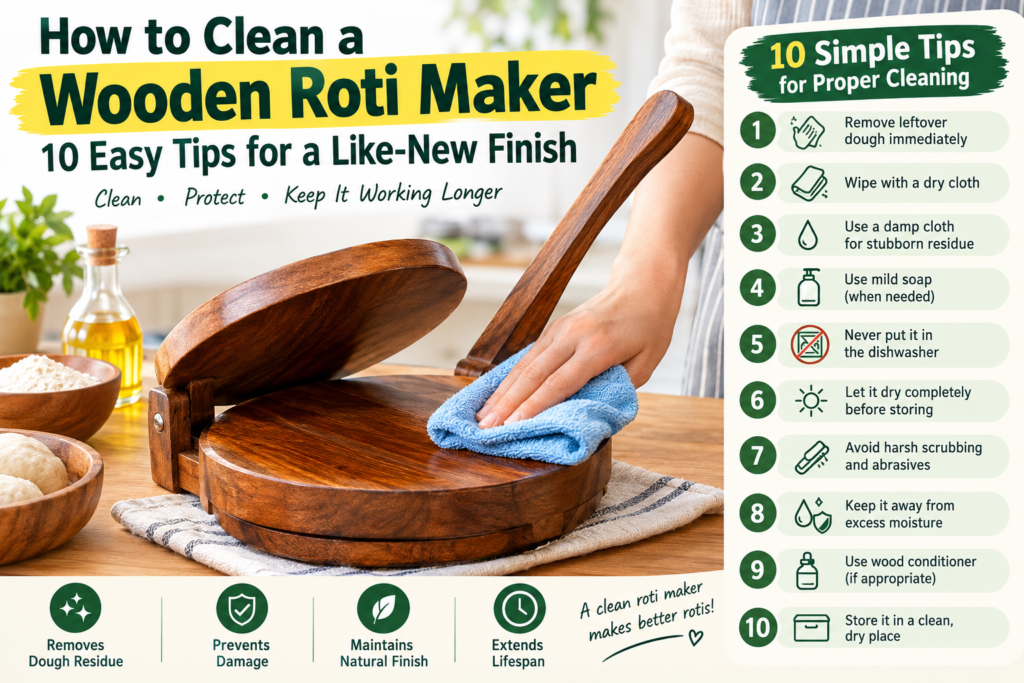
A wooden roti maker is a useful kitchen tool for preparing fresh, homemade rotis and chapatis. However, bits of dough, flour, and moisture can build up on its surface after regular use. Without proper care, the wood may develop stains, unpleasant odors, or cracks over time.
The good news is that cleaning a wooden roti maker is simple when you follow the right steps. You do not need expensive cleaning products or harsh chemicals to keep it in good condition.
In this guide, you will learn how to clean a wooden roti maker, remove stubborn https://nlsenterprises.in/ dough residue, prevent moisture damage, and maintain its natural finish with easy everyday methods.
Why Is It Important to Clean a Wooden Roti Maker?
Cleaning your wooden roti maker after each use helps maintain good kitchen hygiene and keeps the surface ready for your next cooking session.
Here are some important benefits of regular cleaning:
- Removes dough residue: Prevents leftover dough and flour from building up.
- Maintains hygiene: Helps keep the food-contact surface clean.
- Protects the wood: Reduces the risk of swelling, cracking, and moisture damage.
- Prevents unpleasant smells: Removes food particles that may become stale.
- Extends its useful life: Proper care helps preserve the wood’s appearance and strength.
How to Clean a Wooden Roti Maker: 10 Easy Tips
Follow these ten practical tips to keep your wooden roti maker clean and well maintained.
1. Remove Leftover Dough Immediately
The easiest way to clean a wooden roti maker is to remove leftover dough as soon as you finish making rotis.
Use your fingers or a soft, dry cloth to remove loose flour and dough crumbs. If dough is stuck to the surface, gently lift it with a soft cloth or a non-scratch scraper suitable for wood.
Avoid using knives, metal scrapers, or other sharp tools because they can scratch the surface.
Tip: Removing dough while it is still fresh makes cleaning much easier.
2. Wipe the Surface With a Dry Cloth
After removing the loose dough, wipe the wooden surface with a clean, dry microfiber cloth.
Pay attention to the edges, grooves, and areas where flour tends to collect. A dry cloth is often enough to remove loose flour and light residue after normal use.
Do not forget to clean both the top and bottom surfaces if they come into contact with food or kitchen debris.
3. Use a Slightly Damp Cloth for Stubborn Residue
Sometimes, dry wiping is not enough to remove sticky dough. In this case, dampen a soft cloth with a small amount of clean water and gently wipe the affected area.
The cloth should be damp, not soaking wet. After cleaning, immediately wipe the surface with a dry cloth.
Important: Avoid soaking your wooden roti maker in water or leaving water pooled on its surface. Excess moisture can damage wood over time.
4. Use Mild Soap Only When Necessary
If the surface needs more cleaning, use a small amount of mild, food-contact-appropriate dish soap diluted in water, provided the manufacturer’s instructions allow it.
Dampen a cloth with the solution and gently wipe the affected area. Follow with a separate cloth lightly dampened with clean water to remove soap residue.
Dry the entire surface thoroughly afterward.
Avoid bleach, abrasive powders, strong chemical cleaners, and harsh scouring pads. These may damage the finish or leave unwanted residue.
5. Never Put a Wooden Roti Maker in the Dishwasher
A dishwasher exposes wooden kitchen tools to prolonged moisture, high temperatures, and detergents. These conditions can cause wood to swell, warp, crack, or lose its finish.
For this reason, clean a wooden roti maker by hand unless its manufacturer specifically states otherwise.
Similarly, avoid leaving it submerged in a sink full of water.
6. Let It Dry Completely Before Storing
Proper drying is an essential part of wooden roti maker care.
After cleaning, wipe away all visible moisture with a dry towel. Place the roti maker in a clean, well-ventilated area and allow it to air-dry completely before storing it.
Avoid placing it near direct heat, a hot stove, or intense sunlight to speed up drying. Rapid temperature changes can contribute to wood damage.
Remember: Never store a damp wooden kitchen tool in a closed cabinet or airtight container.
7. Avoid Harsh Scrubbing and Abrasive Materials
Scrubbing too hard can scratch the wood and damage its protective finish.
Instead, use a soft cloth or a non-abrasive sponge to remove residue. For dried dough, gently loosen it with a little moisture rather than scraping aggressively.
If the wooden surface has deep grooves, cracks, or splinters, inspect it carefully before using it again. Damaged areas can be difficult to clean properly.
8. Keep the Wooden Surface Away From Excess Moisture
Wood naturally absorbs and releases moisture. Repeated exposure to water can cause changes in its shape and surface condition.
To protect your wooden roti maker:
- Clean up water immediately.
- Do not leave wet cloths on the surface.
- Keep it away from splashes near the sink.
- Store it in a dry, ventilated location.
- Avoid storing it in persistently damp conditions.
These simple habits help maintain the wood and reduce the likelihood of cracking or warping.
9. Use Wood Conditioner Only If Appropriate
Some unfinished wooden kitchen tools may benefit from occasional conditioning, but not every wooden roti maker requires oil or polish.
Check the manufacturer’s instructions before applying any product. If conditioning is recommended, choose a product specifically suitable for food-contact wooden kitchenware and follow its directions.
Avoid ordinary furniture polish, scented oils, varnishes, and products that are not intended for food-contact surfaces.
Do not apply oil simply to make the wood look shiny. An unsuitable product may leave residue or affect the surface.
10. Store It in a Clean, Dry Place
Correct storage helps keep your wooden roti maker ready for everyday use.
Once it is completely dry, store it in a clean cupboard or another dry, well-ventilated area. Keep it away from leaking pipes, damp walls, and direct heat.
Avoid placing heavy objects on top of it, as unnecessary pressure may damage or warp the wooden surface.
Make cleaning and drying part of your regular kitchen routine to help your roti maker stay in good condition for longer.
How Often Should You Clean a Wooden Roti Maker?
For everyday use, remove dough and flour and wipe the surface after each cooking session. Use a slightly damp cloth when necessary, and dry the tool thoroughly.
| Cleaning task | Recommended frequency |
|---|---|
| Remove loose dough and flour | After every use |
| Wipe with a dry cloth | After every use |
| Use a slightly damp cloth | Whenever residue requires it |
| Inspect for cracks or damage | Regularly |
| Apply an approved wood conditioner | Only when recommended by the manufacturer |
The amount of cleaning required depends on how often you use the roti maker and how much dough sticks to its surface.
Common Mistakes to Avoid When Cleaning a Wooden Roti Maker
Even simple cleaning routines can cause problems if the wrong methods are used.
Avoid these common mistakes:
- Soaking it in water: Excess moisture may damage the wood.
- Using harsh chemicals: Strong cleaners may damage the finish or leave unwanted residue.
- Scraping with sharp metal tools: These can scratch or gouge the surface.
- Storing it while damp: Trapped moisture may encourage mold growth.
- Using ordinary furniture polish: Such products may not be suitable for food-contact surfaces.
- Ignoring cracks or splinters: Damaged wood can be difficult to clean thoroughly.
A gentle cleaning routine is generally the best approach for maintaining an ordinary wooden roti maker.
Frequently Asked Questions
1. What is the best way to clean a wooden roti maker?
The best way is to remove leftover dough, wipe the surface with a dry cloth, and use a slightly damp cloth for stubborn residue. Dry the wooden roti maker completely before storing it.
2. Can I wash a wooden roti maker with water?
You can usually wipe it with a lightly damp cloth, but you should avoid soaking it or exposing it to excessive water. Always follow the manufacturer’s cleaning instructions.
3. How do I remove dried dough from a wooden roti maker?
Gently loosen the dried dough with a soft cloth slightly dampened with water. Allow the moisture to soften the residue briefly, then wipe it away without aggressive scraping. Dry the surface immediately.
4. Can I use dish soap to clean a wooden roti maker?
A small amount of mild dish soap diluted in water may be suitable for stubborn residue if the manufacturer permits it. Wipe away the soap with a clean, lightly damp cloth and dry the wood thoroughly.
5. Can I use oil on a wooden roti maker?
Only use oil or conditioner if the manufacturer recommends it. Choose a product suitable for food-contact wooden kitchenware, and avoid ordinary furniture polish or scented oils.
6. How can I prevent mold on a wooden roti maker?
Remove food residue after use, dry the surface thoroughly, and store it in a clean, dry, ventilated location. If mold develops, do not continue using the tool until you have determined that it can be safely cleaned. Discard it if the mold has penetrated the wood or cannot be removed completely.
7. Why is my wooden roti maker developing cracks?
Cracks may develop because of repeated moisture changes, excessive heat, drying conditions, age, or existing defects in the wood. Keep the tool away from soaking water and intense heat. Stop using it if cracks create splinters or make the food-contact surface difficult to clean.
Final Thoughts
Learning how to clean a wooden roti maker does not require complicated methods. Removing dough after every use, wiping the surface gently, avoiding excess water, and allowing the wood to dry completely are the most important steps.
With these ten easy tips, you can maintain a cleaner kitchen tool and help preserve its natural appearance and useful life.
Ready to care for your wooden roti maker? Start by wiping it clean after your next cooking session and make proper drying part of your daily routine.