
How Does a Roti Maker Work? Complete Guide
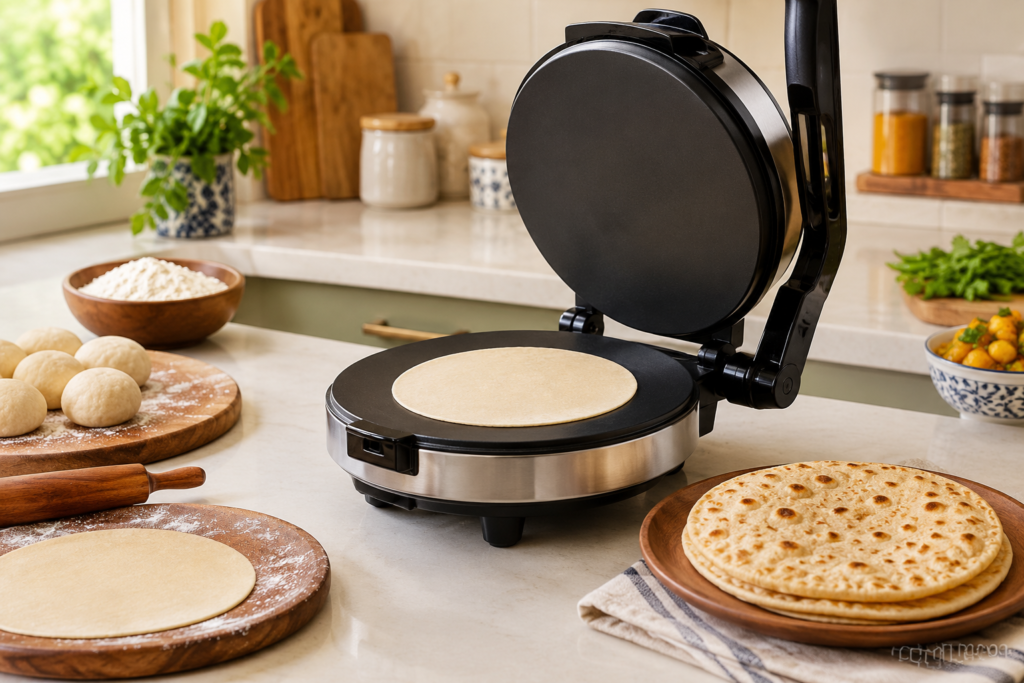
If you make rotis regularly, you may have wondered, how does a roti maker work? A roti maker is a kitchen appliance or manual press designed to simplify the process of flattening and, in some models, cooking https://nlsenterprises.in/ rotis. Electric models generally use heated plates and pressure, while manual roti presses rely on hand pressure to flatten the dough.
For busy Indian households, a roti maker can help reduce the effort involved in preparing everyday chapatis. However, different types work differently, so understanding the process is important before choosing one.
How Does a Roti Maker Work?
An electric roti maker works by heating cooking plates and using pressure to flatten dough into a thin, round roti. Depending on the model, the roti may then be cooked on the heated plates and flipped to cook the other side.
The basic process is:
- Prepare soft wheat-flour dough.
- Divide the dough into small balls.
- Preheat the roti maker if it is an electric model.
- Place the dough ball on the cooking surface.
- Close or press the upper plate.
- Allow the roti to cook.
- Flip it if required by the appliance.
- Finish cooking and remove the roti.
Some automatic models combine pressing and cooking, while a simple wooden roti press only flattens the dough. Therefore, it is important to check whether a product is a roti press, electric roti maker, or automatic roti-making machine.
How Does an Electric Roti Maker Work?
An electric roti maker typically contains two heated plates. When switched on, the appliance heats the plates to the required cooking temperature.
Once the machine is ready, a soft dough ball is placed on the lower plate. The upper plate is then closed or pressed down. This pressure spreads the dough into a thin, circular shape while the heated surfaces begin cooking it.
A recent guide on electric roti makers describes the basic cycle as preheating, placing a soft dough ball, pressing the lid, and cooking the roti on the heated plates.
The exact cooking time and operating method vary by appliance, so the manufacturer’s instructions should always be followed.
How to Use a Roti Maker Step by Step
1. Prepare Soft Dough
Start with wheat flour and enough water to make smooth, soft dough. Dough consistency is important because very stiff dough may not spread easily in a press-style roti maker.
2. Make Equal-Sized Dough Balls
Divide the dough into similar-sized portions and roll them into smooth balls. Consistent portions can help produce rotis of a similar size.
3. Preheat the Machine
If you are using an electric roti maker, allow it to preheat according to the manufacturer’s instructions.
4. Place the Dough
Put the dough ball in the recommended position on the lower plate. Avoid adding more dough than the appliance is designed to handle.
5. Press the Dough
Close the upper plate or press the handle, depending on the design. The pressure spreads the dough into a flatter, round shape.
6. Cook the Roti
Allow the roti to cook according to the appliance instructions. Some models require flipping, while others are designed to cook both sides using heated plates.
7. Remove and Serve
Once cooked, carefully remove the roti using an appropriate utensil and serve it hot.
What Type of Dough Works Best in a Roti Maker?
Soft and well-kneaded dough generally works better than stiff dough in press-style roti makers.
The dough needs enough moisture to spread without becoming excessively sticky. If the dough is too hard, the roti may remain thick or develop an uneven shape.
For everyday Indian chapatis, wheat flour is commonly used. However, different types of flatbread require different dough characteristics, so check the appliance instructions before experimenting.
What Are the Benefits of Using a Roti Maker?
Saves Preparation Effort
A roti maker can simplify the flattening and cooking process, particularly for people who prepare rotis frequently.
Helps With Consistent Shapes
The pressing mechanism can help create more uniform, round rotis when the dough portions and technique are consistent.
Convenient for Busy Households
For people preparing several rotis every day, an electric model can reduce some of the manual work involved in traditional preparation.
Useful for Beginners
Learning to make perfectly round rotis with a rolling pin can take practice. A press-style machine can make the shaping stage more straightforward.
Roti Maker vs. Traditional Chakla Belan
A chakla and belan provide greater manual control over the thickness and shape of a roti. They are also inexpensive and require no electricity.
A roti maker, on the other hand, is designed to simplify the process through pressing and, in electric models, heating.
Neither method is automatically right for everyone. Your choice depends on your cooking habits, available kitchen space, budget, and preference for traditional or appliance-assisted preparation.
Can a Roti Maker Make Soft and Round Rotis?
Yes, a roti maker can help produce round and evenly shaped rotis, but the final result depends on several factors.
Dough consistency, dough-ball size, pressing pressure, cooking temperature, and timing all affect the finished roti. Even a good machine cannot completely compensate for poorly prepared dough.
For softer rotis, pay particular attention to dough hydration and avoid overcooking.
Common Mistakes to Avoid
When using a roti maker, avoid these common mistakes:
- Using dough that is too stiff
- Making dough balls of very different sizes
- Using the appliance before it has properly heated
- Applying excessive pressure
- Overcooking the roti
- Using metal utensils on non-stick plates
- Ignoring the manufacturer’s operating instructions
For appliances with non-stick surfaces, suitable wooden or non-stick utensils are generally preferable to metal tools that may scratch the coating.
Frequently Asked Questions
How does a roti maker work?
A roti maker uses pressure to flatten dough, while an electric model also uses heated plates to cook the roti. The exact process depends on the type of machine.
Does a roti maker need electricity?
Not always. A wooden or manual roti press does not require electricity. Electric roti makers use electrical heating elements to cook the dough.
Can I use a roti maker for chapati?
Yes. Many roti makers are designed specifically for making rotis or chapatis. Always check the product specifications for the recommended dough and cooking method.
Why is my roti not becoming soft in the roti maker?
Common reasons include stiff dough, insufficient hydration, excessive cooking time, or incorrect temperature. Try using softer dough and follow the manufacturer’s recommended cooking process.
Is a roti maker better than a rolling pin?
They serve different purposes. A rolling pin offers more control, while a roti maker can simplify shaping and, depending on the model, cooking. Your preferred method depends on your needs and cooking style.
Final Thoughts
Understanding how a roti maker works makes it easier to choose and use the right appliance for your kitchen. Electric models generally combine heated plates with pressure to flatten and cook the dough, while manual presses mainly help shape the dough.
For Indian households that prepare rotis regularly, a roti maker can be a convenient alternative to traditional preparation. For the best results, focus on soft dough, consistent dough portions, correct temperature, and proper cooking time.
Before purchasing, check the machine’s size, plate material, temperature controls, power requirements, cleaning instructions, and whether it only presses the dough or also cooks it. These details will help you choose a roti maker that fits your everyday kitchen routine.