Best Chakla Belan for Making Soft Rotis
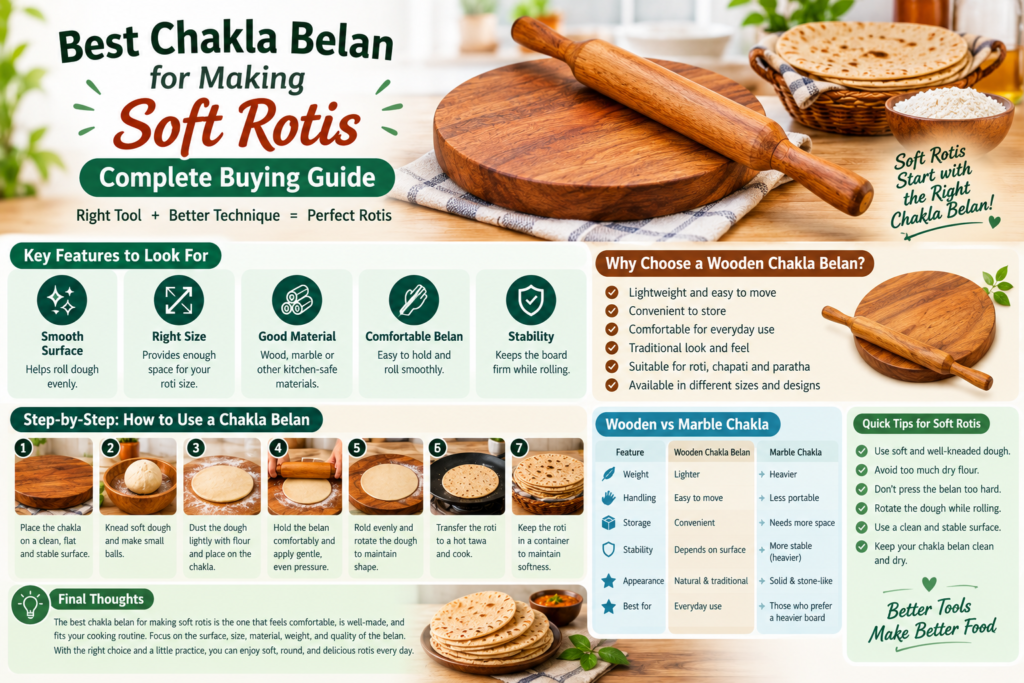
Making soft, round, and evenly cooked rotis starts with good dough, the right technique, and suitable kitchen tools. A chakla belan is one of the most useful traditional tools for preparing roti, chapati, and paratha at home. However, choosing the right one can be confusing because chakla belan sets are available in different materials, sizes, shapes, and designs.
So, what is the best chakla belan for making soft rotis?
The right choice depends on factors such as the material, surface, size, weight, belan design, stability, and ease of maintenance. This guide explains what to look for before buying a chakla belan and how to choose one that makes everyday roti preparation easier.
What Is a Chakla Belan?
A chakla belan is a traditional Indian kitchen tool used to roll dough into flatbreads.
The chakla is the round rolling board, while the belan is the rolling pin. Together, they are commonly used to prepare roti, chapati, paratha, puri dough, and other flatbreads.
A good chakla should provide enough space for rolling dough comfortably, while the belan should be easy to grip and move across the dough.
What Makes the Best Chakla Belan for Soft Rotis?
There is no single chakla belan that is perfect for every kitchen. However, certain features can make roti preparation easier.
1. Choose a Smooth Rolling Surface
The surface of the chakla is one of the first things to check.
A smooth and even surface allows the dough to move more easily while rolling. If the surface has rough areas, cracks, or uneven finishing, the dough may become difficult to handle.
For a wooden chakla, look for a properly finished surface that feels smooth to the touch.
2. Select the Right Chakla Size
Size matters when choosing a chakla for making roti.
A very small board can make it difficult to roll larger rotis or parathas. On the other hand, an unnecessarily large chakla may take up more countertop and storage space.
Choose a size that provides enough room for your usual roti size while still fitting comfortably in your kitchen.
3. Consider the Material
Chaklas are available in materials such as wood, marble, and other kitchen-safe materials.
A wooden chakla belan is a popular choice for everyday home cooking because it is generally lightweight, easy to handle, and convenient to store.
Marble chaklas are heavier and can provide a solid rolling surface. The best material depends on your cooking habits, available storage, and personal preference.
4. Check the Belan Design
The belan is just as important as the chakla.
A good wooden belan should be comfortable to hold and should roll smoothly across the dough. Avoid choosing a belan that feels difficult to grip or control.
The length and thickness should also feel comfortable for your hands.
5. Look for Good Stability
A chakla should remain reasonably stable while you roll dough.
If the board moves frequently, rolling can become frustrating and the roti may not develop an even shape.
Place the chakla on a clean, dry, stable countertop. For a lightweight wooden chakla, a suitable non-slip surface underneath can help improve stability.
Why Choose a Wooden Chakla Belan?
For many home kitchens, a wooden chakla belan is a practical option.
Here are some potential benefits:
- Lightweight and easy to move
- Convenient to store
- Comfortable for everyday use
- Traditional appearance and feel
- Suitable for roti and chapati preparation
- Available in different sizes and designs
- Easy to incorporate into a regular kitchen routine
However, quality matters. A wooden chakla should have a smooth surface, sturdy construction, and proper finishing.
How to Use a Chakla Belan for Soft Rotis
Choosing a good chakla belan is only part of the process. Your technique also matters.
Start with properly kneaded, soft dough. Divide the dough into small portions and make smooth balls.
Flatten one dough ball and lightly dust it with dry wheat flour. Place it on the chakla and begin rolling with the belan.
Use gentle, even pressure rather than pressing extremely hard. Rotate the dough regularly while rolling to help create an evenly shaped roti.
Avoid using excessive dry flour because too much flour can make the rolling process messy and may burn during cooking.
Once the roti reaches the desired size and thickness, carefully transfer it to a properly heated tawa.
Common Mistakes When Buying a Chakla Belan
Before buying, avoid these common mistakes:
Choosing Only by Appearance
A beautiful chakla may not necessarily be comfortable or practical. Check the surface, size, construction, and weight.
Ignoring the Belan
Some buyers focus only on the rolling board. Remember that the belan directly affects how comfortably you can roll dough.
Buying the Wrong Size
Think about your normal roti size and available kitchen space before choosing the board.
Choosing Poor-Quality Wood
For wooden products, look for smooth finishing, sturdy construction, and a surface without obvious cracks or rough areas.
Ignoring Maintenance
Wooden kitchen products need proper care. Follow the manufacturer’s cleaning and storage instructions and avoid prolonged soaking in water.
Wooden Chakla Belan vs Marble Chakla
Both materials can work well, but they offer different experiences.
| Feature | Wooden Chakla Belan | Marble Chakla |
|---|---|---|
| Weight | Generally lighter | Generally heavier |
| Handling | Easy to move | Less portable |
| Storage | Usually convenient | Needs more space/support |
| Stability | Depends on surface | Weight can improve stability |
| Appearance | Natural and traditional | Solid and stone-like |
| Everyday use | Convenient for many kitchens | Suitable for users who prefer a heavier board |
The best choice depends on what feels comfortable and practical for your kitchen.
Frequently Asked Questions
Which chakla belan is best for making soft rotis?
A good-quality chakla belan with a smooth surface, suitable size, comfortable belan, and stable design can work well for making soft rotis. A wooden chakla belan is a practical option for many home kitchens.
What size chakla is best for roti?
Choose a size that gives you enough space to roll your regular roti comfortably without taking up unnecessary countertop space.
Is a wooden chakla good for making roti?
Yes. A properly finished wooden chakla can be suitable for rolling roti, chapati, and paratha dough.
How can I make round roti with a chakla belan?
Use evenly kneaded dough, apply gentle pressure with the belan, and rotate the dough regularly while rolling. Consistent pressure and practice are more important than pressing hard.
How do I maintain a wooden chakla belan?
Remove flour after use, clean it according to the manufacturer’s instructions, avoid prolonged soaking in water, allow it to dry completely, and store it in a clean, dry place.
Final Thoughts
The best chakla belan for making soft rotis is not necessarily the most expensive or heaviest option. What matters is whether the chakla has a smooth and suitable rolling surface, whether the belan is comfortable to use, and whether the overall set fits your cooking routine.
If you prefer a lightweight and traditional option for everyday cooking, a well-made wooden chakla belan can be a practical choice. Before purchasing, compare the size, material, surface quality, weight, construction, and maintenance requirements.
With the right chakla belan and a little practice, rolling evenly shaped dough can become much easier, helping you prepare delicious homemade rotis more comfortably.