Wooden Belan for Roti and Chapati
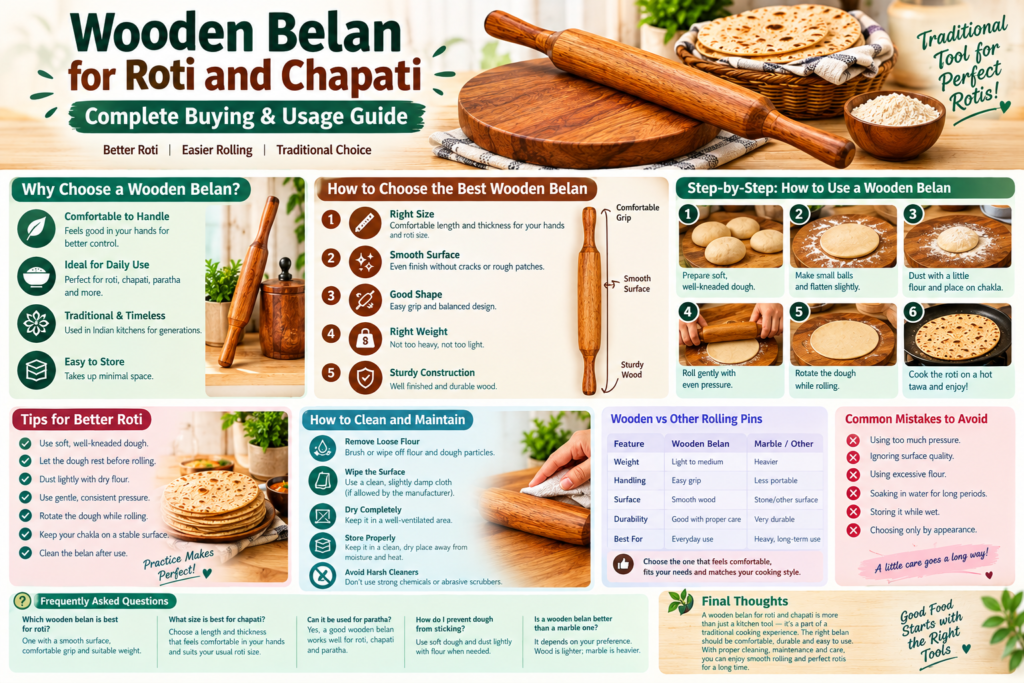
A good wooden belan for roti and chapati can make everyday cooking more comfortable and help you roll dough evenly. The belan, also known as a wooden rolling pin, is a traditional Indian kitchen tool commonly used with a chakla to prepare roti, chapati, paratha, and other flatbreads.
Although a belan looks like a simple kitchen tool, its size, shape, weight, surface, and grip can affect how easily you roll your dough. Choosing the right one is therefore important, especially if you prepare roti regularly.
This complete guide explains what to look for when buying a wooden belan, how to use it properly, and how to care for it.
What Is a Wooden Belan?
A wooden belan is a rolling pin made from wood and designed to flatten and shape dough. In Indian kitchens, it is traditionally used with a round chakla, or rolling board.
The belan is moved back and forth over a dough ball using controlled pressure. With the right technique, it can help you create evenly rolled dough for roti and chapati.
Wooden belans are popular because they offer a traditional cooking experience and are generally easy to handle.
Why Choose a Wooden Belan for Roti and Chapati?
There are several reasons why a wooden rolling pin can be a practical choice for everyday cooking.
Comfortable to Handle
A properly shaped wooden belan can feel comfortable in the hands, allowing you to control the rolling movement more easily.
Suitable for Everyday Roti Making
A good-quality belan can be used regularly for roti, chapati, paratha, and other dough-based flatbreads.
Traditional Kitchen Tool
The wooden belan has been part of Indian cooking traditions for generations and remains a familiar tool in many households.
Easy to Store
Unlike bulky kitchen appliances, a belan requires very little storage space and can be kept alongside your chakla or other cooking utensils.
How to Choose the Best Wooden Belan
Not every wooden belan is the same. Consider these factors before buying one.
1. Check the Size
The length and thickness of the belan should be comfortable for your hands and suitable for the size of roti you usually prepare.
A belan that is too large may feel difficult to control, while one that is too small may not provide the rolling range you prefer.
Choose a size that feels natural when you hold and move it.
2. Look for a Smooth Surface
The rolling surface should be smooth and evenly finished.
Rough areas, splinters, cracks, or uneven finishing can make the belan uncomfortable to use and may interfere with smooth dough rolling.
Before purchasing, inspect the surface carefully.
3. Consider the Shape
Traditional belans are available in different shapes and designs. Some are relatively uniform through the center, while others have shaped ends that make them easier to grip.
The best shape is the one that gives you comfortable control while rolling.
4. Check the Weight
A wooden belan should not feel unnecessarily heavy in your hands.
You need enough weight to roll the dough effectively, but excessive weight can make repeated rolling tiring.
If you make several rotis every day, comfortable handling becomes particularly important.
5. Check the Finish and Construction
Look for a well-finished belan without visible cracks, rough edges, or major defects.
A properly constructed wooden rolling pin should feel sturdy and balanced while you use it.
How to Use a Wooden Belan for Roti
Using a wooden belan correctly is relatively simple.
First, prepare soft and properly kneaded dough. Divide it into small portions and make smooth dough balls.
Flatten one ball slightly and dust it lightly with dry wheat flour.
Place it on the chakla and begin rolling with the wooden belan. Use gentle, controlled pressure rather than pressing extremely hard.
Move the belan forward and backward while rotating the dough regularly. Rotating the dough helps distribute pressure and can make it easier to achieve an even shape.
Continue rolling until the dough reaches the desired size and thickness.
Avoid using excessive dry flour because too much flour can make the process messy and may burn when the roti is cooked.
Tips for Making Better Roti With a Wooden Belan
Your technique matters as much as the belan itself.
Keep these tips in mind:
- Use soft, well-kneaded dough.
- Allow the dough to rest before rolling.
- Dust the dough lightly with flour.
- Use gentle and consistent pressure.
- Rotate the dough while rolling.
- Avoid pressing harder on one side.
- Keep your chakla on a stable surface.
- Clean the belan after use.
With regular practice, you can develop a smoother and more consistent rolling technique.
Wooden Belan vs Other Rolling Pins
Wooden belans are not the only type of rolling pin available. Some kitchens use marble, metal, silicone, or other materials.
A wooden belan can be attractive to people who prefer a lightweight, traditional kitchen tool. Other materials may offer different characteristics, such as a heavier construction or a different surface feel.
There is no universal material that is ideal for every cook. Consider comfort, weight, grip, maintenance, and your normal cooking routine before choosing.
How to Clean and Maintain a Wooden Belan
Proper care can help keep your wooden rolling pin in good condition.
After use, remove loose flour and dough residue. Wipe the belan according to the manufacturer’s care instructions and avoid prolonged soaking in water.
Allow it to dry completely before putting it away.
Store the belan in a clean, dry place away from unnecessary moisture and excessive heat.
Avoid using harsh cleaning methods, aggressive scrubbing, or sharp objects that could scratch the wooden surface.
If the manufacturer provides specific care instructions for the particular type of wood or finish, follow those recommendations.
Common Mistakes to Avoid
When using a wooden belan, avoid these common mistakes:
Using too much pressure: Excessive pressure can make the dough uneven.
Ignoring the surface: A damaged or rough belan may make rolling less comfortable.
Using excessive flour: Too much flour can create unnecessary mess and may burn during cooking.
Storing it while wet: Moisture should be allowed to evaporate before storage.
Choosing only by appearance: A stylish belan is not necessarily the most comfortable one. Check its size, weight, finish, and construction.
Frequently Asked Questions
Which wooden belan is best for roti?
The best wooden belan is one that feels comfortable to hold, has a smooth surface, suitable size and weight, and provides good control while rolling dough.
What size wooden belan is best for chapati?
There is no single ideal size for everyone. Choose a length and thickness that feel comfortable in your hands and suit the size of chapati you normally prepare.
Can a wooden belan be used for paratha?
Yes. A suitable wooden belan can be used to roll paratha dough as well as roti and chapati.
How do I prevent dough from sticking to a wooden belan?
Use properly kneaded dough and lightly dust it with dry flour when necessary. Avoid adding excessive flour.
How do I clean a wooden rolling pin?
Remove flour and dough residue after use and clean it according to the manufacturer’s instructions. Avoid prolonged soaking and allow it to dry completely.
Is a wooden belan better than a marble rolling pin?
It depends on your preferences. A wooden belan is generally convenient for everyday handling, while a marble rolling pin may appeal to users who prefer a heavier kitchen tool. Consider comfort, weight, grip, and maintenance rather than choosing only by material.
Final Thoughts
A wooden belan for roti and chapati is a simple but important kitchen tool. The right belan should feel comfortable in your hands, have a smooth surface, and be suitable for your regular cooking needs.
When buying one, pay attention to size, shape, weight, surface finish, construction, and grip. When using it, focus on soft dough, gentle pressure, regular rotation, and consistent rolling.
With the right wooden belan and proper technique, preparing evenly rolled roti and chapati can become a smoother and more enjoyable part of your everyday cooking routine.