Wooden Chakla Belan vs Marble Chakla
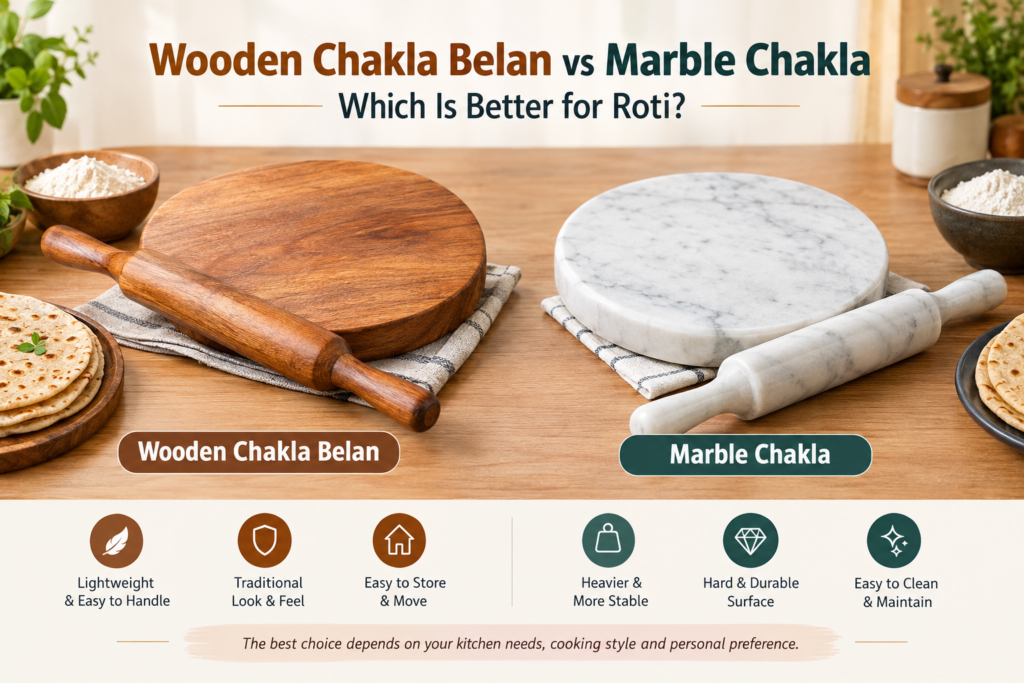
Choosing the right chakla belan for making roti can make everyday cooking easier and more comfortable. Two popular options are wooden chakla belan and marble chakla. Both can provide a smooth surface for rolling dough, but they differ in weight, handling, maintenance, durability, and overall cooking experience.
So, wooden chakla belan vs marble chakla—which is better for roti? The answer depends on your kitchen needs, cooking habits, and personal preference.
In this guide, we compare both options to help you understand their differences before buying.
What Is a Wooden Chakla Belan?
A wooden chakla belan is a traditional roti-making set made from wood. It usually includes a round wooden rolling board, known as a chakla, and a wooden rolling pin called a belan.
Wooden chakla belan sets are popular because they are generally lightweight, easy to handle, and comfortable for everyday cooking. The natural surface also provides a familiar traditional feel while rolling roti, chapati, paratha, and other flatbreads.
A well-made wooden rolling board should have a smooth, even surface without rough edges or major cracks.
What Is a Marble Chakla?
A marble chakla is a rolling board made from natural or engineered marble. Marble chaklas are typically heavier than wooden ones and have a hard, solid surface.
The weight can help keep the board stable on the kitchen countertop while rolling dough. Many people also choose marble because of its solid construction and smooth appearance.
However, marble can be less convenient to move and store because of its weight.
Wooden Chakla Belan vs Marble Chakla: Key Differences
Understanding the differences can make your buying decision easier.
1. Weight and Portability
One of the biggest differences is weight.
Wooden chakla belan sets are generally easier to lift, move, and store. This can be useful if you frequently change your cooking space or need to put the chakla away after use.
Marble chaklas are considerably heavier. Their weight can provide stability on the countertop, but moving and storing them may require more effort.
For easy handling: Wooden chakla belan has an advantage.
2. Stability While Rolling
A rolling board should remain reasonably stable while you prepare roti.
A marble chakla’s heavier construction can help it stay firmly positioned on a suitable countertop. A wooden chakla is lighter, so its stability can depend more on the countertop surface and the design of the board.
If your wooden chakla moves while rolling, placing it on a clean, dry, non-slip kitchen surface can improve stability.
For naturally heavier construction: Marble chakla may be preferable.
3. Ease of Use
For everyday home cooking, ease of handling matters.
Wooden chakla belan sets are usually easier to pick up and reposition. The wooden belan is also designed for comfortable rolling and can be a practical choice for making regular rotis and chapatis.
Marble provides a hard rolling surface, but the overall set can feel heavier and less convenient for some users.
For everyday convenience: Wooden chakla belan is often a practical choice.
4. Durability
Both wood and marble can provide long-term use when properly made and maintained.
Marble is a hard and heavy material, while wood can be durable when it is properly seasoned, finished, and cared for.
The actual lifespan depends on the material quality, manufacturing, usage, and maintenance rather than simply whether the product is wooden or marble.
When buying a wooden chakla belan, look for sturdy construction, a smooth finish, and an even rolling surface.
5. Cleaning and Maintenance
Maintenance is another important consideration.
A wooden chakla should generally be cleaned according to the manufacturer’s instructions and kept dry after cleaning. Avoid leaving wooden kitchen products soaking in water for long periods.
Marble is non-porous compared with many natural materials, but it should still be cleaned properly after use. Food residue and flour should not be allowed to build up on the surface.
For both options, good hygiene depends on regular cleaning and proper drying.
6. Roti-Making Experience
The ideal chakla should provide enough space and a reasonably smooth surface for rolling dough evenly.
A wooden chakla can offer a comfortable traditional experience and is easy to handle. Marble provides a hard, solid surface and may feel particularly stable during rolling.
Your preferred experience may depend on the size of the board, surface finish, belan design, countertop, and your rolling technique.
Which Chakla Is Better for Daily Roti Making?
There is no single answer that applies to every kitchen.
A wooden chakla belan can be a practical option if you prioritize:
- Lightweight handling
- Easy storage
- Traditional kitchen use
- Comfortable everyday cooking
- Easy movement around the kitchen
- A matching wooden chakla and belan set
A marble chakla may suit you if you prefer:
- A heavier rolling board
- A solid countertop setup
- A hard rolling surface
- A traditional stone-like kitchen accessory
- A board that stays relatively stable because of its weight
Instead of choosing based only on material, consider the size, weight, surface finish, construction quality, and ease of cleaning.
How to Choose the Best Chakla Belan for Roti
Before purchasing a chakla belan, check these important factors:
Choose the Right Size
The chakla should provide enough space to roll your usual roti or paratha comfortably. A board that is too small can make rolling difficult.
Check the Surface
Look for a smooth and even rolling surface. For wooden products, avoid boards with rough patches, sharp edges, or visible cracks.
Consider the Weight
Think about where you will store and use the product. If you frequently move kitchen items, a lightweight wooden option may be more convenient.
Check the Belan
The belan should be comfortable to hold and should roll smoothly. Its length and shape should match your cooking style.
Consider Maintenance
Choose a material and design that you can comfortably clean and maintain as part of your regular kitchen routine.
Wooden Chakla Belan vs Marble Chakla: Quick Comparison
| Feature | Wooden Chakla Belan | Marble Chakla |
|---|---|---|
| Weight | Generally lighter | Generally heavier |
| Portability | Easy to move | Less convenient to move |
| Stability | Depends on surface/design | Weight can provide stability |
| Everyday handling | Convenient | Can require more effort |
| Storage | Usually easier | Requires stronger storage space |
| Appearance | Natural and traditional | Solid and stone-like |
| Maintenance | Needs careful drying | Easy to wipe, but still needs proper care |
| Best suited for | Everyday home cooking | Users who prefer a heavier board |
Frequently Asked Questions
Is a wooden chakla belan good for making roti?
Yes. A properly made wooden chakla belan can be suitable for making roti, chapati, and paratha. Look for a smooth, sturdy, and evenly finished product.
Is marble chakla better than wooden chakla?
Neither material is universally better. Marble can offer a heavier and stable rolling board, while wooden chakla belan can be easier to handle and store. Your choice should depend on your kitchen requirements.
Which is easier to store, wooden or marble chakla?
A wooden chakla is generally easier to move and store because it is lighter than a typical marble chakla.
Can I use a wooden chakla for paratha?
Yes. A suitable wooden chakla can be used for rolling paratha, chapati, puri dough, and other flatbreads, provided the board has an appropriate size and smooth surface.
Final Thoughts
When comparing wooden chakla belan vs marble chakla, the right choice depends on what you value most in your kitchen.
A wooden chakla belan can be a convenient choice for people who want a lightweight, easy-to-handle, traditional roti-making set. Marble chakla can appeal to users who prefer a heavier and solid rolling surface.
Before buying, don’t focus only on the material. Check the board size, surface smoothness, belan quality, weight, construction, maintenance requirements, and storage space.
For regular home cooking, choosing a well-made chakla belan that feels comfortable and practical in your kitchen is more important than simply choosing one material over another.