10 Common Roti-Making Mistakes and How to Avoid Them
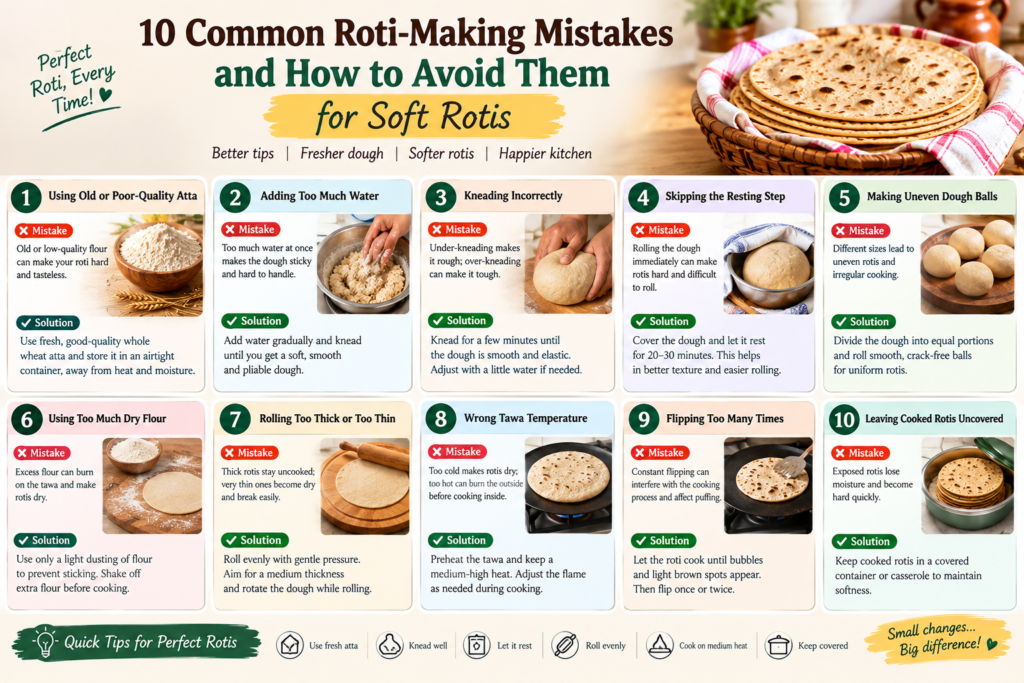
Making soft, round and fluffy roti at home sounds simple, but small mistakes can make a big difference. Sometimes the roti becomes hard, sometimes it refuses to puff, and sometimes it turns out uneven or dry.
The good news is that most roti-making mistakes are easy to fix. https://nlsenterprises.in/shop/The key areas are dough consistency, kneading, resting, rolling, tawa temperature and how you store cooked rotis.
If you want softer and more consistent homemade roti and chapati, avoid these 10 common mistakes.
1. Using Old or Poor-Quality Atta
The quality and freshness of your wheat flour can affect the texture of your roti. Flour that has been stored for too long or exposed to heat and moisture may not produce the same results as fresh atta.
How to avoid it
Choose fresh, finely milled whole-wheat atta and store it in an airtight container away from heat and direct sunlight. Buy an amount that you can reasonably use before the flour loses freshness.
2. Adding Too Much Water at Once
Adding all the water at once can make the dough difficult to control. You may end up with some areas that are sticky while other parts remain dry.
How to avoid it
Add water gradually while mixing the atta. The exact amount can vary depending on the flour, so focus on the texture rather than following one fixed measurement.
Your finished dough should be soft, smooth and pliable, without being excessively sticky.
3. Kneading the Dough Incorrectly
Under-kneaded dough may feel rough and can make rolling difficult. On the other hand, excessive kneading or repeatedly adding dry flour can contribute to a tougher texture.
How to avoid it
Knead until the dough becomes smooth and elastic. A practical approach is to knead for several minutes, then check the texture rather than relying only on the clock.
If the dough feels stiff, gradually work in a little water instead of adding lots of dry flour.
4. Skipping the Dough-Resting Step
One of the most overlooked roti-making mistakes is rolling the dough immediately after kneading.
Resting gives moisture time to distribute through the dough and allows the gluten structure to relax, making the dough easier to roll.
How to avoid it
Cover the dough and let it rest for around 20–30 minutes at room temperature before making the dough balls.
This simple step can make rolling smoother and more manageable.
5. Making Uneven Dough Balls
If some dough balls are large and others are small, your rotis will naturally have different sizes and thicknesses.
Cracked or uneven dough balls can also make rolling more difficult.
How to avoid it
Divide the dough into similar-sized portions. Roll each portion between your palms until the surface becomes smooth and relatively crack-free.
Then flatten each ball gently before rolling.
6. Using Too Much Dry Flour
A light dusting of flour can prevent the dough from sticking to the chakla and belan, but using too much can cause problems.
Excess flour may remain on the surface and burn on the tawa, while too much dusting can interfere with good contact between the roti and cooking surface.
How to avoid it
Use only enough dry atta to prevent sticking. Shake or brush off excess flour before placing the roti on the tawa.
7. Rolling the Roti Too Thick or Too Thin
A roti that is too thick may remain undercooked in the centre, while an extremely thin roti can dry out quickly.
Uneven thickness can also prevent the roti from cooking consistently.
How to avoid it
Use gentle, even pressure with the belan. Rotate the dough regularly as you roll to help maintain a consistent thickness.
Instead of focusing only on making a perfectly round shape, concentrate on making the entire roti evenly thin.
8. Cooking on the Wrong Tawa Temperature
Tawa temperature is one of the most important factors in making soft rotis.
A tawa that is not hot enough can make the roti cook slowly and become dry. An excessively hot tawa can brown or burn the outside before the inside cooks properly.
How to avoid it
Preheat the tawa properly and maintain a steady medium-high heat, adjusting the flame as needed during cooking.
The ideal temperature can vary with your tawa and stove, so learn to recognize how quickly your roti develops bubbles and light brown spots.
9. Flipping the Roti Too Many Times
Constantly flipping the roti can interfere with the cooking process. Waiting too long before flipping can also make the surface dry.
How to avoid it
Watch for bubbles and light brown spots before flipping. Cook the second side briefly and finish according to your preferred method.
Work confidently rather than repeatedly moving the roti around the tawa.
10. Leaving Cooked Rotis Uncovered
Even a perfectly cooked roti can become dry if it is left exposed to air.
Once the moisture escapes, the roti can lose its soft and flexible texture.
How to avoid it
Place freshly cooked rotis in a covered container or casserole. You can also use a clean cloth-lined container to help retain their softness until serving.
Why Is My Roti Hard?
If your roti is consistently hard, check the entire process rather than blaming one ingredient.
Common causes include:
- Dough that is too dry
- Insufficient resting time
- Excessive dry flour while rolling
- Rolling the roti too thin
- Incorrect tawa temperature
- Overcooking
- Leaving cooked rotis uncovered
Start by correcting the dough consistency and cooking temperature. These two factors have a major effect on the final texture.
How Can You Make Soft Rotis Every Time?
For consistently soft rotis, follow a simple routine:
Use fresh atta → add water gradually → knead until smooth → rest the dough → make even dough balls → roll evenly → cook on a properly heated tawa → keep cooked rotis covered.
The process becomes easier with practice. You do not need complicated ingredients or expensive equipment to improve your everyday roti.
Frequently Asked Questions
Why does my roti become hard?
A dry dough, excessive flour during rolling, incorrect tawa temperature or overcooking can contribute to hard rotis. Keeping cooked rotis covered also helps maintain softness.
Why does my roti not puff?
Uneven rolling, incorrect dough consistency and unsuitable tawa temperature can affect puffing. A well-rested, evenly rolled roti cooked on a properly heated tawa has a better chance of puffing.
How do I make round rotis?
Make smooth, evenly sized dough balls and rotate the dough regularly while rolling. Apply gentle pressure rather than repeatedly pressing one area.
How long should roti dough rest?
A resting period of around 20–30 minutes is a useful starting point for everyday roti dough.
How do I keep rotis soft after cooking?
Keep freshly cooked rotis covered in a suitable container or casserole to reduce moisture loss.
Final Thoughts
Perfect roti comes from getting several small details right. By avoiding these 10 common roti-making mistakes, you can improve your dough, rolling technique, cooking process and final texture.
Remember the basics: soft dough, proper resting, light flour, even rolling, a well-heated tawa and covered rotis.
With a little practice, making soft and delicious homemade roti and chapati can become a simple part of your everyday Indian kitchen routine.