How to Choose the Right Belan for Roti
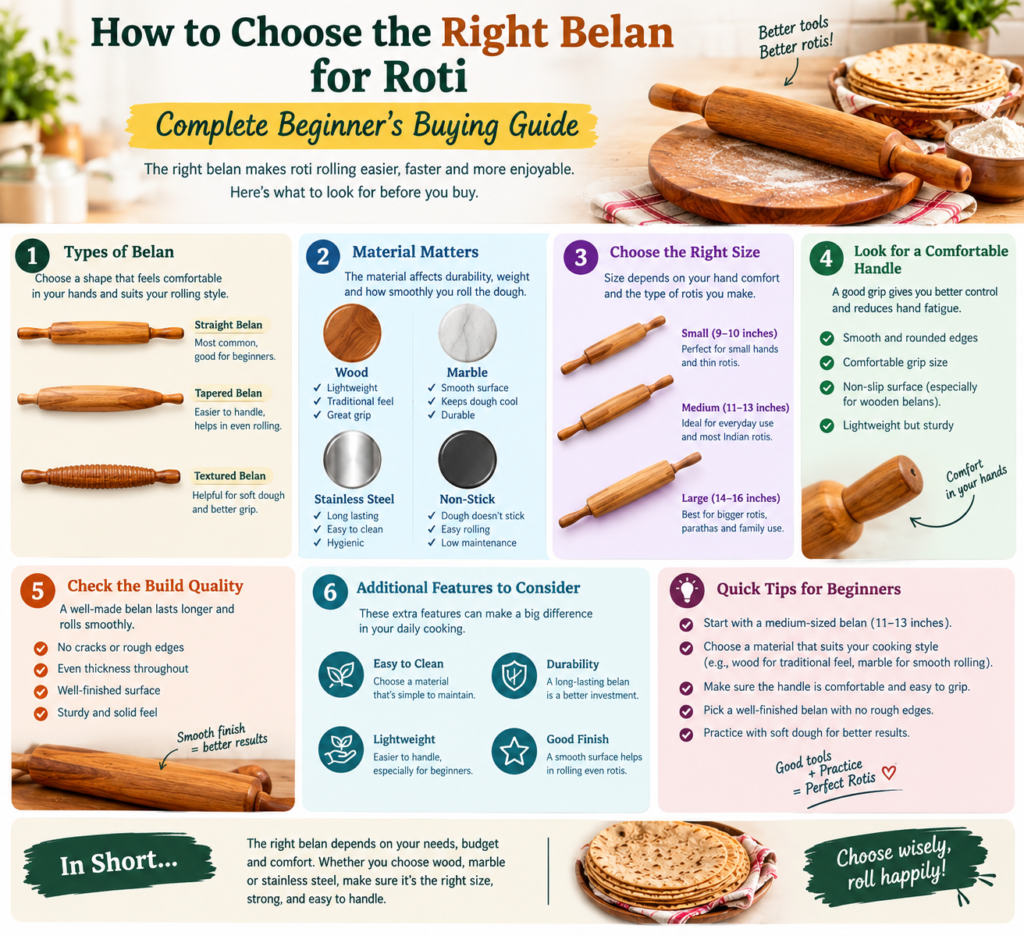
Making soft, round, and evenly rolled rotis starts with good dough, but the right belan for roti can make the rolling process much easier. A belan, also known as a rolling pin,https://nlsenterprises.in/shop/ helps flatten and shape dough before it goes onto the tawa.
For beginners, choosing a belan can be confusing because different products come in different lengths, weights, shapes, and materials. A belan that feels comfortable for one person may feel difficult for another.
So, how do you choose the right belan for roti?
The answer depends on your hand comfort, roti size, rolling technique, kitchen space, and personal preference. This guide explains the most important factors to consider before buying a roti rolling pin.
What Is a Belan?
A belan is a traditional Indian rolling pin used to flatten and shape dough for roti, chapati, paratha, and other flatbreads.
Unlike some rolling pins with separate handles, a traditional belan is often designed as a single smooth piece. You hold it with both hands and roll it across dough placed on a chakla or suitable flat surface.
A good belan should move smoothly and allow you to control the thickness of the dough without excessive effort.
What Should You Consider When Choosing a Belan?
The most important factors are:
- Material
- Length
- Weight
- Shape
- Thickness
- Surface finish
- Comfort and grip
- Ease of cleaning and maintenance
Let’s look at each factor in detail.
1. Choose the Right Belan Material
Belans are available in different materials, including wood, metal, marble, and other manufactured materials.
A wooden belan is a popular traditional choice for Indian kitchens because it is lightweight, comfortable to handle, and familiar to many home cooks.
When buying a wooden belan, look for a smooth, well-finished surface without cracks, splinters, or rough edges.
The material should be appropriate for food-contact use, and you should follow the manufacturer’s cleaning and care instructions.
2. Pick a Comfortable Belan Size
Size is one of the most important factors when choosing a belan.
A very short belan may require more hand movement, while an excessively long one may feel difficult to control, especially on a small kitchen counter.
For everyday roti making, choose a length that gives you enough rolling surface while remaining comfortable in both hands.
If possible, compare the belan with your existing chakla before buying. The rolling pin should work comfortably with the size of your rolling board.
3. Consider the Weight
A belan should not be unnecessarily heavy.
A heavier rolling pin can apply more pressure, but that does not automatically mean it will produce better rotis. Beginners may find a balanced, moderate-weight belan easier to control.
The ideal weight depends on your strength, rolling technique, and the type of dough you prepare.
The key is control rather than weight alone.
4. Look at the Shape
Traditional belans generally have a smooth cylindrical shape, but small differences in thickness and taper can affect handling.
A well-balanced shape should allow the belan to roll smoothly across the dough.
Avoid choosing a belan purely because it looks attractive. The shape should feel comfortable in your hands and suit your rolling technique.
5. Check the Surface Finish
The surface of a belan should be smooth.
Rough surfaces can make rolling uncomfortable and may cause dough to catch on the rolling pin.
Before purchasing a wooden belan, inspect it for:
- Splinters
- Cracks
- Rough patches
- Uneven finishing
- Sharp edges
A properly finished surface can make everyday rolling more comfortable.
6. Think About Grip and Comfort
You will use your hands continuously while rolling roti, so comfort matters.
Hold the belan, if possible, before purchasing it. Check whether you can comfortably grip it and move it forward and backward.
Your hands should not feel strained after a few minutes of rolling.
For online purchases, check the listed dimensions and product photographs carefully and read the manufacturer’s specifications.
7. Match the Belan to Your Roti Size
The type of roti you usually make should influence your choice.
If you mostly prepare standard-sized rotis, a regular belan should be sufficient. If you frequently make larger parathas or other flatbreads, you may prefer a different size.
Think about your actual cooking routine rather than buying the largest belan available.
Wooden Belan vs Other Rolling Pins
A wooden belan is not automatically the best option for everyone.
Wooden Belan
- Traditional feel
- Generally lightweight
- Comfortable for everyday roti making
- Available in many sizes
- Requires appropriate care
Metal Rolling Pin
- Can be durable
- Usually easy to clean
- May feel heavier or different in the hand
Marble Rolling Pin
- Can be heavy and stable
- Useful for certain doughs
- Requires more storage space
The best option depends on your cooking style, comfort, and maintenance preferences.
Common Mistakes When Buying a Belan
Many beginners focus only on price or appearance. That is a mistake.
Avoid:
- Buying a belan that is too large for your chakla.
- Choosing a very heavy product without considering comfort.
- Ignoring rough surfaces or splinters.
- Buying without checking dimensions.
- Choosing appearance over usability.
- Forgetting about cleaning and storage requirements.
A simple, well-finished belan that feels comfortable can be more useful than an expensive but awkward one.
How to Use a Belan for Better Rotis
Choosing the right belan is only half the process. Your technique matters too.
Start with soft, properly rested dough. Flatten the dough ball slightly before placing it on the chakla. Use a small amount of dry flour if needed to prevent sticking.
Roll gently from the center toward the edges and rotate the dough regularly. Avoid applying excessive pressure in one area.
The goal is to create even thickness, rather than simply rolling as quickly as possible.
With practice, you will naturally develop better control over the belan.
Frequently Asked Questions
Which belan is best for roti?
A smooth, well-balanced belan that feels comfortable in your hands is generally a practical choice. For many home cooks, a properly finished wooden belan is a traditional option.
Is a wooden belan good for beginners?
Yes. A lightweight, smooth wooden belan can be comfortable for beginners. Choose a size that you can easily control.
What size belan should I buy for roti?
Choose a size that works comfortably with your chakla and the size of rotis you normally prepare. Avoid choosing a belan that is unnecessarily long or difficult to handle.
Is a heavy belan better for making roti?
Not necessarily. A heavier belan may apply more pressure, but control and comfort are more important than weight alone.
How do I maintain a wooden belan?
Follow the manufacturer’s care instructions. Avoid prolonged soaking, clean it appropriately, and allow it to dry thoroughly before storage.
Can the same belan be used for roti and paratha?
Yes. A suitable belan can generally be used for both roti and paratha. Your preferred size may depend on the type and size of flatbread you usually prepare.
Final Thoughts
Choosing the right belan for roti does not have to be complicated. Focus on the factors that actually affect everyday use: material, size, weight, shape, surface finish, and comfort.
For many beginners, a smooth and well-balanced wooden belan is a practical starting point. However, there is no single belan that is perfect for every cook.
Choose a rolling pin that works comfortably with your chakla, matches the size of your rotis, and gives you good control while rolling. With the right tool and regular practice, making evenly rolled homemade rotis becomes much easier.