Best Wooden Tools for Making Chapati
Making soft, evenly shaped chapatis becomes easier when you have the right kitchen tools. While flour, water, and good technique are essential, a comfortable chakla and belan can make rolling dough much more convenient.
For beginners setting up an Indian kitchen, choosing wooden tools can be confusing because there are many sizes, shapes, finishes, and materials available. Should you buy a wooden chakla? Is a traditional wooden belan better? What other wooden tools are actually useful?
This guide explains the best wooden tools for making chapati, what each tool does, and what to check before buying.
What Wooden Tools Do You Need to Make Chapati?
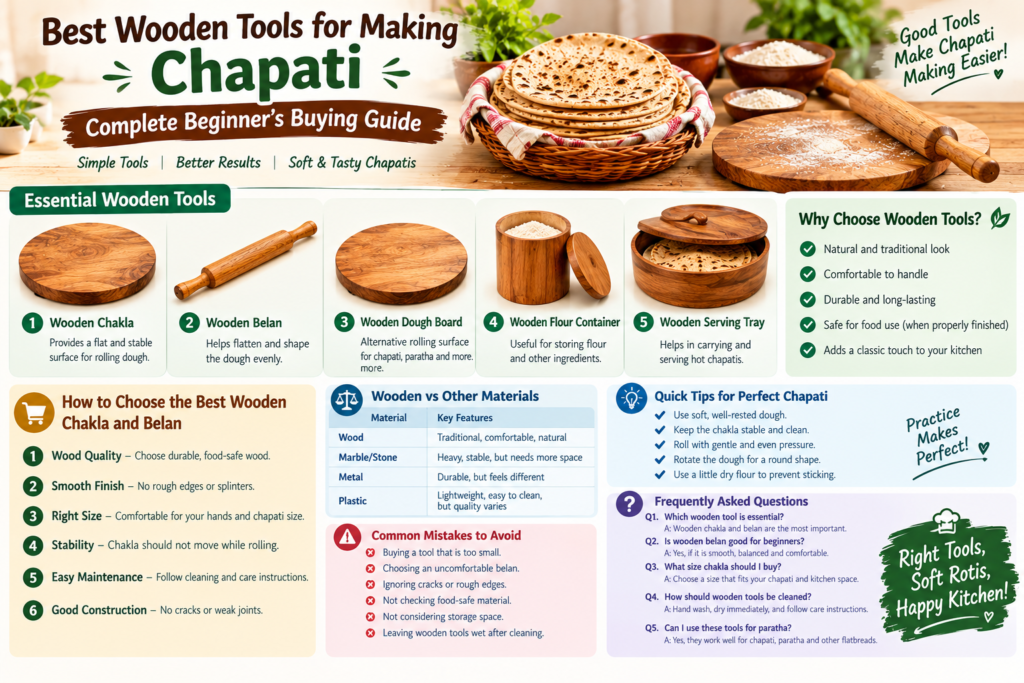
The essential wooden chapati-making tools include:
- Wooden chakla – for rolling dough.
- Wooden belan – for flattening and shaping dough.
- Wooden dough board – an alternative rolling surface.
- Wooden flour or spice containers – optional kitchen accessories.
- Wooden serving board or tray – useful for handling or serving chapatis.
For most beginners, however, you do not need a large collection. A good-quality wooden chakla and belan are enough to get started.
1. Wooden Chakla: The Main Rolling Surface
A wooden chakla is a flat board designed for rolling dough. It gives you a dedicated, stable surface for preparing chapatis.
When selecting a wooden chakla, look for a smooth surface and sturdy construction. The board should be large enough for your preferred chapati size without taking up unnecessary counter space.
What to check:
- Smooth, even surface
- Strong construction
- Comfortable size
- Stable base
- Food-contact-suitable material
- No cracks or rough edges
A stable chakla is particularly helpful for beginners because the board should stay reasonably steady while you roll.
2. Wooden Belan: The Essential Rolling Pin
The wooden belan is one of the most important tools for chapati making. It allows you to flatten and shape dough while controlling its thickness.
Different belans have different lengths and shapes. Some are slim and lightweight, while others are thicker and heavier.
For beginners, comfort matters more than choosing the largest or most expensive belan.
A good wooden belan should have:
- A smooth finish
- Comfortable handling
- Balanced weight
- No sharp edges
- Strong construction
- A size suitable for your hands
A well-balanced belan can make it easier to apply consistent pressure while rolling.
3. Wooden Dough Board
A wooden dough board can work as an alternative to a traditional chakla. It provides a flat working surface for rolling chapati, roti, paratha, and similar dough-based foods.
If you have limited kitchen space, look for a board that is easy to store. If you prepare large chapatis or parathas regularly, a larger surface may be more comfortable.
4. Wooden Flour Container
A wooden flour container is not required for rolling chapati, but it can be a useful addition to an organized kitchen.
It can provide convenient storage for dry ingredients, depending on its construction and whether it is specifically designed for food storage.
Always check the manufacturer’s instructions before storing flour or other ingredients in a wooden container.
5. Wooden Serving Tray
A wooden serving tray can be useful for carrying and serving freshly prepared chapatis.
For everyday use, choose a tray that is sturdy, easy to handle, and finished appropriately for food contact. A covered roti container may be more suitable when your primary goal is keeping chapatis warm and soft.
Why Choose Wooden Chapati-Making Tools?
Wooden kitchen tools are popular for their traditional appearance, comfortable handling, and natural material.
They can also add a warm, classic look to an Indian kitchen.
However, wood requires proper care. Moisture should not be allowed to remain on wooden tools for long periods, and cleaning should follow the manufacturer’s instructions.
The goal should not be to buy wooden tools simply because they look attractive. Construction quality, food safety, comfort, and maintenance should come first.
How to Choose the Best Wooden Chakla and Belan
Before purchasing wooden chapati tools, consider these factors.
1. Wood Quality
Look for a product made from suitable, durable material intended for kitchen use. Avoid tools with cracks, splinters, or poorly finished surfaces.
2. Smooth Finish
The surface should feel smooth without rough patches. A rough rolling surface can make dough handling uncomfortable.
3. Size
Choose a chakla large enough for the chapatis you normally make. For the belan, select a length and thickness that feels comfortable in your hands.
4. Stability
A chakla that moves around while rolling can be frustrating. A stable design is especially valuable for beginners.
5. Easy Maintenance
Wooden products need appropriate care. Check whether the manufacturer recommends hand washing, drying immediately, oiling, or avoiding soaking.
Wooden vs Other Chapati-Making Materials
Wood is not automatically better than every other material. Each option has different characteristics.
Wood: Traditional appearance and comfortable handling.
Marble or stone: Heavy and stable, but can require more counter space.
Metal: Durable in some designs but may feel different during dough preparation.
Plastic: Lightweight and easy to clean, but quality varies considerably.
The best choice depends on your kitchen, cooking frequency, personal preference, and maintenance routine.
Common Mistakes When Buying Wooden Chapati Tools
Avoid choosing tools only because they are inexpensive or visually attractive.
Common mistakes include:
- Buying a chakla that is too small.
- Choosing a belan that feels uncomfortable.
- Ignoring rough edges or cracks.
- Purchasing products without checking intended food use.
- Not considering storage space.
- Leaving wooden tools wet after cleaning.
A slightly more carefully chosen tool can be more comfortable for regular cooking.
Frequently Asked Questions
Which wooden tool is essential for making chapati?
The two most important tools are a wooden chakla and wooden belan. Together, they provide the rolling surface and rolling pin needed to shape chapati dough.
Is a wooden belan good for beginners?
Yes. A smooth, well-balanced wooden belan can be comfortable for beginners. The right size is important because a belan that is too heavy or large can be difficult to control.
What size wooden chakla should I buy?
Choose a size that comfortably accommodates the chapatis you normally make while fitting your available kitchen counter space.
How should wooden chapati tools be cleaned?
Follow the manufacturer’s care instructions. In general, avoid prolonged soaking, clean the tools appropriately, and allow them to dry thoroughly before storage.
Can wooden chakla and belan be used for paratha?
Yes. A suitable chakla and belan can generally be used to roll various types of flatbread dough, including paratha, depending on the recipe and tool size.
Final Thoughts
The best wooden tools for making chapati do not have to be complicated or expensive. For most home kitchens, a smooth, stable wooden chakla and comfortable wooden belan provide the essential setup.
When buying, focus on quality, size, smooth finishing, stability, comfortable handling, and proper maintenance rather than choosing a product based only on appearance.
With good tools, properly prepared dough, and regular practice, rolling chapati can become a much easier and more enjoyable part of everyday cooking.