How to Clean and Maintain a Wooden Chakla Belan
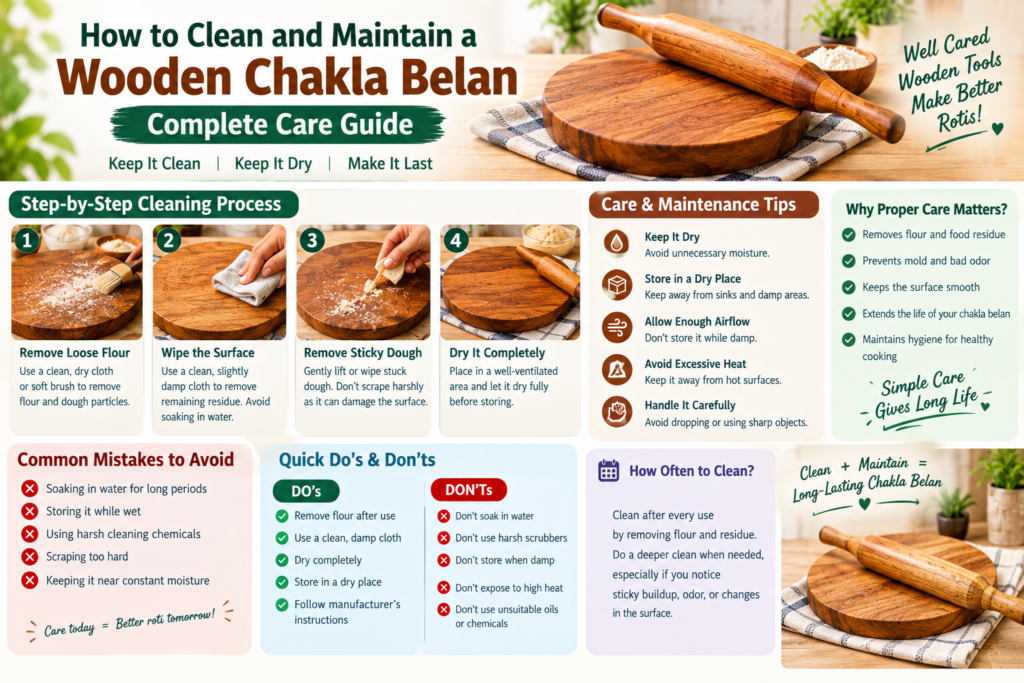
A wooden chakla belan is a useful traditional kitchen tool for making roti, chapati, paratha, and other flatbreads. Because it comes into regular contact with flour and dough, proper cleaning and maintenance are important for keeping it clean, dry, and ready for everyday cooking.
Unlike metal or some synthetic kitchen tools, wood needs a little extra care. Excessive moisture, prolonged soaking, and improper storage can affect the condition of wooden kitchen products over time.
The good news is that caring for a wooden chakla belan is simple when you follow the right routine.
In this guide, you will learn how to clean and maintain a wooden chakla belan, how to dry it properly, how to store it, and which common mistakes to avoid.
Why Proper Wooden Chakla Belan Care Matters
Regular cleaning helps remove flour, dough particles, and other food residue from the chakla and belan.
Proper drying is equally important because wooden products should not remain unnecessarily wet for long periods. Good storage also helps protect the surface from moisture, dust, and accidental damage.
A simple cleaning and maintenance routine can help your wooden chakla belan remain practical and comfortable to use.
How to Clean a Wooden Chakla Belan After Use
Follow these simple steps after making roti or other flatbreads.
1. Remove Loose Flour First
After you finish rolling the dough, remove loose flour and small dough particles from the chakla and belan.
You can use a clean, dry kitchen cloth or a soft brush suitable for kitchen use.
Avoid scraping the wooden surface aggressively because excessive force can damage the finish.
2. Wipe the Surface
If the product’s care instructions allow it, wipe the chakla and belan with a clean, slightly damp cloth.
The goal is to remove remaining food residue without unnecessarily soaking the wood.
For routine cleaning, you generally do not need to submerge the wooden chakla or belan in water.
3. Remove Sticky Dough Carefully
Sometimes wet dough can stick to a wooden rolling board.
Allowing the residue to dry completely can make it harder to remove. Instead, gently wipe or lift the residue without using excessive force.
For stubborn residue, follow the manufacturer’s cleaning recommendations for the specific type of wood and finish.
4. Dry It Completely
After cleaning, allow the chakla and belan to dry completely before storing them.
Place them in a clean, well-ventilated area where air can circulate around the wooden surfaces.
Avoid storing the products while they are still damp.
Should You Wash a Wooden Chakla Belan With Water?
A common question is whether a wooden chakla belan can be washed with water.
The answer depends on the product’s construction, wood type, and manufacturer’s instructions. In general, avoid prolonged soaking or leaving wooden kitchen products submerged in water.
For routine cleaning, removing loose flour and wiping the surface with an appropriate cloth may be sufficient. If more thorough cleaning is required, use the care method recommended by the manufacturer.
The important point is to avoid unnecessary prolonged exposure to moisture.
How to Maintain a Wooden Chakla Belan
Cleaning is only one part of wooden chakla belan care. Proper maintenance can also help preserve the product’s surface and usability.
Keep It Dry
Moisture is one of the main things to manage when caring for wooden kitchen products.
Always allow your chakla and belan to dry properly before putting them away.
Store It in a Dry Place
Keep the wooden chakla belan in a clean and dry area of your kitchen.
Avoid storing it directly next to a sink where it may regularly come into contact with splashing water.
Give It Enough Airflow
Do not immediately place a damp wooden chakla inside a closed cabinet or container.
Allowing it to dry first helps prevent moisture from becoming trapped around the surface.
Avoid Excessive Heat
Do not place a wooden chakla or belan directly against a very hot cooking surface or heating appliance.
Sudden or excessive heat can affect wood and its finish.
Handle It Carefully
Avoid dropping the chakla or using sharp objects directly on its rolling surface.
A smooth, even surface is important for comfortable dough rolling, so treat the wooden board as a kitchen tool that requires reasonable care.
Can You Use Oil on a Wooden Chakla Belan?
Whether a wooden chakla or belan should be oiled depends on the type of wood, finish, and manufacturer’s instructions.
Do not automatically apply cooking oil simply because the product is wooden.
If the manufacturer recommends conditioning the wood, use only an appropriate food-safe product and follow the recommended application method.
For a finished wooden product, unnecessary oiling may not be required.
Common Wooden Chakla Belan Cleaning Mistakes
Avoid these common mistakes to help protect your wooden rolling board and belan.
1. Soaking It in Water
Leaving wooden kitchen products submerged for long periods can expose them to unnecessary moisture.
2. Storing It While Wet
Always allow the chakla and belan to dry properly before storage.
3. Using Harsh Cleaning Methods
Aggressive scrubbing or unsuitable cleaning chemicals can affect the surface or finish.
4. Scraping Too Hard
Hard scraping can create scratches or rough areas on the rolling surface.
5. Keeping It Near Constant Moisture
Storing the product beside a sink or in another damp area can make proper maintenance more difficult.
How Often Should You Clean a Wooden Chakla Belan?
A wooden chakla belan should be cleaned after each use by removing flour and food residue.
A more thorough cleaning routine can be used when necessary, depending on how frequently you use the product and the manufacturer’s care instructions.
If you notice sticky residue, unpleasant odors, visible buildup, or other changes in the surface, clean the product appropriately before using it again.
How to Store a Wooden Chakla Belan Properly
Good storage is simple:
- Clean away flour and dough residue after use.
- Make sure the chakla and belan are completely dry.
- Store them in a clean, dry kitchen area.
- Keep them away from unnecessary moisture.
- Avoid placing heavy objects on the chakla.
- Allow adequate airflow around the wooden products.
If your kitchen has limited storage space, make sure the chakla is positioned where it will not regularly come into contact with water or excessive heat.
Frequently Asked Questions
How do you clean a wooden chakla belan?
Remove loose flour and dough particles first. Then wipe the surface using an appropriate clean cloth according to the manufacturer’s care instructions. Avoid prolonged soaking and allow the wood to dry completely before storage.
Can I wash a wooden chakla with water?
Some wooden products can tolerate limited water exposure, but prolonged soaking should generally be avoided. Always follow the manufacturer’s instructions for your specific chakla.
How do I remove dough stuck to a wooden chakla?
Gently remove the residue without aggressively scraping the wooden surface. For persistent buildup, follow the cleaning instructions provided with the product.
How should I dry a wooden chakla belan?
After cleaning, place it in a clean, well-ventilated area and let it dry completely before storing it.
Can I use soap on a wooden chakla belan?
Cleaning requirements vary according to the wood and finish. Follow the manufacturer’s instructions rather than automatically using household soap or harsh cleaners.
How do I keep a wooden chakla belan hygienic?
Clean it after use, remove flour and dough residue, keep it dry, store it properly, and avoid prolonged moisture exposure.
Final Thoughts
Knowing how to clean and maintain a wooden chakla belan can help you take better care of one of the most useful tools in a traditional kitchen.
The basic routine is simple: remove food residue, clean appropriately, avoid prolonged soaking, dry thoroughly, and store in a clean and dry place.
Most importantly, follow the care instructions provided by the manufacturer because different types of wood and finishes can have different maintenance requirements.
With consistent care and proper storage, your wooden chakla belan can remain a useful part of your everyday roti-making routine.