
Simple Saving Ideas for Kids
Teaching children to save money does not have to be difficult. With simple activities, fun challenges, and guidance from parents, kids can learn how to manage money from an early age. These lessons help children understand the value of money, make better spending decisions, and develop https://nlsenterprises.in/habits that can benefit them throughout life.
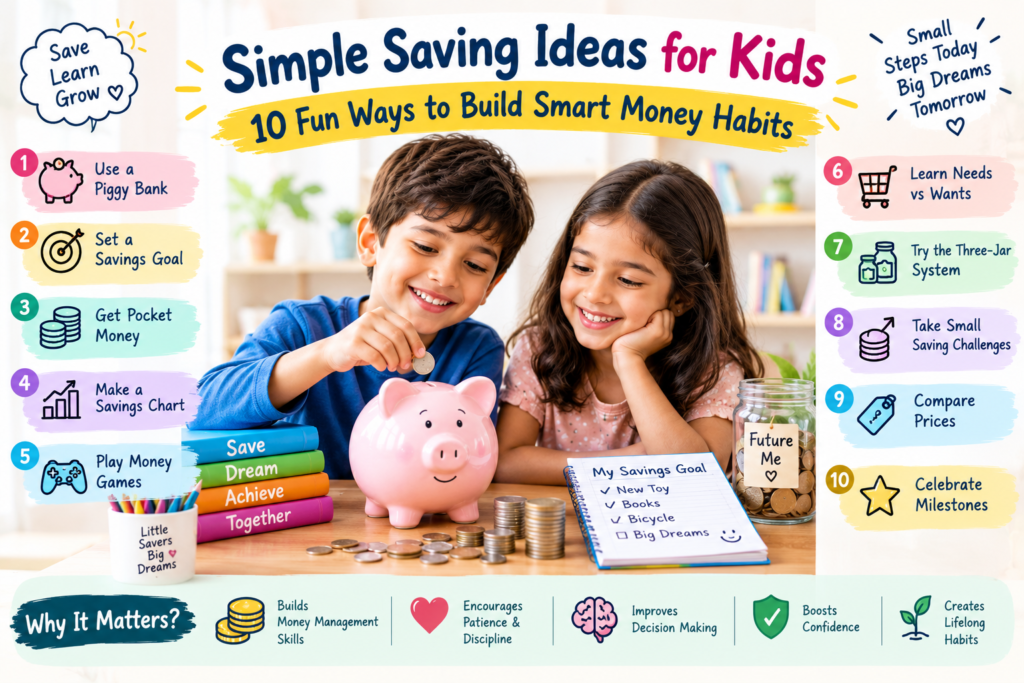
If you are looking for simple saving ideas for kids, there are many easy ways to get started at home. From using a piggy bank to setting savings goals, small activities can make learning about money enjoyable and practical.
Why Should Kids Learn to Save Money?
Learning to save money helps children become more responsible with their spending. It also teaches them that achieving a goal often requires patience and planning.
Here are some key benefits of teaching kids to save:
- Better money management: Children learn to plan how they use their money.
- Patience and discipline: They understand the importance of saving regularly.
- Smarter decisions: Kids learn to think before buying something.
- Goal-setting skills: They discover how small savings can lead to bigger goals.
- Financial confidence: They become more comfortable discussing money and making simple choices.
Parents can introduce these lessons through everyday activities without making financial education complicated.
10 Simple Saving Ideas for Kids
1. Start with a Piggy Bank
A piggy bank is one of the easiest saving tools for children. Give your child a piggy bank where they can keep coins and notes received as pocket money or gifts.
Choose a colourful design that makes saving exciting. A transparent jar is another good option because children can see their money grow.
2. Set a Fun Savings Goal
Children are more motivated to save when they know what they are saving for. Help your child choose a goal, such as buying a book, toy, or art supplies.
Explain how much the item costs and how much they need to save. A clear target makes the process easier to understand.
3. Give Regular Pocket Money
Pocket money can help children practise managing money independently. Depending on their age and your family budget, you can give them a small amount weekly or monthly.
Encourage them to divide their money between saving, spending, and future goals. The aim is to help children make thoughtful choices rather than spend everything immediately.
4. Create a Savings Chart
A savings chart turns saving into a fun activity. Draw a simple chart and divide the savings goal into smaller steps.
For example, if your child wants to save ₹500, create five steps of ₹100 each. Every time they reach a milestone, let them colour a section of the chart.
This visual progress can help children stay interested and motivated.
5. Play Money-Management Games
Games are a fun way to introduce basic financial concepts. You can play a pretend shopping game at home using toy money and everyday objects.
Give your child a budget and ask them to choose items within that amount. This activity teaches counting, comparing prices, and making spending decisions.
6. Teach the Difference Between Needs and Wants
Children should understand that some things are necessary while others are optional.
Needs include essential items such as food, school supplies, and clothing. Wants include extra toys, games, and treats.
During shopping trips, ask your child to identify whether an item is a need or a want. This simple habit can help them understand why saving money is important.
7. Use a Three-Jar Saving System
Set up three jars labelled Save, Spend, and Share.
- Save: Money for future goals.
- Spend: Money for small purchases.
- Share: Money set aside for helping others, if the child and family wish to do so.
This method introduces budgeting in a simple, visual way. You can adjust the jars as your child grows and their understanding improves.
8. Encourage Small Saving Challenges
Make saving more exciting with weekly challenges. For example, children can try saving a small amount from their pocket money each week.
You can also create a 30-day savings challenge using amounts that suit the child’s age and budget.
Keep the challenge realistic. The purpose is to build consistency, not to pressure children to save more than they can afford.
9. Teach Children to Compare Prices
When shopping, show children how similar products can have different prices. Explain that comparing options can help families make informed decisions.
For example, compare the prices of two notebooks or water bottles with similar features. Ask your child which option offers better value.
This activity builds practical decision-making skills and helps children understand that smart spending supports their saving goals.
10. Celebrate Savings Milestones
When children reach a savings milestone, recognise their effort. You can praise their consistency, update their savings chart, or let them choose the next goal.
Rewards do not need to cost money. Spending time together or choosing a family activity can be just as meaningful.
Focus on the habit of saving rather than the total amount collected.
How Can Parents Make Saving Easy for Kids?
Parents can make financial learning more effective by keeping lessons simple and leading by example.
Try these practical tips:
- Talk openly about everyday spending decisions.
- Set age-appropriate and realistic savings goals.
- Let children make small, supervised choices.
- Avoid criticising them for every spending mistake.
- Encourage regular saving, even when the amount is small.
- Explain that saving and responsible spending work together.
Children learn at different speeds, so patience and consistency are essential.
Frequently Asked Questions
What is the easiest way for kids to start saving money?
Starting with a piggy bank or savings jar is an easy first step. Children can deposit small amounts regularly and watch their savings grow.
How much should kids save from their pocket money?
There is no fixed amount. Parents can encourage children to save a small, manageable portion of their pocket money based on their age and family circumstances.
How can parents make saving money fun?
Savings charts, colourful jars, simple games, and achievable goals can make saving more enjoyable. Celebrating progress also helps children stay motivated.
At what age should children learn about saving money?
Children can begin learning basic saving concepts in their preschool years through pretend play and simple jars. As they grow older, parents can introduce pocket money, budgeting, and more advanced financial concepts.
Final Thoughts
These simple saving ideas for kids can help parents introduce money management in an enjoyable and practical way. Activities such as using a piggy bank, setting goals, playing budgeting games, and tracking progress teach children valuable financial skills.
Start with small steps and make saving a regular part of family life. With patience and encouragement, children can develop smart money habits that support better decisions and greater financial confidence in the future.