
Wooden Tray vs Bamboo Tray
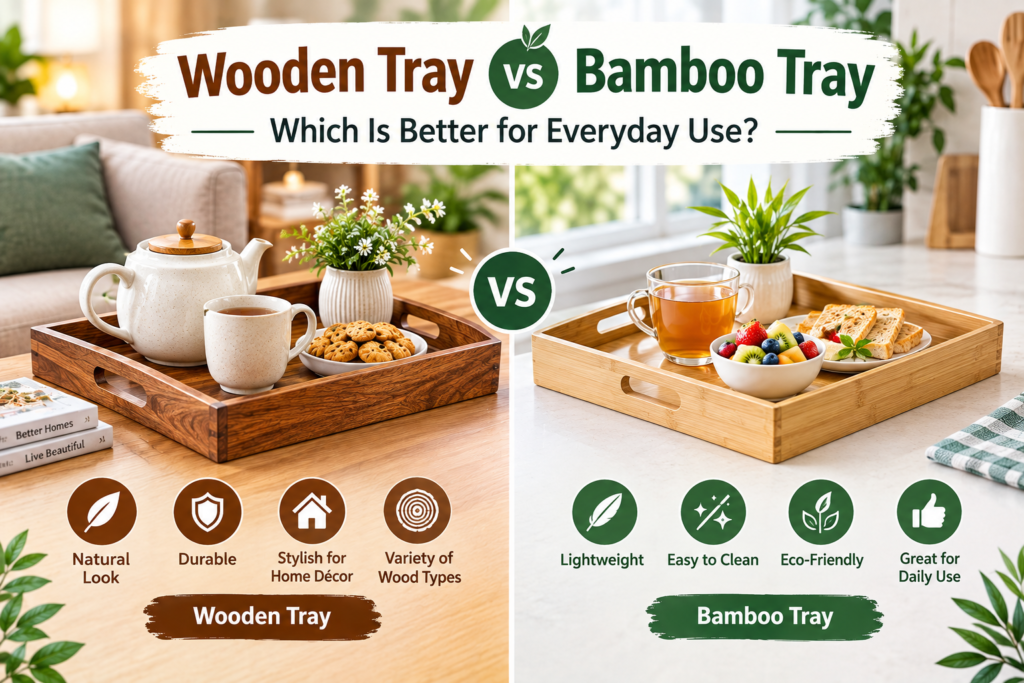
When comparing a Wooden Tray vs Bamboo Tray, both options offer natural beauty and practical benefits. Wooden trays are available in different wood types and designs, while bamboo trays are appreciated for their lightweight construction and natural appearance.
Choosing the right serving tray can make everydayhttps://nlsenterprises.in/ tasks easier and more stylish. Whether you are serving tea, carrying breakfast, organising small items, or decorating your living room, a good tray can be both useful and attractive.
When comparing a Wooden Tray vs Bamboo Tray, both options offer natural beauty and practical benefits. Wooden trays are available in different wood types and designs, while bamboo trays are appreciated for their lightweight construction and natural appearance.
But which tray is better for everyday use? In this guide, we will compare their durability, design, maintenance, and common uses to help you make the right choice.
What Is a Wooden Tray?
A wooden tray is made from natural wood or engineered wood materials. It is commonly used for serving tea and coffee, carrying snacks, and decorating different areas of the home.
Wooden trays are available in various finishes, including light wood, dark wood, rustic designs, and polished styles. Their appearance depends on the wood type, craftsmanship, and protective finish.
Benefits of Wooden Trays
- Natural and elegant appearance.
- Available in many styles and sizes.
- Suitable for serving and home decoration.
- Can be durable with proper care.
- Complements traditional and modern interiors.
A wooden serving tray is a great choice for people who want a stylish and versatile household accessory.
What Is a Bamboo Tray?
A bamboo tray is made from bamboo, a fast-growing grass commonly used to manufacture household products and furniture. Bamboo trays are popular for their natural look, lightweight feel, and simple designs.
They can be used for serving breakfast, carrying beverages, organising accessories, and decorating coffee tables. Some bamboo trays are made from solid bamboo pieces, while others use laminated bamboo strips.
Benefits of Bamboo Trays
- Lightweight and easy to carry.
- Natural appearance with a distinctive texture.
- Suitable for everyday serving.
- Available in simple and modern designs.
- Bamboo grows quickly and can be a renewable material when responsibly sourced.
A bamboo serving tray is a practical option for people who prefer lightweight products with a natural style.
Wooden Tray vs Bamboo Tray: Key Differences
Understanding the differences can help you choose a tray that matches your needs and budget.
1. Durability and Strength
A quality wooden tray can last for years when properly maintained. Its strength depends on the wood species, construction, and protective finish.
Bamboo trays can also be strong and durable. However, their performance depends on the quality of the bamboo, adhesive used in laminated products, and overall construction.
Which is better? Both can offer long-lasting use. Compare the quality of individual products rather than choosing based on material alone.
2. Design and Appearance
Wooden trays offer a wide range of colours, grains, and finishes. They can look rustic, traditional, or luxurious depending on their design.
Bamboo trays usually have a lighter colour and a clean, natural appearance. They work well in minimalist, contemporary, and nature-inspired interiors.
Which is better? Wooden trays offer greater variety in wood finishes, while bamboo trays are ideal for a light and simple natural look.
3. Weight and Convenience
Some wooden trays can feel heavy, particularly when made from solid hardwood. Lighter wood varieties and engineered wood designs may be easier to carry.
Bamboo trays are often lightweight, making them convenient for carrying tea, coffee, snacks, and breakfast items.
Which is better? Bamboo trays are often a good choice if lightweight handling is your priority.
4. Cleaning and Maintenance
Wooden trays generally need gentle cleaning and thorough drying. Avoid soaking them in water because excessive moisture can damage the material.
Bamboo trays also need proper care. Wipe them with a damp cloth, dry them after cleaning, and follow the manufacturer’s instructions.
Which is better? Both require care to prevent moisture damage. The protective finish and construction can make a significant difference.
Best Uses of Wooden and Bamboo Trays
Wooden trays are excellent for serving guests, displaying decorative accessories, organising coffee tables, and creating elegant breakfast arrangements.
Bamboo trays are useful for everyday tea and coffee serving, carrying snacks, organising small household items, and adding a natural touch to living spaces.
For serving food, choose a tray specifically suitable for food contact and follow its care instructions.
Which Tray Is More Eco-Friendly?
Bamboo grows quickly and can be a renewable resource when harvested responsibly. However, the environmental impact of a bamboo tray also depends on processing, adhesives, coatings, transportation, and lifespan.
Wooden trays can also be a responsible choice when made from sustainably sourced wood and designed for long-term use.
The better option: Look for responsible sourcing, durable construction, and transparent product information. Neither material is automatically more sustainable in every situation.
Frequently Asked Questions
Is a wooden tray better than a bamboo tray?
A wooden tray offers more variety in wood types, colours, and finishes. A bamboo tray is often lighter and provides a simple natural appearance. The best choice depends on your preferences and intended use.
Are bamboo trays durable?
Yes, quality bamboo trays can be durable when properly constructed and maintained. Avoid prolonged exposure to moisture and follow the manufacturer’s care instructions.
Which tray is best for everyday use?
Both are suitable for everyday use. Bamboo trays can be convenient for lightweight serving, while wooden trays offer versatility in design and decoration.
How do you clean a bamboo serving tray?
Wipe the tray with a damp cloth and dry it thoroughly. Avoid soaking it in water or placing it in a dishwasher unless the manufacturer specifically permits it.
Final Verdict: Wooden Tray vs Bamboo Tray
When comparing a Wooden Tray vs Bamboo Tray, both materials offer useful benefits for everyday serving and home decoration.
Choose a wooden tray if you want a wide selection of designs, finishes, and decorative styles. Choose a bamboo tray if you prefer a lightweight serving accessory with a clean, natural appearance.
Before buying, consider the tray’s size, construction, finish, maintenance requirements, and intended use. Selecting a well-made product will help you enjoy a practical and attractive serving tray for years to come.
SEO Title: SEO Title: Wooden Tray vs Bamboo Tray: Which Is Better for Everyday Use?
Focus Keyword: Wooden Tray vs Bamboo Tray
Meta Description: Wooden Tray vs Bamboo Tray: Compare durability, design, maintenance, and everyday uses to choose the best serving tray for your home.
URL Slug: wooden-tray-vs-bamboo-tray
Wooden Tray vs Bamboo Tray: Which Is Better for Everyday Use?
Choosing the right serving tray can make everyday tasks easier and more stylish. Whether you are serving tea, carrying breakfast, organising small items, or decorating your living room, a good tray can be both useful and attractive.
When comparing a Wooden Tray vs Bamboo Tray, both options offer natural beauty and practical benefits. Wooden trays are available in different wood types and designs, while bamboo trays are appreciated for their lightweight construction and natural appearance.
But which tray is better for everyday use? In this guide, we will compare their durability, design, maintenance, and common uses to help you make the right choice.
What Is a Wooden Tray?
A wooden tray is made from natural wood or engineered wood materials. It is commonly used for serving tea and coffee, carrying snacks, and decorating different areas of the home.
Wooden trays are available in various finishes, including light wood, dark wood, rustic designs, and polished styles. Their appearance depends on the wood type, craftsmanship, and protective finish.
Benefits of Wooden Trays
- Natural and elegant appearance.
- Available in many styles and sizes.
- Suitable for serving and home decoration.
- Can be durable with proper care.
- Complements traditional and modern interiors.
A wooden serving tray is a great choice for people who want a stylish and versatile household accessory.
What Is a Bamboo Tray?
A bamboo tray is made from bamboo, a fast-growing grass commonly used to manufacture household products and furniture. Bamboo trays are popular for their natural look, lightweight feel, and simple designs.
They can be used for serving breakfast, carrying beverages, organising accessories, and decorating coffee tables. Some bamboo trays are made from solid bamboo pieces, while others use laminated bamboo strips.
Benefits of Bamboo Trays
- Lightweight and easy to carry.
- Natural appearance with a distinctive texture.
- Suitable for everyday serving.
- Available in simple and modern designs.
- Bamboo grows quickly and can be a renewable material when responsibly sourced.
A bamboo serving tray is a practical option for people who prefer lightweight products with a natural style.
Wooden Tray vs Bamboo Tray: Key Differences
Understanding the differences can help you choose a tray that matches your needs and budget.
1. Durability and Strength
A quality wooden tray can last for years when properly maintained. Its strength depends on the wood species, construction, and protective finish.
Bamboo trays can also be strong and durable. However, their performance depends on the quality of the bamboo, adhesive used in laminated products, and overall construction.
Which is better? Both can offer long-lasting use. Compare the quality of individual products rather than choosing based on material alone.
2. Design and Appearance
Wooden trays offer a wide range of colours, grains, and finishes. They can look rustic, traditional, or luxurious depending on their design.
Bamboo trays usually have a lighter colour and a clean, natural appearance. They work well in minimalist, contemporary, and nature-inspired interiors.
Which is better? Wooden trays offer greater variety in wood finishes, while bamboo trays are ideal for a light and simple natural look.
3. Weight and Convenience
Some wooden trays can feel heavy, particularly when made from solid hardwood. Lighter wood varieties and engineered wood designs may be easier to carry.
Bamboo trays are often lightweight, making them convenient for carrying tea, coffee, snacks, and breakfast items.
Which is better? Bamboo trays are often a good choice if lightweight handling is your priority.
4. Cleaning and Maintenance
Wooden trays generally need gentle cleaning and thorough drying. Avoid soaking them in water because excessive moisture can damage the material.
Bamboo trays also need proper care. Wipe them with a damp cloth, dry them after cleaning, and follow the manufacturer’s instructions.
Which is better? Both require care to prevent moisture damage. The protective finish and construction can make a significant difference.
Best Uses of Wooden and Bamboo Trays
Wooden trays are excellent for serving guests, displaying decorative accessories, organising coffee tables, and creating elegant breakfast arrangements.
Bamboo trays are useful for everyday tea and coffee serving, carrying snacks, organising small household items, and adding a natural touch to living spaces.
For serving food, choose a tray specifically suitable for food contact and follow its care instructions.
Which Tray Is More Eco-Friendly?
Bamboo grows quickly and can be a renewable resource when harvested responsibly. However, the environmental impact of a bamboo tray also depends on processing, adhesives, coatings, transportation, and lifespan.
Wooden trays can also be a responsible choice when made from sustainably sourced wood and designed for long-term use.
The better option: Look for responsible sourcing, durable construction, and transparent product information. Neither material is automatically more sustainable in every situation.
Frequently Asked Questions
Is a wooden tray better than a bamboo tray?
A wooden tray offers more variety in wood types, colours, and finishes. A bamboo tray is often lighter and provides a simple natural appearance. The best choice depends on your preferences and intended use.
Are bamboo trays durable?
Yes, quality bamboo trays can be durable when properly constructed and maintained. Avoid prolonged exposure to moisture and follow the manufacturer’s care instructions.
Which tray is best for everyday use?
Both are suitable for everyday use. Bamboo trays can be convenient for lightweight serving, while wooden trays offer versatility in design and decoration.
How do you clean a bamboo serving tray?
Wipe the tray with a damp cloth and dry it thoroughly. Avoid soaking it in water or placing it in a dishwasher unless the manufacturer specifically permits it.
Final Verdict: Wooden Tray vs Bamboo Tray
When comparing a Wooden Tray vs Bamboo Tray, both materials offer useful benefits for everyday serving and home decoration.
Choose a wooden tray if you want a wide selection of designs, finishes, and decorative styles. Choose a bamboo tray if you prefer a lightweight serving accessory with a clean, natural appearance.
Before buying, consider the tray’s size, construction, finish, maintenance requirements, and intended use. Selecting a well-made product will help you enjoy a practical and attractive serving tray for years to come.