
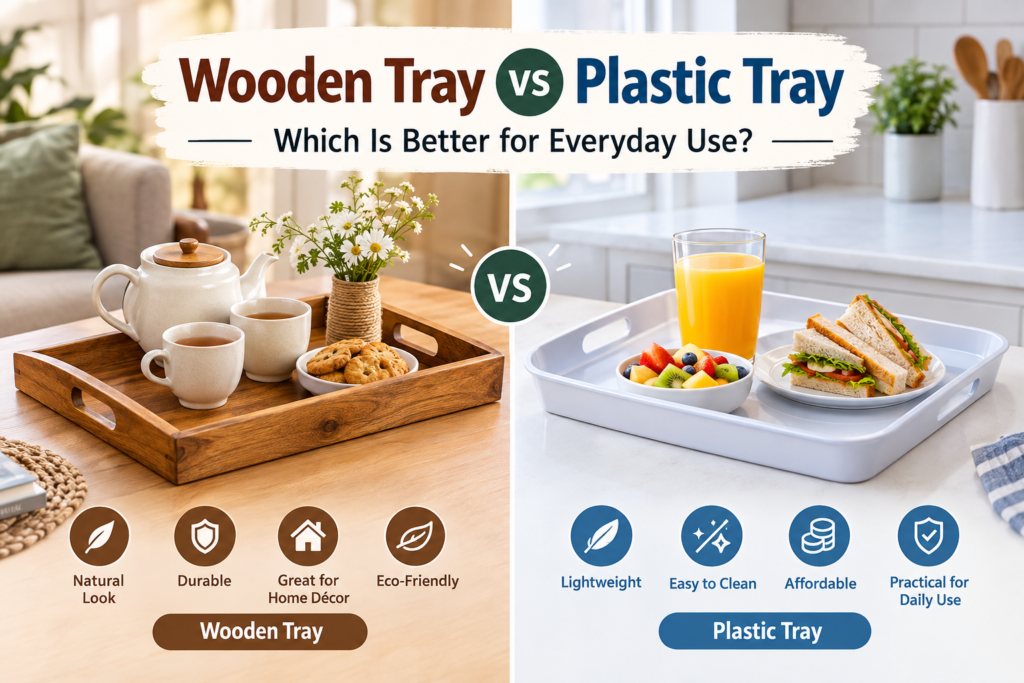
Wooden Tray vs Plastic Tray: Which Is Better for Everyday Use?
Choosing the right serving tray may seem like a small decision, but it can make everyday tasks easier and more convenient. Whether you are serving breakfast, carrying tea and coffee, organizing kitchen essentials, or presenting snacks to guests, a good tray adds both functionality and style to your home.
When comparing a wooden tray vs plastic tray, both options offer unique advantages. Wooden trays are known for their natural appearance and timeless charm, while plastic trays are popular for their lightweight design, affordability, and easy cleaning.
But which one is better for everyday use? The answer depends on your lifestyle, budget, cleaning preferences, and personal taste. Let’s compare both options to help you make the right choice.
1. Wooden Tray vs Plastic Tray: Key Differences
The biggest difference between wooden and plastic https://nlsenterprises.in/ trays is their material, appearance, and maintenance requirements.
A wooden tray offers a warm, natural look that complements traditional, modern, and minimalist interiors. It is often chosen for serving guests, enjoying breakfast in bed, or adding an elegant touch to a dining table.
A plastic tray, on the other hand, focuses on convenience. It is generally lightweight, easy to handle, and available in various colors, sizes, and designs. It works well for busy households and everyday activities.
Quick comparison:
- Appearance: Wooden trays offer a natural, premium look, while plastic trays provide more color and design options.
- Weight: Plastic trays are generally lighter, although this depends on the design.
- Cleaning: Plastic trays are often easier to clean, while wooden trays require more careful maintenance.
- Durability: Both can last for years when used and maintained properly.
- Price: Plastic trays are often more affordable, while wooden trays can cost more depending on the wood and craftsmanship.
- Best use: Wooden trays suit stylish serving and presentation, while plastic trays are convenient for frequent, everyday handling.
2. Benefits of Using a Wooden Tray
Wooden trays are an excellent choice for people who value aesthetics, natural materials, and long-lasting home accessories.
A Natural and Elegant Appearance
One of the main advantages of a wooden serving tray is its timeless appeal. The natural grain and texture of wood create a warm, welcoming atmosphere. Wooden trays can complement wooden furniture, ceramic tableware, and neutral home décor.
They are especially useful for serving tea, coffee, snacks, and breakfast when presentation matters.
Strong and Long-Lasting
A well-made wooden tray can provide years of service when properly cared for. Solid wood trays are often sturdy enough for carrying cups, plates, and small dishes.
However, durability depends on the type of wood, construction, finish, and exposure to moisture.
A More Natural Material Choice
Wood is a renewable material when sourced responsibly. Choosing a durable wooden tray can also reduce the need for frequent replacements. For environmentally conscious buyers, responsibly sourced wood may be preferable to disposable or frequently replaced plastic products.
Keep in mind: Wooden trays should be kept dry and cleaned according to the manufacturer’s instructions to prevent stains, warping, or damage.
3. Benefits of Using a Plastic Tray
Plastic trays are designed for convenience, making them a practical option for busy households.
Lightweight and Easy to Carry
Plastic trays are usually lightweight, so carrying drinks, snacks, and small meals requires less effort. This makes them useful for children, older adults, and anyone who prefers easy handling.
Simple Cleaning and Maintenance
Most nonporous plastic trays can be cleaned easily with warm water and dish soap. Unlike unfinished wood, plastic generally does not absorb moisture as readily.
However, scratches, cracks, and worn surfaces can trap residue, so damaged trays should be replaced when necessary. Always check whether a plastic tray is dishwasher-safe before washing it in a dishwasher.
Affordable and Versatile
Plastic trays are available in a wide range of shapes, colors, and sizes. They are often budget-friendly and suitable for kitchens, dining areas, picnics, and casual gatherings.
For everyday tasks where convenience matters more than appearance, a plastic tray can be a sensible choice.
4. Which Tray Is More Hygienic?
Hygiene depends on the tray’s surface condition, material quality, and cleaning routine rather than the material alone.
A smooth, intact plastic tray is generally easy to wash and dry. A properly finished wooden tray can also be hygienic when it is cleaned promptly and maintained correctly.
For food serving, choose a tray intended for food contact. Wash it after use, avoid leaving food residue on the surface, and dry wooden trays thoroughly.
If a wooden tray develops deep cracks or persistent stains, or a plastic tray becomes heavily scratched or damaged, consider replacing it.
5. Which Tray Is Better for the Environment?
The environmental impact of a tray depends on how it is manufactured, how long it lasts, and what happens when it is discarded.
Responsibly sourced wood is renewable and may be biodegradable under suitable conditions. However, coatings, adhesives, and manufacturing practices can affect its overall impact.
Plastic trays may be lightweight and reusable, but conventional plastics are often made from fossil fuels and can persist in the environment if improperly discarded.
For a more sustainable choice, look for a durable tray that you will use for years. Avoid unnecessary replacements, and consider responsibly sourced wood or recycled plastic where appropriate.
6. Wooden Tray vs Plastic Tray: Which Should You Choose?
The best option depends on how you plan to use your tray.
Choose a wooden tray if you:
- Prefer a natural and elegant appearance.
- Frequently serve guests or enjoy stylish food presentation.
- Want a sturdy home accessory that can last with proper care.
- Do not mind occasional maintenance.
Choose a plastic tray if you:
- Need a lightweight and affordable option.
- Prefer quick, straightforward cleaning.
- Use trays frequently for casual meals and snacks.
- Want a practical option for everyday household tasks.
If your budget allows, keeping both types at home can be useful. Use a wooden tray for special occasions and attractive serving, and a plastic tray for routine tasks that prioritize convenience.
Frequently Asked Questions (FAQs)
1. Is a wooden tray better than a plastic tray?
A wooden tray is often better for appearance, presentation, and a natural feel. A plastic tray is generally better for lightweight handling, affordability, and simple maintenance. The right choice depends on your needs.
2. Which tray is easier to clean?
Plastic trays are generally easier to clean because most have nonporous surfaces. Wooden trays also clean well when properly finished, but they should not be soaked or left wet for long periods.
3. Are wooden trays safe for serving food?
Yes, wooden trays can be suitable for serving food when they are made with food-safe finishes, maintained properly, and used according to the manufacturer’s instructions.
4. Which tray lasts longer?
Both can last for years. A well-made wooden tray can be highly durable, while a quality plastic tray can also withstand frequent use. Material quality and proper care are important factors.
5. What is the best tray for everyday use?
A plastic tray is a practical choice for quick, frequent serving and easy cleaning. A wooden tray is ideal for people who value durability, natural design, and attractive presentation.
Conclusion
When comparing a wooden tray vs plastic tray, there is no single winner for every household. Wooden trays stand out for their natural beauty, sturdy construction, and elegant presentation. Plastic trays offer lightweight convenience, affordability, and easy maintenance.
For everyday use, choose a tray that suits your routine, cleaning habits, and budget. If practicality is your priority, plastic may be the better option. If style and natural materials matter more, a wooden tray may be worth the investment.
Ultimately, the best tray is one that makes serving easier, fits your lifestyle, and provides reliable value over time.