
What Is a Wooden Roti Maker Press?
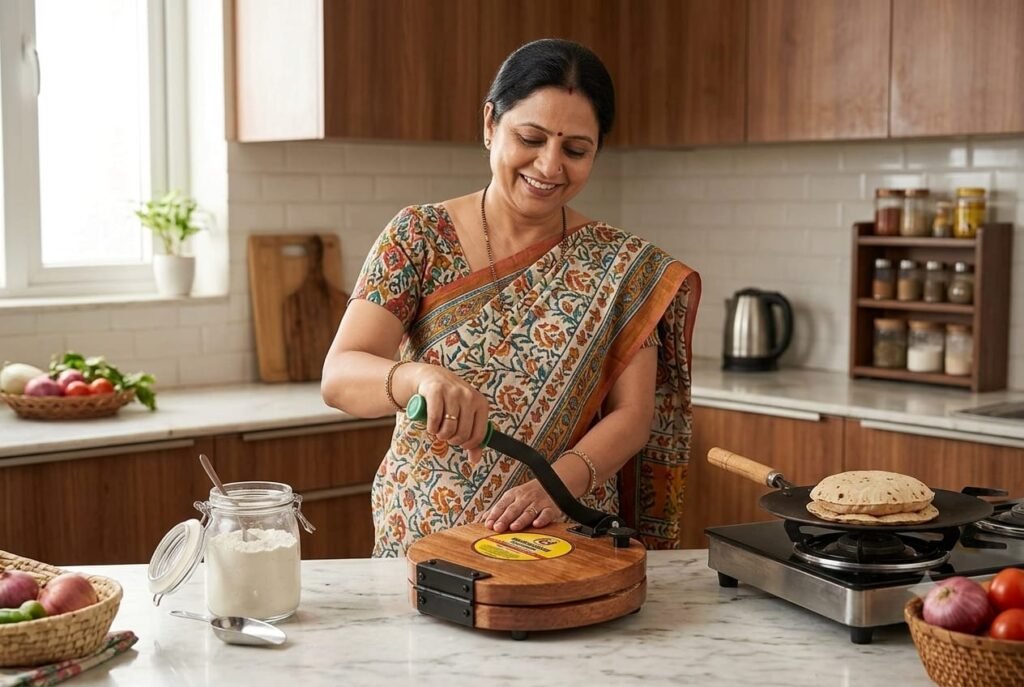
Making perfectly round rotis can take practice. A wooden roti maker press offers a https://nlsenterprises.in/ simple manual way to flatten dough into a more uniform shape before cooking it on a tawa. It is especially useful for people who want consistent rotis without relying entirely on traditional rolling techniques.
Unlike electric roti-making machines, a wooden roti press generally works through hand pressure and does not require electricity. Some models are made from solid wood and feature two flat plates connected with a hinge and a handle. The dough is placed between the plates and pressed to create a flat, round disc.
But how exactly does a wooden roti maker work, and is it useful for an Indian kitchen? Let’s explore.
What Is a Wooden Roti Maker Press?
A wooden roti maker press is a manual kitchen tool used to flatten dough for rotis, chapatis, pooris, and, depending on the design, other flatbreads.
Most traditional designs have a lower wooden plate, an upper pressing plate, and a handle or lever. When the handle is pressed, the dough spreads between the plates.
Because it does not use electricity, it can be used in virtually any kitchen with a suitable working surface. Some manufacturers also offer models designed for larger rotis, with products commonly advertised for around 8-inch or larger rotis.
How Does a Wooden Roti Maker Press Work?
Using a wooden roti press is relatively straightforward.
Step 1: Prepare the Dough
Prepare a soft, smooth dough using wheat flour and water. The dough should be pliable rather than excessively dry or sticky.
Step 2: Make a Dough Ball
Take a small portion of dough and roll it between your palms to form a smooth ball.
Step 3: Place the Dough
Depending on the product design, place the dough ball between the wooden plates. Some presses may require a small amount of oil or a sheet to prevent sticking, so always follow the manufacturer’s instructions.
Step 4: Press the Handle
Close the upper plate and apply gentle, even pressure. The dough spreads into a flatter, round shape.
Step 5: Remove and Cook
Carefully remove the flattened dough and cook it on a preheated tawa. Adjust the pressing technique and dough quantity to achieve the thickness you prefer.
The basic process is therefore place, press, remove, and cook. Manual wooden roti makers are designed to simplify the shaping stage rather than automatically cook the roti.
What Are the Benefits of a Wooden Roti Maker Press?
1. Helps Create Consistent Shapes
One of the main reasons people use a roti press is to achieve a more uniform shape. Even pressure can help produce a rounder and more evenly flattened dough disc.
This can be particularly helpful for beginners who find it difficult to maintain an even shape with a rolling pin.
2. No Electricity Required
A manual wooden roti press does not need a plug, battery, or motor. This makes it convenient for everyday kitchen use and easy to move or store.
3. Simple Manual Operation
There are no complicated controls or electronic components. The mechanism relies on hand pressure, making the tool straightforward to operate.
4. Natural Wooden Appearance
Wooden kitchen tools can add a traditional, natural feel to the kitchen. Solid-wood models are also often chosen for their sturdy construction and classic appearance.
However, buyers should verify the type of wood and food-contact suitability before purchasing.
5. Can Be Used for Different Flatbreads
Depending on its size and design, a wooden press can be used for rotis, chapatis, pooris, parathas, bhakri, and other flattened dough products. Always check the manufacturer’s recommended uses because not every press is suitable for every type of dough.
Wooden Roti Maker vs. Rolling Pin
A traditional chakla belan gives you greater control over the shape and thickness of your roti. However, it requires practice and hand coordination.
A wooden roti press simplifies the flattening process by applying pressure between two plates.
For beginners, the press can make achieving a consistent shape easier. For experienced cooks who prefer controlling every part of the rolling process, a chakla and belan may remain the preferred option.
The two methods can also be used together depending on the recipe and desired thickness.
Is a Wooden Roti Maker Good for Indian Kitchens?
Yes, a wooden roti maker can be a practical addition to an Indian kitchen, particularly for people looking for a manual, electricity-free way to flatten dough.
It can be useful in apartments, family kitchens, and homes where rotis are prepared regularly. For buyers in India, factors such as available kitchen space, product size, wood quality, build strength, and ease of cleaning are worth considering.
How to Choose the Right Wooden Roti Maker Press
Before buying a wooden roti press, consider these factors:
Wood quality: Look for sturdy, properly finished wood intended for food-contact use.
Size: Check the plate diameter and make sure it suits the roti size you normally prepare.
Construction: Examine the hinge, handle, plates, and joints. A stable press should feel secure during operation.
Surface finish: A smooth surface can make handling and cleaning easier.
Weight: A heavier model may feel stable, but make sure it is practical for your kitchen and storage space.
Maintenance: Check the manufacturer’s cleaning instructions. Natural wood generally should not be soaked for long periods.
How to Clean and Maintain a Wooden Roti Press
Good maintenance can help preserve the wood and overall construction.
Wipe the press with a dry or slightly damp cloth after use. Avoid prolonged soaking because excessive moisture can affect natural wood. Allow the press to dry completely before storing it.
Do not put a wooden roti press in a dishwasher unless the manufacturer specifically states that it is dishwasher-safe.
Regularly check the hinges and joints for looseness, especially if the press is used frequently.
Frequently Asked Questions
Does a wooden roti maker need electricity?
No. A wooden roti maker press is a manual tool and works through hand pressure.
Can a wooden roti press make perfectly round rotis?
It can help produce a more consistent round shape by applying pressure evenly, but the final result also depends on dough consistency, dough-ball size, pressing technique, and the specific design of the product.
Can I make pooris with a wooden roti press?
Some wooden presses are marketed for both rotis and pooris. However, suitability depends on the product’s design and recommended use, so check the manufacturer’s specifications before using it for different dough types.
Is a wooden roti maker better than an electric roti maker?
They serve different purposes. A wooden press is manual and does not require electricity, while an electric appliance can automate more of the cooking process. The right choice depends on your preferred preparation method, kitchen setup, and budget.
Final Thoughts
A wooden roti maker press is a simple manual kitchen tool designed to make the dough-flattening stage easier and more consistent. Its electricity-free operation, compact functionality, and traditional wooden construction make it an interesting option for Indian kitchens.
Before buying one, pay attention to wood quality, plate size, construction, food safety, ease of cleaning, and intended use. With the right dough consistency and technique, a wooden roti press can make preparing evenly shaped rotis more convenient while keeping the process simple and hands-on.